
Lower Paxton Roofing handles emergency roof repair in Lower Paxton, PA, backed by more than 20 years of roofing work and serving surrounding cities including Linglestown, Progress, Susquehanna Township, Harrisburg and Hummelstown. When water is coming into the house or a storm has opened the roof, the first job is to stop more water from getting in, and the second is to make a proper repair.
Emergency work is still careful work. We take photos before we touch anything, so the damage is documented for your own insurance claim, and we tell you clearly which part of what we did is temporary and which is permanent. A tarp that nobody follows up on becomes the next leak. This page explains what to do in the first hour, what an emergency visit involves and how the permanent repair follows.
What to Do First When the Roof Is Leaking
Protect People and Belongings
Move furniture, electronics and anything valuable away from the leak, and set out buckets or tubs to catch water. If a ceiling is bulging with water, a small hole in the lowest point over a bucket lets it drain in a controlled way instead of letting the drywall give way. If water is near light fixtures or outlets, switch off that circuit at the panel.
Stay off the roof. A wet, storm-damaged roof is one of the most dangerous places to stand, and an emergency repair is not worth a fall. Everything that needs doing up top can wait until a crew with fall protection gets there.
Document the Damage
Before anything is moved or cleaned up, photograph the leak, the ceiling, damaged belongings and any visible roof damage from the ground. Note the date and time the damage happened. Those photos are your record for an insurance claim, and they are hard to recreate once the cleanup starts.
Keep receipts for anything you buy or pay for to limit the damage, from tarps and buckets to a hotel night if the house is not livable. Many policies reimburse reasonable steps taken to prevent further damage.
Call the Insurer and a Roofer
Report the claim to your insurer promptly. Pennsylvania’s rules in 31 Pa. Code 146 require an insurer to acknowledge a claim within 10 working days, and the sooner it is reported, the sooner that clock starts. Call us at the same time so the roof can be secured while the claim moves forward.
Emergency Tarping and Dry-In
Securing an Open Roof
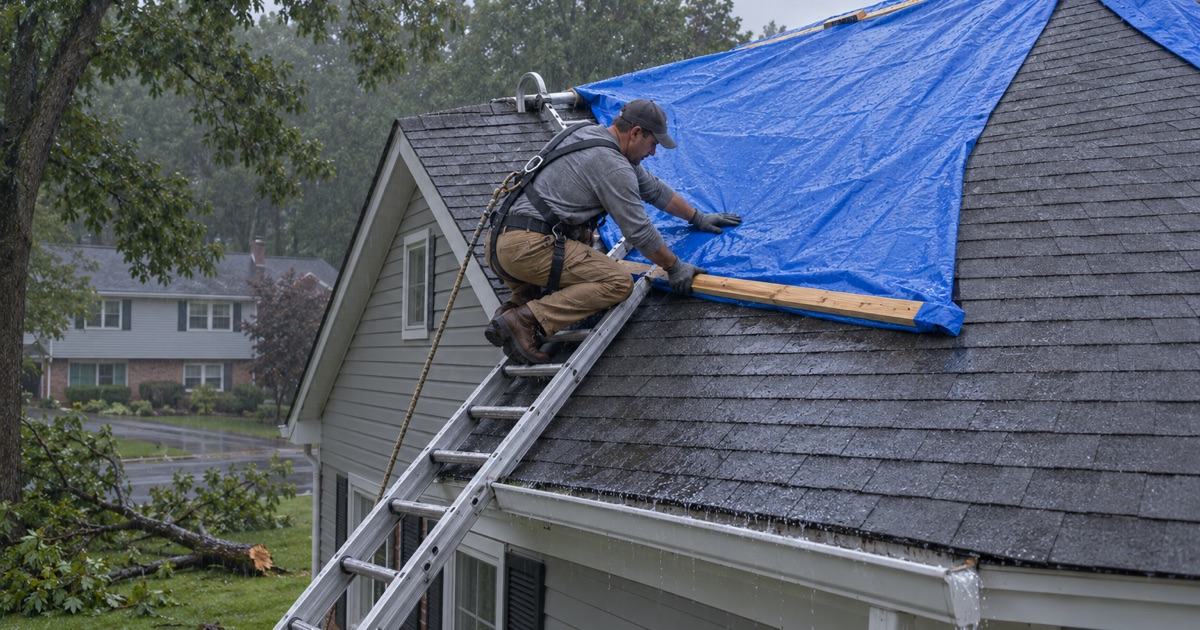
When wind has torn off shingles or opened a section of the roof, we cover the exposed area with underlayment or a heavy tarp fastened to the roof with battens, extending over the ridge so water cannot run underneath it. A loose tarp held down with a few bricks blows off in the next gust and lets water in at the edges.
Where the damage is limited to a few missing shingles or a lifted section of flashing, a temporary dry-in with underlayment and sealed edges may be all that is needed until the permanent repair is made.
Fallen Trees and Branches
A tree or large limb on a roof can crack rafters, puncture the decking and leave a hole open to the sky. The tree usually has to come off first, and that is a job for a tree service with the right equipment. Once it is clear, we inspect the framing, dry in the opening and plan the structural and roofing repair.
If rafters or trusses are broken, the repair is structural. In Lower Paxton Township, the permit chart says roof work needs a building permit when structural changes are made, so we account for that in the permanent repair plan.
Active Leaks at Flashing and Penetrations
Not every emergency is storm damage. A chimney flashing that finally gives way or a pipe boot that splits can send water into the house during heavy rain. We find the source from the attic and the roof, stop the water with a temporary seal or dry-in, and schedule the permanent flashing repair.
Why We Will Not Work in Every Storm
Crew Safety Comes First
We do not put a crew on a roof during lightning, high winds, ice or heavy rain. Federal OSHA rules require fall protection for residential roofing at six feet, and even with it, a wet or icy roof in a storm is unsafe. We will advise you on what to do inside the house and get onto the roof as soon as it is safe.
Owners sometimes hear from storm chasers who promise to be on the roof immediately. A crew that ignores the weather is ignoring its own safety and probably the quality of the work as well.
Storm Chasers After Major Storms
After a big storm, out-of-area crews often knock on doors offering fast repairs and promising insurance will pay. Pennsylvania requires home improvement contractors to register with the Attorney General under HICPA, and only a licensed public adjuster may negotiate a claim on your behalf for a fee. Ask for a registration number and read any contract before you sign it.
From Emergency Fix to Permanent Repair
Photo Report for Your Claim
After the emergency work, you receive photos of the damage and of what we did to secure the roof, along with a written description. We will meet your adjuster on site when asked, so the adjuster can see the damage directly. The claim itself stays between you and your insurer.
Scheduling the Permanent Repair
Once the roof is secure and the weather clears, we return to make the permanent repair: new shingles, new flashing, replaced decking where water or impact damaged it, and repaired framing if needed. Damaged decking is photographed and shown to you before it is replaced, at an agreed per-sheet price.
If the inspection shows the storm damaged more of the roof than one section, we tell you, with photos, and explain whether a repair or a replacement is the better answer. That recommendation is given straight, before replacement is ever priced.
- 20+ Years Roofing
- Itemized Written Scopes
- Repair Before Replace