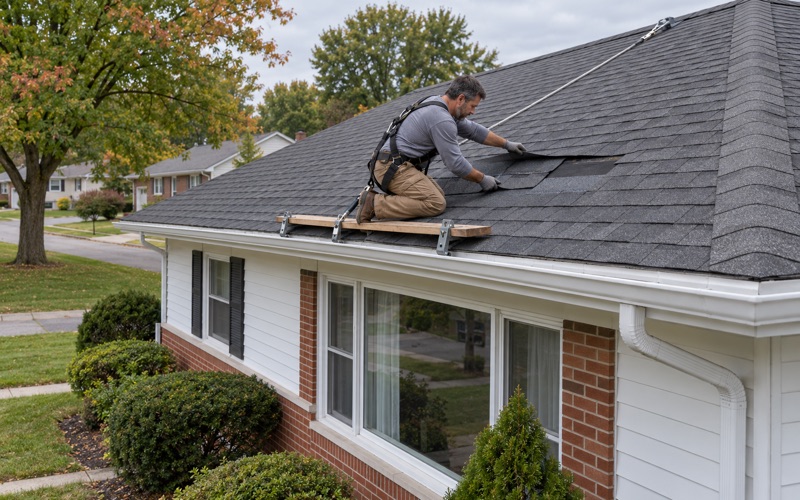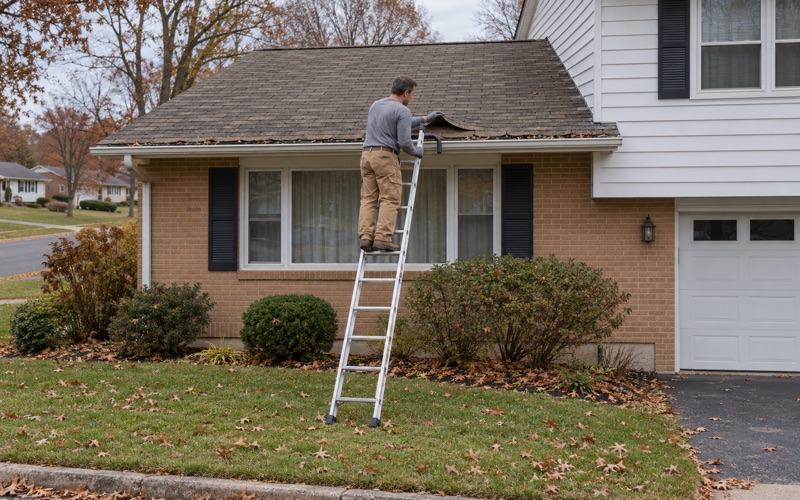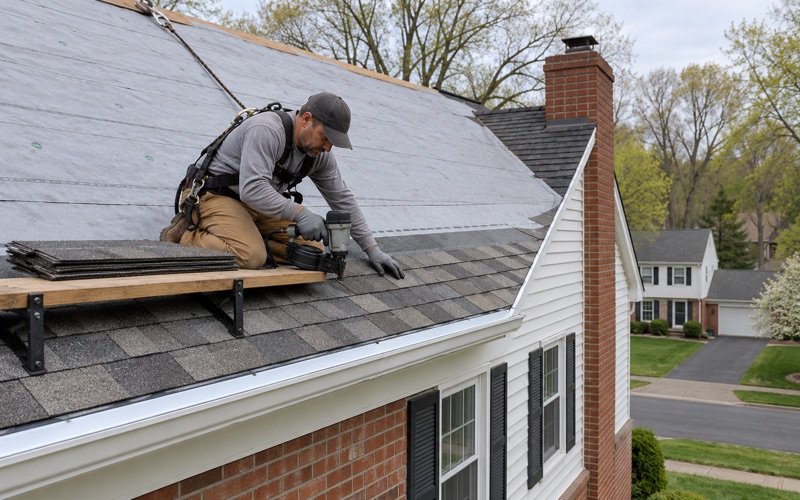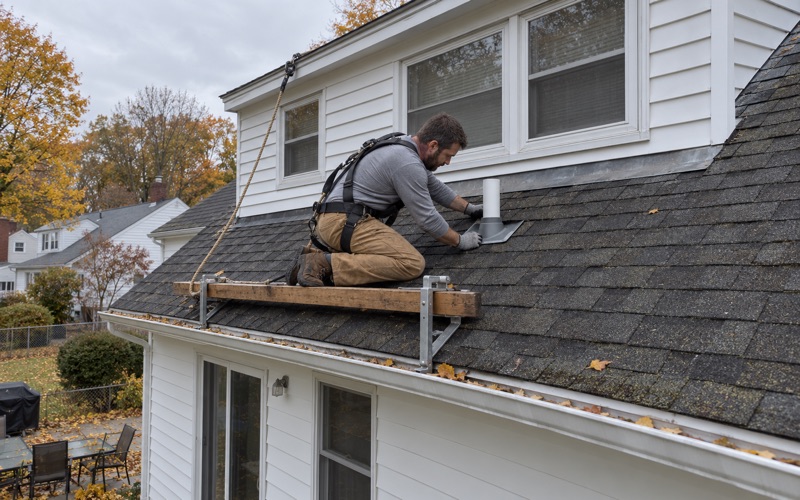
Lower Paxton Roofing has handled roofing in Hampden for more than 20 years, and much of the work across Hampden Township now starts with a question about a roof that is still young. When a newer house shows a ceiling stain or a lifted shingle, the useful first step is working out who is responsible for it before anyone climbs a ladder with a price in mind.
That is why our leak visits begin in the attic as well as on the roof. Water rarely enters where it shows up on a ceiling, and on a recently built home the true entry point decides whether the fix belongs to a warranty, to us, or to nobody yet. We trace it first and price it second.
We also tell owners plainly whether a roof can be repaired before replacement enters the conversation. Plenty of the roofs we look at here are either too new to replace or old enough that a full tear-off is the honest answer, and the difference shows up in the decking, the flashing and the attic, not in a sales pitch.
New Construction Across Hampden Since 2010
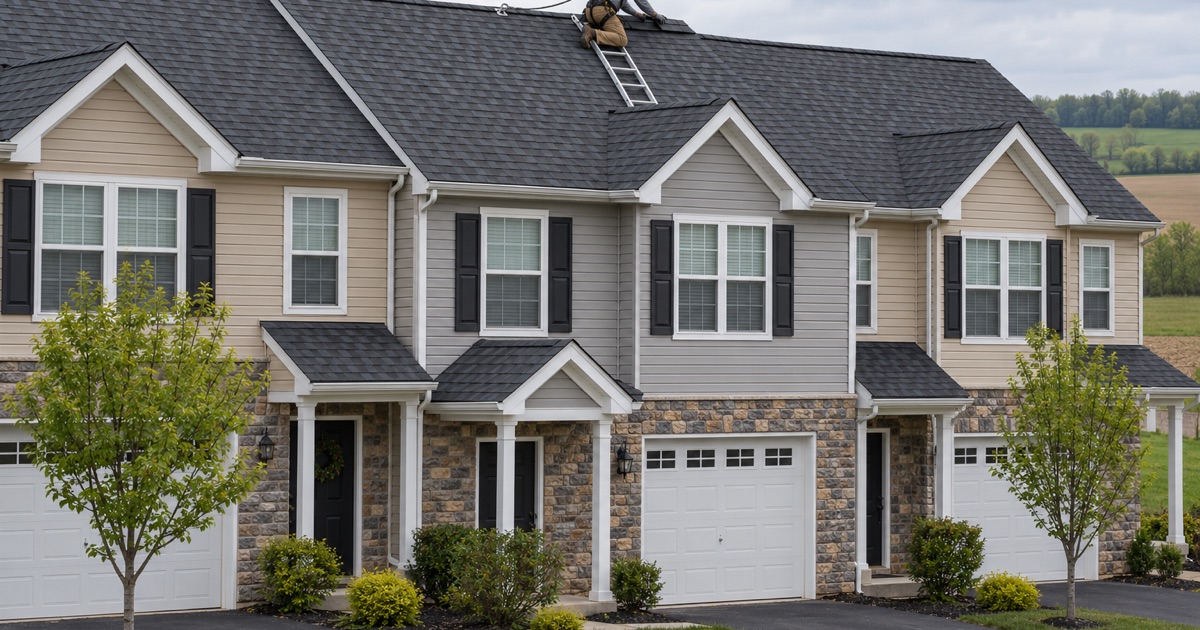
Hampden is not a finished suburb. A real share of its housing is recent, and that shapes both what owners ask us about and what we look for when we arrive.
Homes Built in 2010 or Later
Census figures from the American Community Survey count 2,089 of Hampden’s 13,637 homes, or 15.3 percent, as built in 2010 or later, and 277 of those went up from 2020 onward. For a township of this size, that is a large stock of roofs still on their original shingles, underlayment and flashing, many of them not yet through a single replacement cycle.
A roof that age usually fails in specific places rather than everywhere at once. Pipe boots, step flashing at sidewalls, valleys and the drip edge along the eaves are where installation shortcuts tend to show first. We check those details on every newer home, because a small miss at a boot or a wall now becomes a rotted sheet of decking a few winters from now.
Townes of Hampden Off Hampden Court
Building is still going on. Berks Homes is selling new construction townhomes at Townes of Hampden, a community whose sales office sits at 2005 Hampden Court, and its listings carry Enola mailing addresses. The builder describes it as low-maintenance townhome living on the West Shore, which for most buyers means the exterior, roof included, is something they expect not to think about.
Attached homes add their own roof questions. Shared roof planes, the lines between units and the flashing where one unit’s roof meets a neighboring wall all matter, and responsibility can depend on the community’s own documents. We look at the whole run of roof that drains toward a unit, not just the section above one owner’s front door, before saying where a problem starts.
Attic Moisture That Looks Like a Leak
New houses are built tight, and that changes how a roof ages from the inside. Bathroom fans, kitchen exhausts and dryer vents that end in the attic instead of outdoors push moist air against the underside of the sheathing. In a cold snap that moisture turns to frost on the nail tips, then drips when it thaws, which looks exactly like a roof leak.
We check every exhaust duct to see where it actually ends, and we compare ridge vent against soffit intake to see whether the attic can breathe. Sometimes the fix is a duct clamp and a few feet of insulated pipe, not roofing at all. Telling an owner that is part of giving a straight answer before anyone talks about replacement.
Looking for roofing closer to Palmyra? See Roofing in Palmyra.
Builder Warranties and First-Year Roof Leaks
For a new owner, the first roof question is rarely about replacement. It is about what the builder’s coverage handles and when that coverage stops.
Year One Versus Years Two to Ten
Berks Homes states its warranty as Year 1 for workmanship and materials and Years 2-10 for structural elements, and it says cosmetic items are not covered. Its warranty page, as it appears in search results, adds that roof leaks are included in the one-year coverage unless your own warranty says otherwise. The signed warranty document in your closing papers is the one that governs.
Read plainly, that puts the first year in a different category from every year after it. A leak from a missed shingle course or a poorly sealed boot is a workmanship and materials question while that first year runs. After it, the stated coverage turns to structural elements, so we suggest owners have the roof looked over before the first anniversary arrives.
Roof Leaks in a New Townhome’s First Year
When a first-year leak appears, the owner’s first call usually belongs to the builder, under whatever process the warranty sets out. We do not handle builder warranty claims and have no arrangement with any builder. What we can do, when an owner asks, is look at the attic and the roof and write down what we see.
That written record helps an owner describe the problem accurately. A stain on a bedroom ceiling may trace back to an exhaust duct, a missing kick-out flashing at a wall, or a valley that was never flashed properly. Knowing which one it is lets the owner ask the right question of the right party while the first year is still running.
Before the First Year Runs Out
Most first-year roof problems are quiet. Nail pops under a shingle, a ridge cap lifted by wind, or sealant left off a pipe boot may not leak until the second spring. A look in the attic for daylight, damp sheathing or frost on nails, along with a walk of the roof itself, catches most of these early.
If the roof is fine, we say so and leave it. If something needs attention, we photograph it and note where it is so the owner can raise it with the builder in writing. Nothing about that visit commits the owner to us, and we would rather a builder correct its own work than have an owner pay for it.
Hampden’s Permit Line: Re-Shingling Versus Structural Work
Every township in our area sets its own rule for re-roofing, and we check the rule for the house’s own municipality before we price a job. Hampden’s rule is short and worth knowing.
Non-Structural Roof Re-Shingling
Hampden Township Community Development requires a residential building permit for construction work that exceeds $500 total project cost. Its list of exceptions includes non-structural roof re-shingling, along with window replacement. For a straightforward reshingle, that exception is where the township’s own wording points, and it is the first thing we read against a scope.
The township does not define structural on that page, so we do not guess at it for an owner. When a job sits near the line, we ask Community Development directly before the scope is final. A permit question settled before work starts costs a phone call, while one settled after the roof is open can stop a crew partway through.
When Work Goes Past the Shingles
Structural roof work is not listed among the exceptions, so anything beyond reshingling deserves a check with the township first. Changes owners raise with us include altering a roof’s pitch, adding a dormer, reframing a sagging section, or replacing rafters damaged by a long-running leak. We treat each of those as a permit conversation rather than a roofing detail.
Decking is where this comes up most. Once old shingles are off, we photograph any damaged sheathing and show it to the owner before replacing it, at the per-sheet price written into the contract. If damage reaches the rafters or the framing below, we stop, explain what we found, and confirm the township’s requirement before going further.
Who to Call and What We Bring
Hampden Township Community Development works from the municipal building at 209 South Sporting Hill Road, Mechanicsburg, and can be reached at (717) 761-0119. Residential permits are handled in house, with a Codes Enforcement Officer serving as field inspector, so a question about a specific roof usually reaches someone who knows the township’s own process.
Our written scopes list tear-off, decking, underlayment, flashing, ventilation and gutters as separate lines. That layout helps with permit questions as much as with comparing estimates, since it shows plainly whether a job stays at the shingles or reaches into the structure, and an owner can hand it to the township when a question comes up.
Hampden’s 1970s and 1980s Houses on a Second or Third Roof
The newer homes get attention, but a larger share of Hampden’s housing is older. Census figures place 4,564 homes, or 33.5 percent of the township’s total, between 1970 and 1989, and those roofs sit at a very different stage.
Reading What the Last Roofer Left
A house built in the 1970s or 1980s has usually had at least one roof replaced by now, and some are on their third. Each previous job left its own decisions behind: a second layer laid over the first, flashing bent back into place rather than replaced, or a vent cut in without matching intake at the soffits.
We find out which of those we are dealing with before pricing anything. The attic tells most of the story through water staining on older sheathing, rusted nail tips, or insulation packed against the soffits. On the roof, a spongy step near the eaves or a doubled edge at the drip line usually means more than one layer is up there.
Tear-Off, Decking and the Two-Layer Limit
The residential code limits how many layers of roofing a house can carry, and a roof already on its second layer has to come off entirely before anything new goes on. A full tear-off also lets us see the decking, which on a forty-year-old house has often been through a leak or two that the attic never quite showed.
New underlayment goes down over sound decking, with a self-adhering ice barrier at the eaves and in valleys, then drip edge at eaves and rakes before the shingles. On these homes we usually discuss architectural shingles such as GAF Timberline HDZ, Owens Corning Duration or CertainTeed Landmark, and we price each the same way so owners can compare.
Flashing, Ventilation and Gutters Done With the Roof
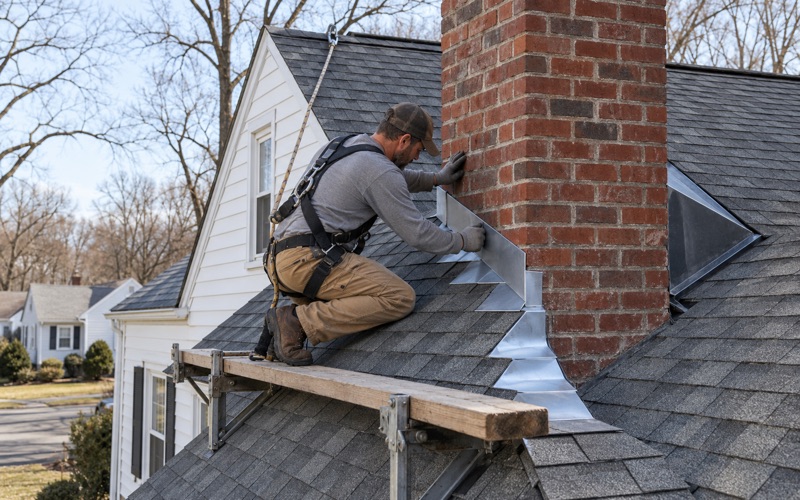
Step, counter and chimney flashing gets replaced with the roof instead of being reused under new shingles. On older homes the chimney flashing is often the original leak source, and a wide chimney may need a cricket to shed water around it. Reusing tired metal under a new roof just moves the next leak a few years down the line.
Ventilation and gutters get the same treatment. We balance the attic’s intake and exhaust on the new roof, and we size and pitch gutters and downspouts along with it rather than as an afterthought. At the end of each work day, the driveway, yard and gutters are cleaned and swept with a magnet for stray roofing nails.
- 20+ Years Roofing
- Itemized Written Scopes
- Repair Before Replace