Lower Paxton Roofing brings more than 20 years of work to roofing in Lebanon, and a large share of the calls we take here come from people who own a house they do not live in. A landlord’s roof question usually arrives with a deadline attached, and we plan the work around that deadline rather than around our own calendar.
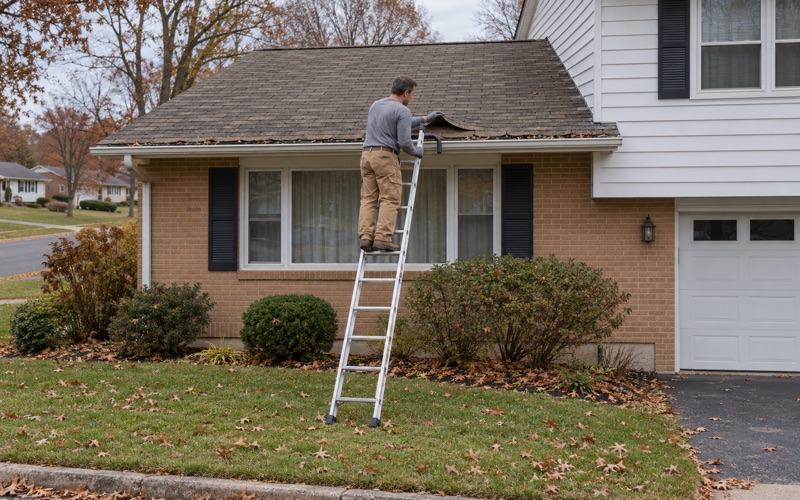
Our first visit to any leak covers two places: the roof surface and the attic or top-floor ceiling under it. Water rarely drips where it enters, so we follow the stain back to the opening before anyone talks price. Then you get a plain answer on whether the roof can be repaired, and replacement only comes up if a repair would not hold.
When a full roof is the right call, the written scope breaks tear-off, decking, underlayment, flashing, ventilation and gutters into separate lines. A property owner comparing our number with someone else’s can then line the two up item by item instead of guessing what a single total covers.
Lebanon’s Rented Rowhouses and the Yearly Registration
Who lives under these roofs
Lebanon is a city where renting is the norm rather than the exception. Of the 10,764 occupied homes counted by the 2024 American Community Survey, 5,732 are rented, which is 53.3 percent. That share shapes our work here, because the person who calls about a stain is often a tenant and the person who approves the repair is an owner who may live elsewhere.
We handle that split by sending photos and a short written finding to the owner the same day we look. The tenant hears what we saw and roughly when we plan to come back. Nobody has to relay a description of a roof secondhand, and the owner can decide without driving across town to climb a ladder.
Rowhouses held as rentals
Among the rented homes, 1,686 are one-unit attached houses, the rowhouse form common across the city. For an owner holding one or several of these as rentals, the roof matters less as a construction detail and more as the thing standing between the unit and its yearly license. A small leak over a back bedroom becomes a paperwork problem long before it becomes a structural one.
Working on an occupied rental means a tenant is home while we are overhead. We give the owner a start date to pass along, keep ladders and material clear of the front door, and finish each day by cleaning the yard, the walk and the gutters, with a magnet sweep for nails so nobody steps on one on the way to work.
Registering each unit with the Department of Public Safety
Every owner of a residential rental unit in the city must register each unit with the Department of Public Safety, and the registration is renewed every year. Effective January 1, 2026, the fee is $60 per dwelling unit and $30 per rooming house unit. The program sits under Article 1907 of the city’s Codified Ordinances and is run by the department’s Code Enforcement staff.
We are not part of that process and do not file anything for owners. What we can do is make sure the roof is not the reason a unit stalls. When a landlord knows a registration or inspection is coming, we can look over the roof and the top-floor ceilings beforehand and say plainly what needs attention and what can wait.
Looking for roofing closer to Maytown? See Maytown Roofing.
‘Sealed From the Weather’: Where the Roof Meets the Rental Checklist
What line 304.1 says
The city’s Routine Rental Inspection Checklist, form CE 413 revised 09/25/25, is built on the 2018 International Property Maintenance Code. Under Exterior Structure, item 304.1 reads: ‘Structure in sound condition and sealed from the weather.’ The checklist does not list the roof as its own separate item, but a roof that lets water through is hard to square with that line.
The checklist also says plainly that it is not an all-encompassing list of every code requirement. For an owner, the practical reading is that a building with an active leak is not sealed from the weather, whatever the exact source. That is why we treat a leaking rental roof as a licensing question first and a repair question second.
Corrected before the license moves forward
The checklist header states that all items must be corrected prior to being forwarded for the license issuance process. The footer adds that any items not corrected will result in an official Notice of Violation issued by the Department of Public Safety, Code Enforcement. A leak tied to a checklist item, in other words, holds up the license until the fix is done.
That changes how we schedule. A rental repair tied to a pending license gets a firm date, and when the work is finished the owner gets photos of the repaired area and a written note of what was done. That record is the owner’s to use however the city’s process calls for; we do not speak for the department or predict its decisions.
Flashing is usually the opening
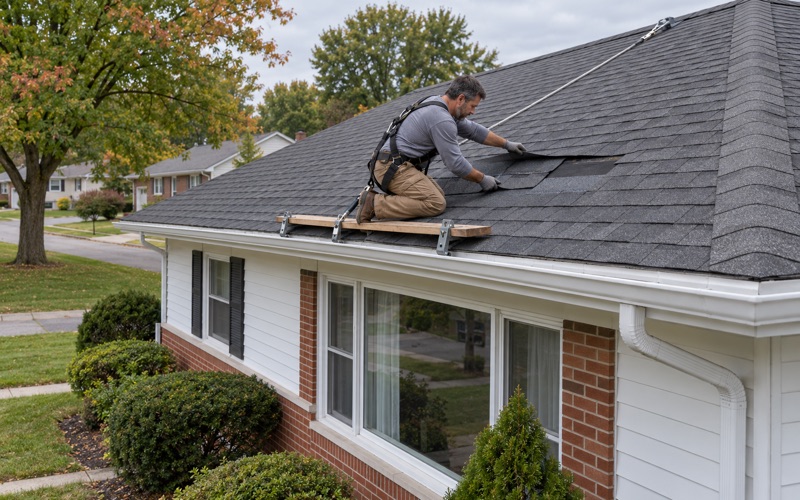
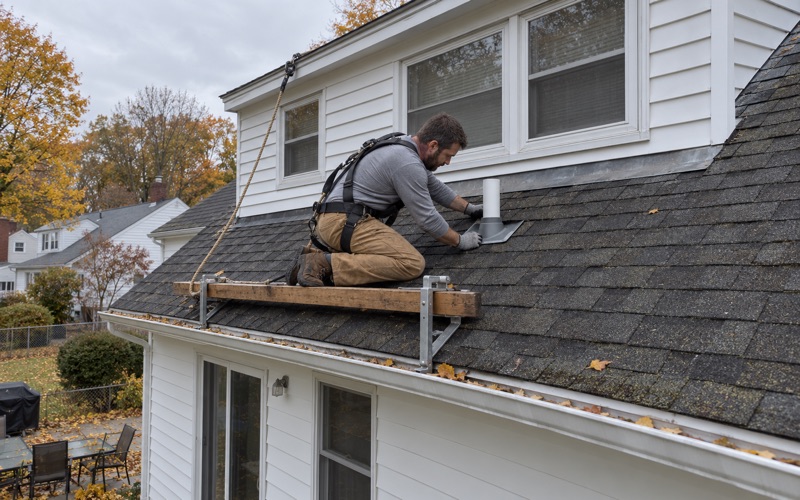
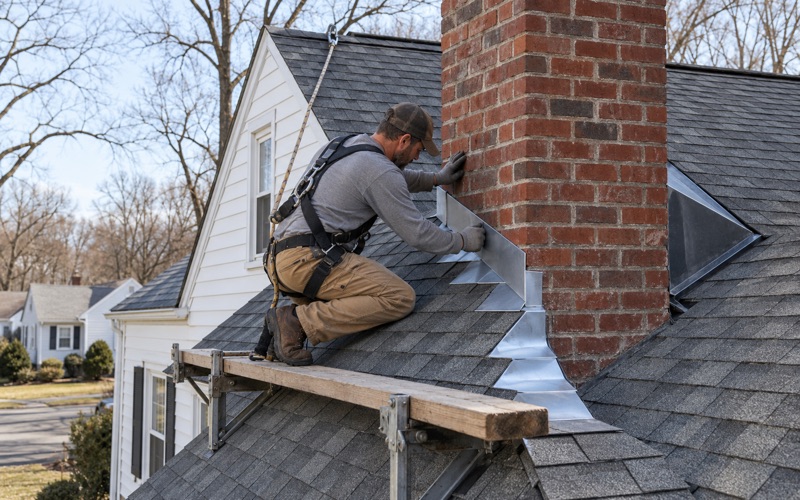
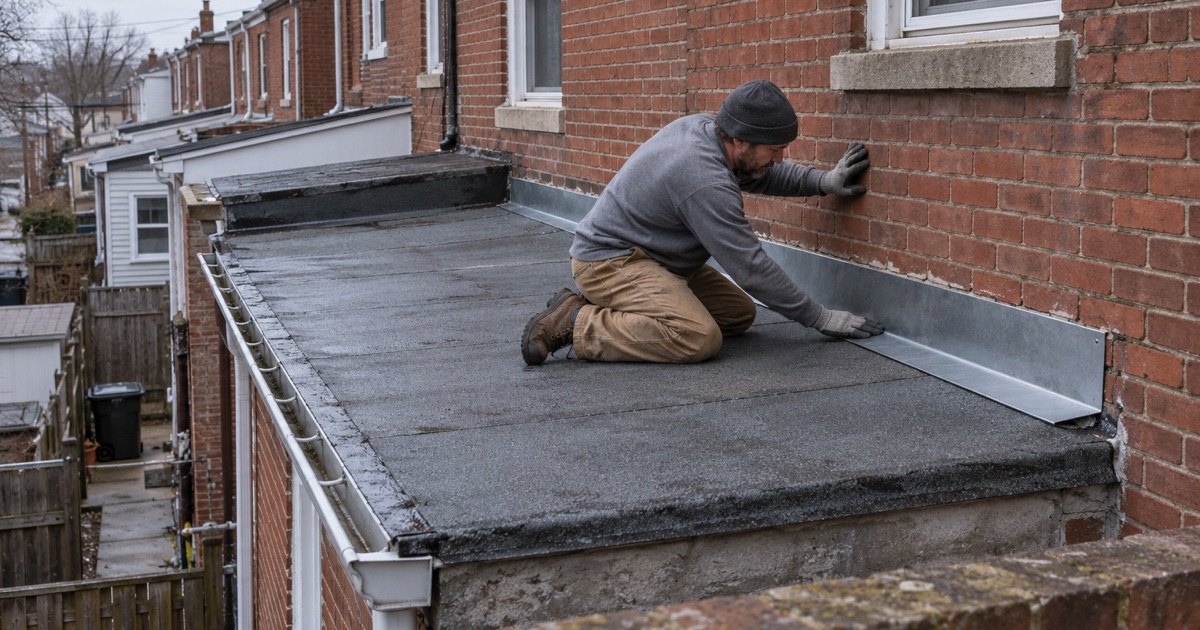
On many leaks, the opening is at the flashing rather than out in the field of shingles: a chimney with cracked counter flashing, a plumbing vent with a split pipe boot, or a wall junction where step flashing has pulled loose. Those are small openings, and closing them is often a repair rather than a new roof.
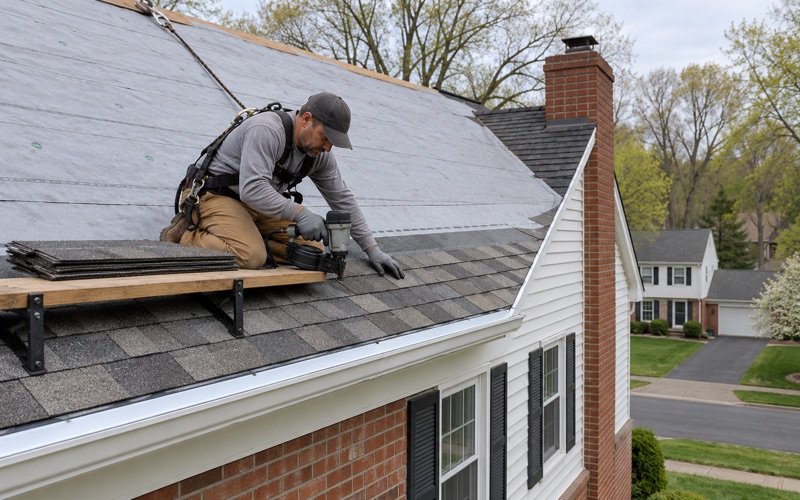
When a roof does get replaced, we replace the step, counter and chimney flashing with it rather than bending the old metal back into place under new shingles. Reused flashing is one of the common ways a fresh roof starts leaking within a few seasons, and on a rental that means the same checklist problem coming back.
Water-Stained Ceilings and What They Mean Upstairs
Line 305.3 and the drop ceiling
Inside the unit, item 305.3 on the same checklist says drop ceiling panels must be free of water stains and not have missing panels. A neighboring line, 305.2/305.3, asks for ceilings in good condition with no holes or large cracks that pose a safety issue. A brown ring on a ceiling tile is the most visible sign anyone walking through the unit will notice.
Swapping a stained panel for a clean one does not solve anything if water is still coming in above it. The next storm marks the new tile, and the owner pays twice. We would rather find the source first, so the replacement panel stays clean through the seasons that follow instead of announcing the same leak again.
Tracing a stain back to the roof
A stain on a top-floor ceiling rarely sits directly under the opening. Water lands on decking or a rafter, runs along it, and drops where gravity finally wins. That is why our leak visits always include the attic or the space above the ceiling, not just the shingles, so we can follow the wet wood back to where it starts.
In a rowhouse, the space above the top floor can be tight, sometimes only a shallow crawl space under a low roof. We work with whatever access the building has, and when there is none, we read the roof surface, the flashing and the ceiling together. The goal stays the same: a repair aimed at the actual opening, not a guess.
When the stain is not the roof
Not every stained ceiling is a roof problem. Condensation from a poorly vented attic, a bathroom fan that dumps moist air into the ceiling space, or an overflowing gutter backing water under the eave can all mark a ceiling. We say so when that is what we find, because new shingles will not fix a ventilation or drainage issue.
Where ventilation is the cause, the fix is usually a ridge vent paired with enough soffit intake to balance it, measured by net free area rather than by eye. Where gutters are the cause, we size and pitch them as part of the roof plan, since a gutter that holds water against the fascia can stain the same ceiling a leak would.
Shingle-Only Re-Roofs Versus Other Roof Work in the City
What the Quick Reference Guide exempts
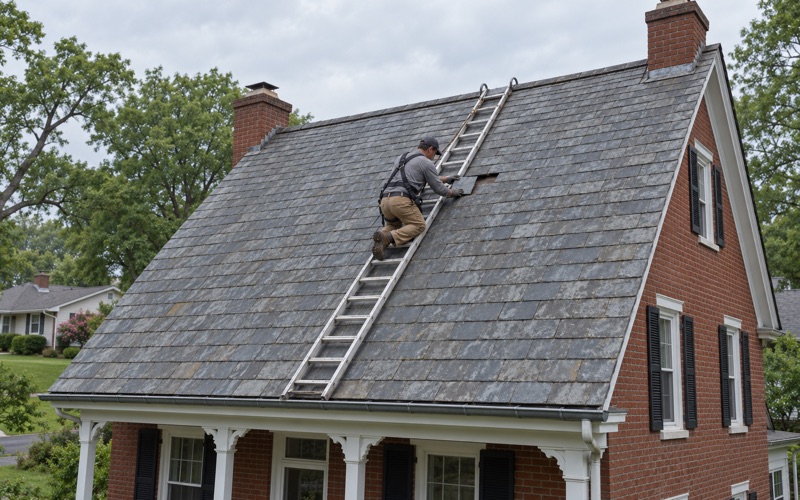
The City of Lebanon’s Quick Reference Guide to Common Residential Projects lists ‘Re-Roof (residential shingle replacement only)’ under No Permit Required, along with siding and gutter repair. For a rental owner replacing worn asphalt shingles on a house, that removes one step from the schedule. The wording is narrow, though, and we read it exactly as written.
The same guide lists ‘New roof over existing deck/patio areas’ under Yes, You Need A Permit. The city’s building and zoning page adds that all commercial work other than painting or carpeting requires a permit. A shingle tear-off on a residential rowhouse and a membrane roof on a commercial building are treated differently, and we check which one a job is before pricing it.
Low-slope and commercial roofs
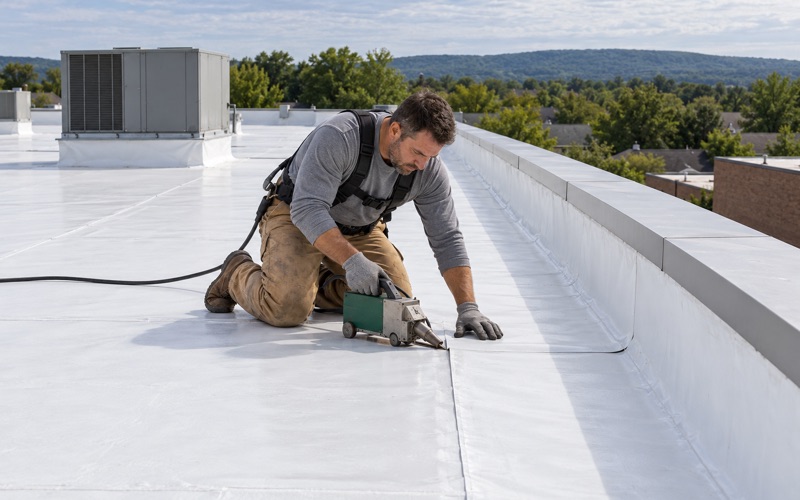
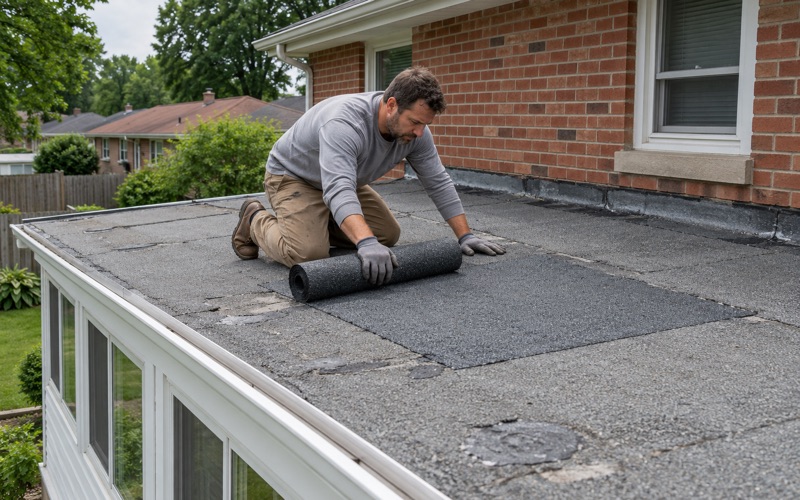
Low-slope roofs covered in EPDM rubber, TPO or torch-down modified bitumen are not shingle replacements, and the guide’s exemption does not reach them. On a commercial building, any roof work needs a permit. We do not assume an exemption the city’s own guide does not give, and we tell the owner which side of the line the job sits on at the estimate.
When a permit is needed, the City of Lebanon Zoning Office receives the application and forwards it to the inspection company the applicant chooses. The city names Commonwealth Code Inspection Services, Inc. and ABI Inspection Services as its contracted agencies. We build that step into the schedule so the owner is not surprised by it later.
When in doubt, ask the Zoning Officer
The guide itself says that if in doubt, call the City of Lebanon Zoning Officer at 717-639-2800, extension 403. We follow the same advice. Because every municipality around here sets its own re-roof rule, we confirm the rule for the property’s own municipality before we price anything, and inside the city line that means the city’s guide and its Zoning Office.
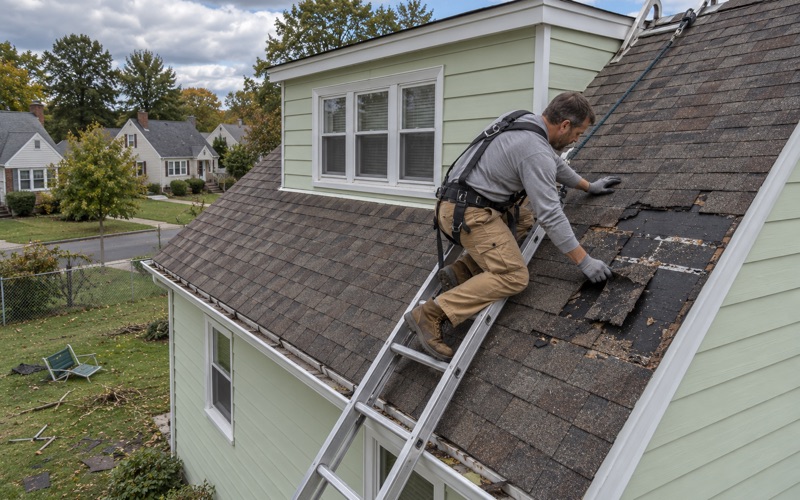
Whether or not a permit applies, damaged decking that turns up once the old shingles are off is photographed and shown to the owner before we replace it, at the per-sheet price written into the contract. Storm damage gets the same treatment, written up for the owner’s own insurance claim. For a landlord managing a unit from a distance, those photos stand in for a site visit.
- 20+ Years Roofing
- Itemized Written Scopes
- Repair Before Replace