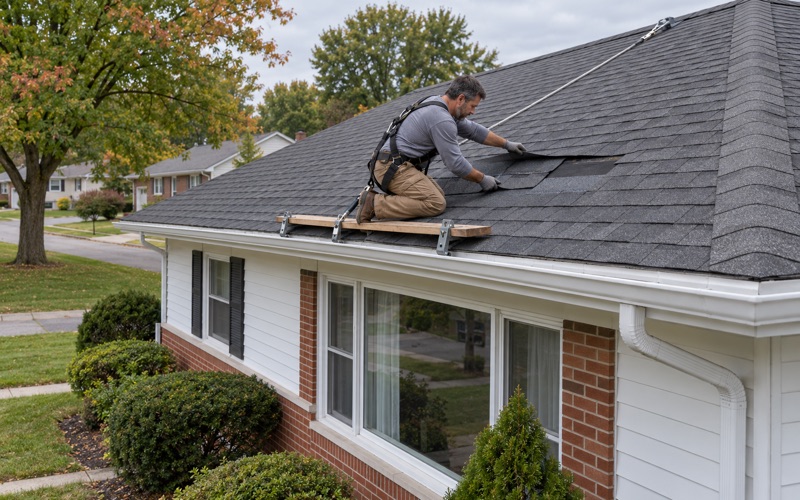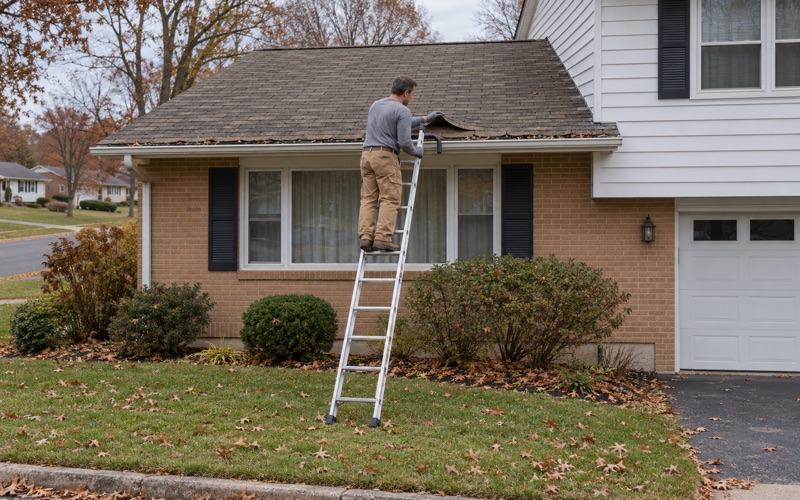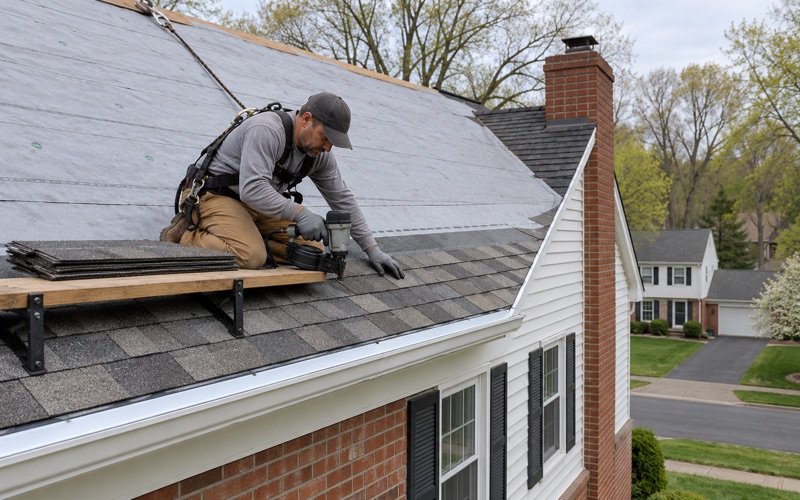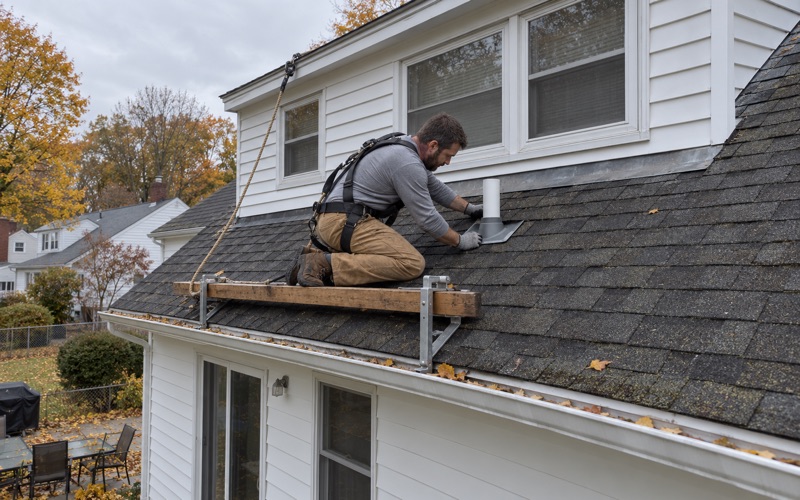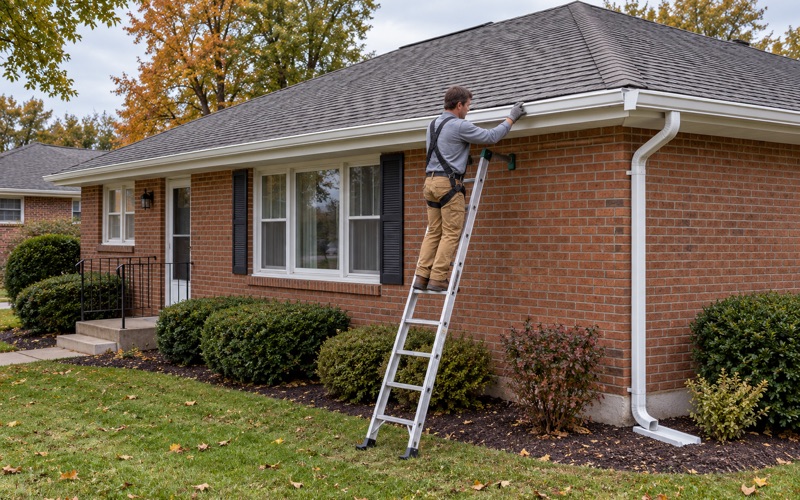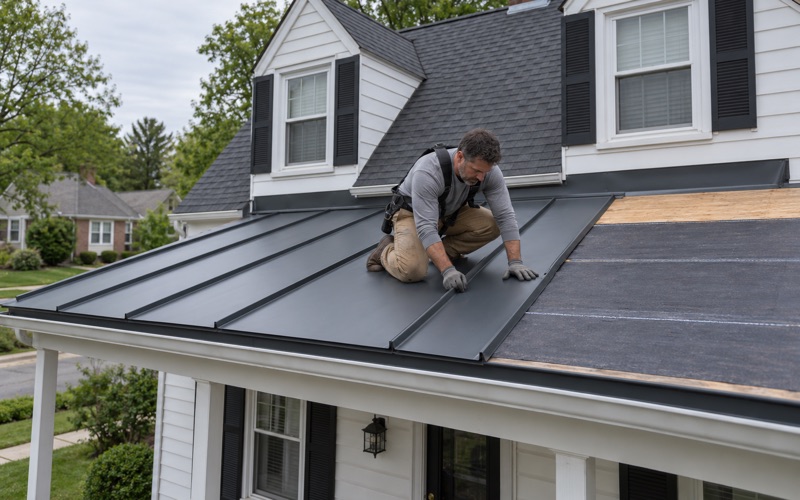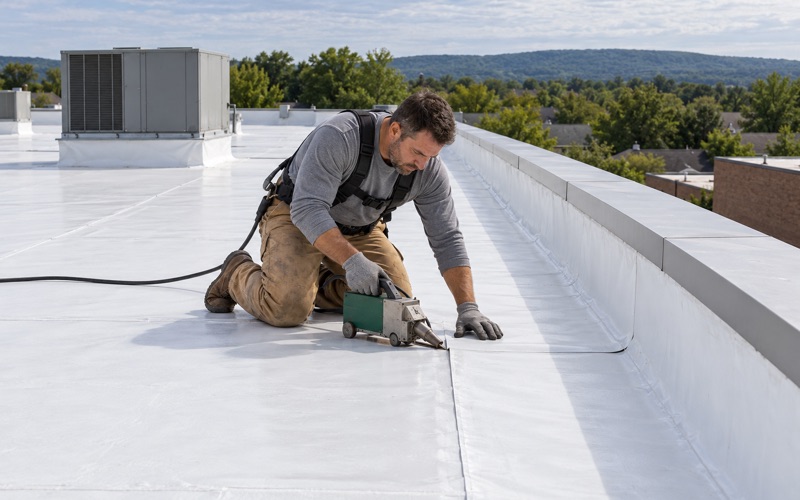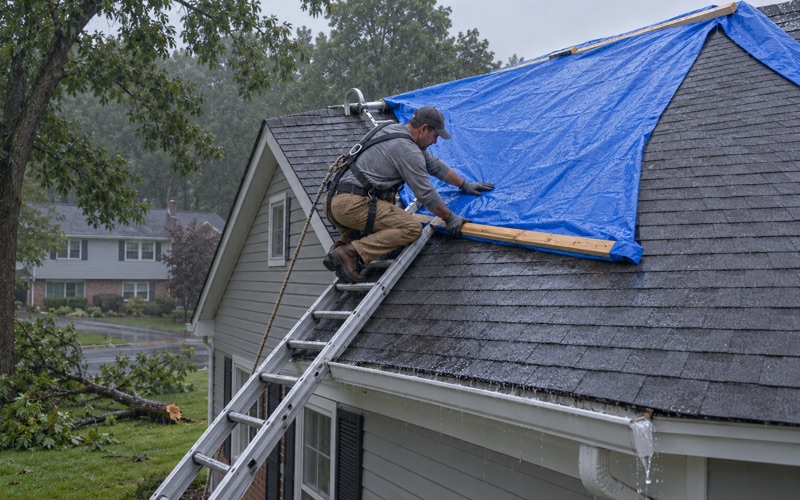
Lower Paxton Roofing has spent more than 20 years on roofing in Lititz and across the surrounding region, and the work here starts with a question many contractors skip: which part of the borough is the house in? A roof on a side street of postwar ranches and a roof facing the Moravian church square are both Lititz roofs, but they do not follow the same path from estimate to tear-off.
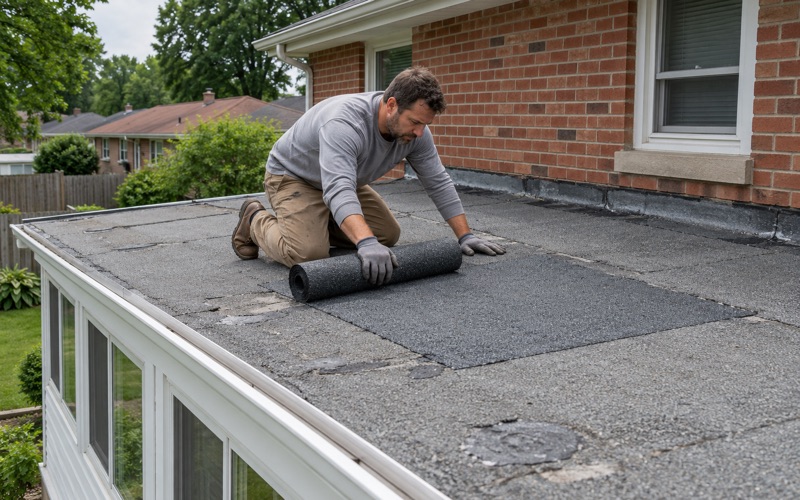
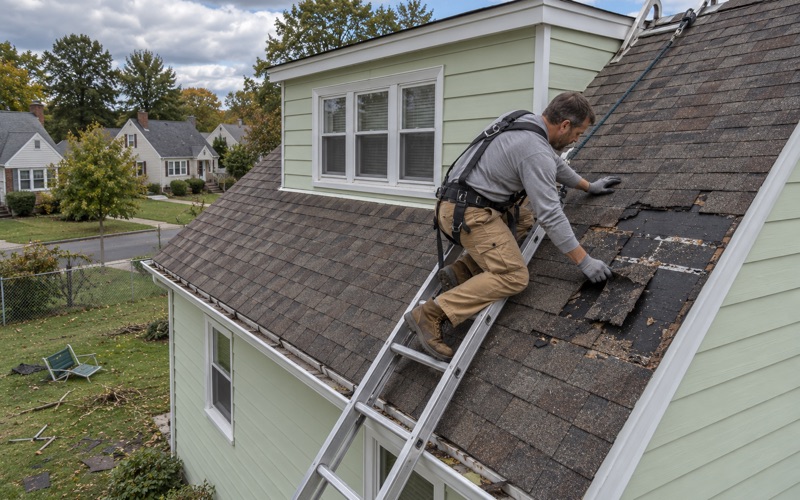
We handle shingle, slate, metal and low-slope roofs, from a single leak to a full replacement. When water is coming in, we go into the attic as well as onto the roof, because the stain on a ceiling is rarely directly under the opening. Once we find where the water actually enters, we tell you plainly whether a repair will hold before anyone talks about a new roof.
When a replacement is the right answer, the written scope breaks tear-off, decking, underlayment, flashing, ventilation and gutters into their own lines. That way you can set our number beside anyone else’s and compare item by item, and on the oldest blocks of Lititz you can also see which parts of the plan touch the outside of a building that the borough looks at more closely.
The Moravian Core and Its 1986 Listing
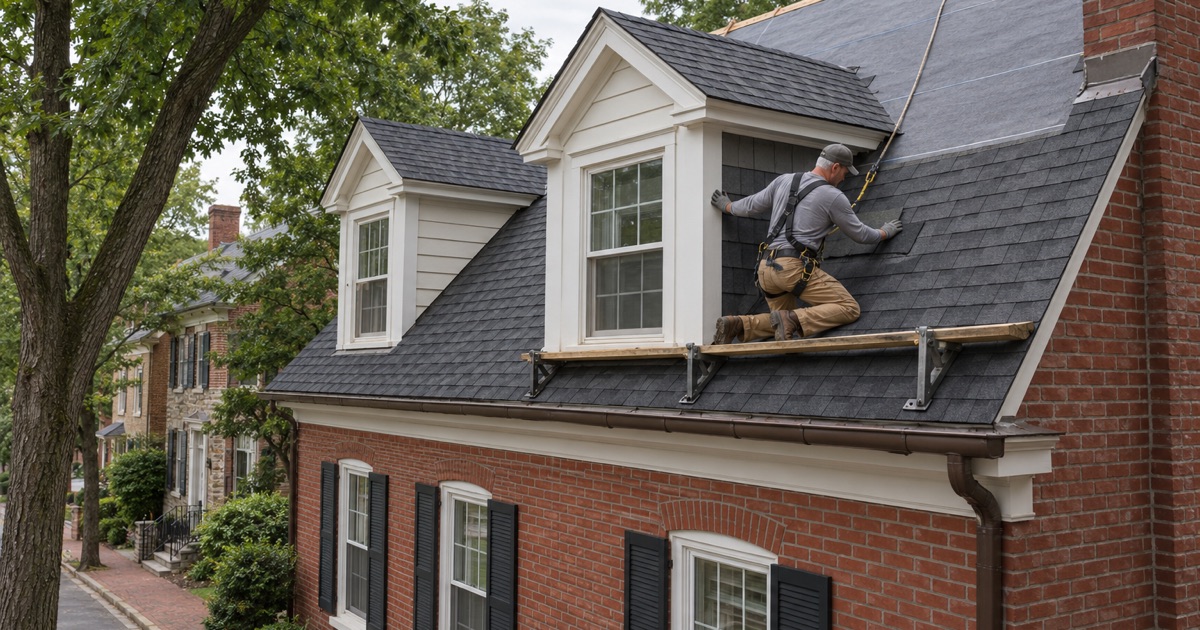
Lititz was founded by members of the Moravian Church in 1756, and the town’s oldest blocks still gather around the church square on East Main Street. That core is the reason a roof in the middle of the borough can carry more planning than the same roof a few streets away.
The church square and its oldest buildings
The square holds some of the earliest Moravian buildings still standing in Lititz. The Sisters’ House dates to 1758, the Brothers’ House to 1759, and the Moravian Church itself to 1787. Nearby, the Mary Dixon Memorial Chapel of 1884 stands at Linden Hall, the girls’ boarding school founded in 1746.
These buildings set the tone for the streets around them. The rooflines, the pitch, the materials and the way water leaves the eaves are part of what people see when they walk the square, and owners of the houses nearby tend to care about keeping that character intact.
What the National Register district covers
On May 9, 1986, the Lititz Moravian Historic District was listed on the National Register of Historic Places. It is roughly bounded by East Main, Willow and Locust, Marion and Orange, and South Cedar and South and North Broad Streets. The listing counts 113 contributing buildings, one site and two structures, dating from about 1755 to 1930.
A National Register listing records what is historically significant. It is not, by itself, the same thing as the area the borough reviews for exterior changes, and the two are described differently. We keep them separate when we plan a job, because a homeowner who assumes the Register boundary is the review line can end up surprised in either direction.
Why the date range matters on the roof
A district whose buildings span nearly two centuries does not have one kind of roof. Some houses carry slate, some carry standing seam metal, and many have been re-roofed in asphalt more than once since they were built. Before we write a scope on one of these houses, we look at what is on it now and what the layers underneath tell us.
Under the current code, a roof can carry no more than two layers, and older houses often already have two. That usually means a full tear-off down to the boards, which is where the age of the building starts to show in the decking and the flashing.
Looking for roofing closer to Linglestown? See Roofing in Linglestown.
The Historic Area Advisory Committee Since 1972
Lititz Borough set up its Historic Area Advisory Committee in 1972, replacing the earlier Board of Historical Review. Its stated purpose is to assist the Zoning Officer concerning exterior architectural changes to structures and buildings in the borough’s Historical Area.
How the committee works
The committee has seven members appointed to five-year terms. A 2025 profile of the group described it as working with the Lititz Zoning Hearing Board in an advisory capacity on decisions about exterior changes. That same profile put the volume at roughly 25 to 30 applications a year.
Those applications cover a wide range of exterior work. The profile listed windows, doors, porches, lighting and landscaping, and roofs among them, and the committee’s own page notes that its review also includes the installation of signs.
Advice, not a rulebook we can quote
The committee’s role is advisory. We have not read the borough ordinance chapter that governs the Historical Area, so we do not tell owners that a particular material is required or ruled out there. What we do tell them is that an exterior roof change in that area is the kind of work the committee sees, and that its view belongs in the plan early.
Getting that order right is mostly about time. A shingle color, a switch from one material to another, or a change to the visible flashing at a chimney is easy to discuss before materials are ordered and expensive to revisit after they are on a pallet in the driveway.
Who to call at the borough
Questions about zoning and the Historical Area go to the Lititz Borough office at (717) 626-2044, where the Zoning Officer, Lori McEntarfer, handles them. Code inspections inside the borough are handled exclusively by Code Administrators, Inc., the inspection service the borough has authorized for that work.
We did not find a borough statement on whether a re-roof needs a permit in Lititz. Because every township and borough in our service area sets its own rule, we confirm the current requirement for your address with the borough before we price the job, rather than assuming one answer from the town next door.
Planning a Roof Change on Main Street West of Linden Hall
The Historical Area the committee reviews is described as the blocks of Main Street primarily west of Linden Hall, reaching about two blocks north of East Main Street and one block south. If your house sits on those blocks, a visible change to the roof is worth raising with the borough before the order goes in.
Start with what is already on the roof
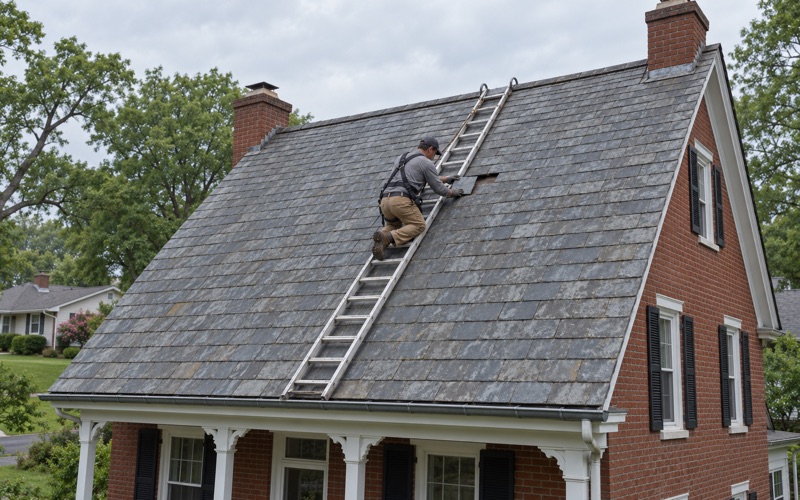
On these blocks we begin with an honest read of the existing roof. A sound slate roof with a few broken pieces is repaired slate by slate, using copper nails and slate hooks, rather than torn off. A tired asphalt roof on a house that once wore slate is a different conversation, and we lay out the options without pushing one.
That inspection also covers the attic. On a house this old, water can track along rafters and come through well away from where it entered, so we trace it before we decide whether the job is a repair, a section, or the whole roof.
Write the exterior change down before ordering
When the plan does change the outside of the house, we write the change into the scope in plain terms. That might be a new material, a different shingle profile, new copper or painted metal at the valleys, or a ridge vent where none existed. A clear written description makes it easier to bring the plan to the borough and to get a useful answer.
Only after that conversation do we order materials. For architectural shingles such as GAF Timberline HDZ, Owens Corning Duration or CertainTeed Landmark, the color and profile are part of what people on the street will see, so we treat the choice as part of the review rather than an afterthought.
Flashing and chimneys on Main Street
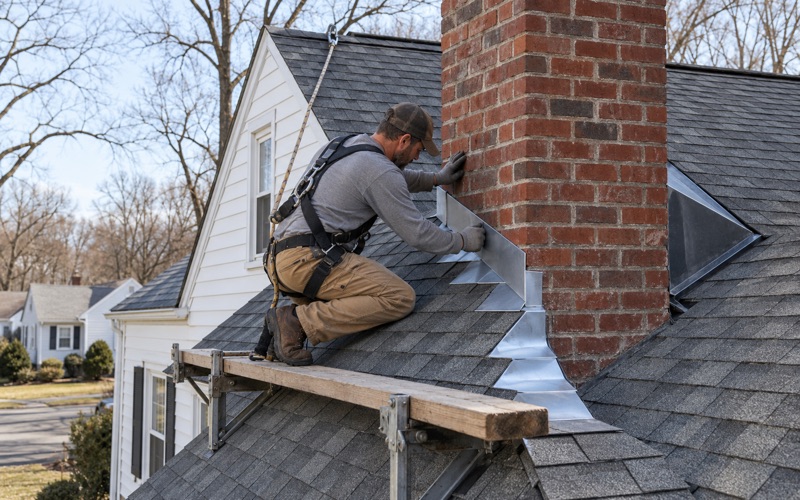
Many of the houses on these blocks have masonry chimneys and walls that meet the roof at awkward angles. We replace step, counter and chimney flashing with the roof instead of reusing the old metal under new material, and where a wide chimney sits across the slope we add a cricket so water is turned aside rather than pooling behind it.
Counter flashing set into a reglet cut in the masonry gives a cleaner, longer-lasting joint than metal caulked to the face of the brick. On a visible chimney near the square, that detail also looks closer to how the roof was meant to be finished.
Roofs on Lititz’s Prewar and Attached Houses
Most Lititz roofs sit outside the Historical Area, but the housing stock across the borough still leans older and more connected than in many towns. Census estimates put 1,310 of the borough’s 4,112 homes, about 31.9 percent, as built in 1939 or earlier, and 1,192, about 29.0 percent, as one-unit attached houses.
Shared walls and shared roof lines
An attached house shares at least one wall, and often a continuous roof plane, with its neighbor. Replacing one side means building a clean tie-in where the new roof meets the old, with the flashing and underlayment carried far enough that water cannot run back under the joint. We talk with owners about where their roof ends and the neighbor’s begins before we set a tear-off line.
Ventilation on these houses also needs care. A ridge vent only works with enough intake at the soffits, and on a row of joined roofs the intake has to be planned for the one house being worked on without borrowing air from next door.
Decking on prewar houses
Houses built before 1940 were often sheathed in solid boards rather than plywood, and decades of leaks can leave some of those boards soft. When we find damaged decking after the old roof comes off, we photograph it and show you before replacing it, at the per-sheet price already written into the contract.
New underlayment goes down over sound decking, with a self-adhering ice barrier at the eaves where the code calls for it and a synthetic underlayment across the rest of the field. Drip edge goes along the eaves and rakes so water leaves the roof cleanly.
Gutters, solar and the end of each day
On a narrow lot with a house close to the sidewalk, gutters matter as much as the roof. We size and pitch gutters and downspouts with the new roof, and add kick-out flashing where a roof edge meets a wall so water is carried into the gutter instead of down the siding.
If your roof carries solar panels, we schedule the removal and reinstall as part of the plan from the start. And on every job, the driveway, yard and gutters are cleaned at the end of each work day, with a magnet sweep for roofing nails, so the street looks the way it did when we arrived.
- 20+ Years Roofing
- Itemized Written Scopes
- Repair Before Replace