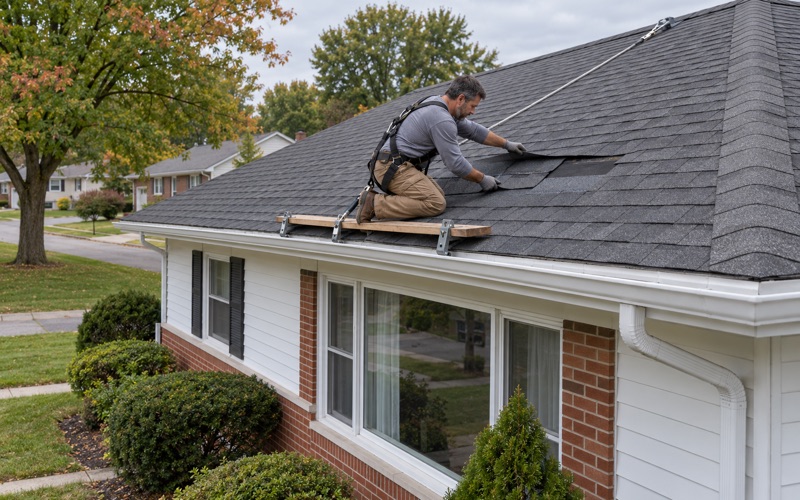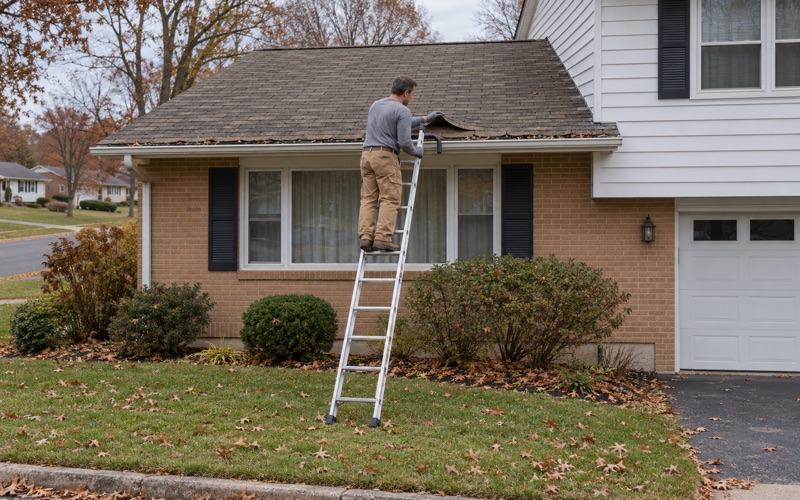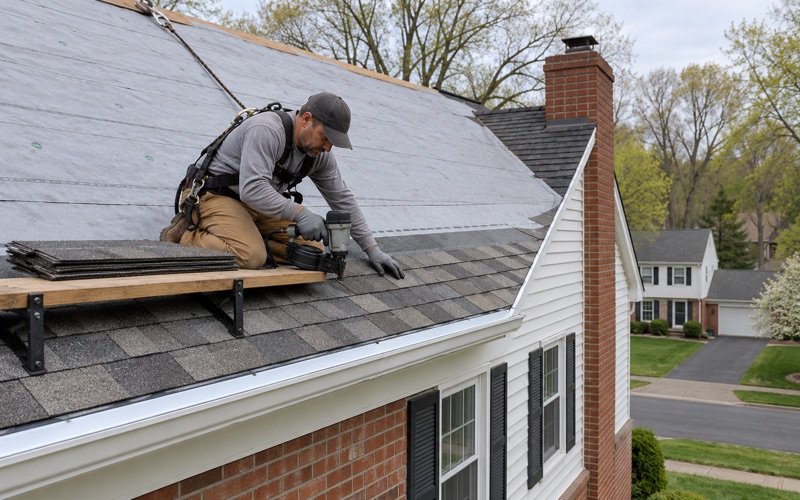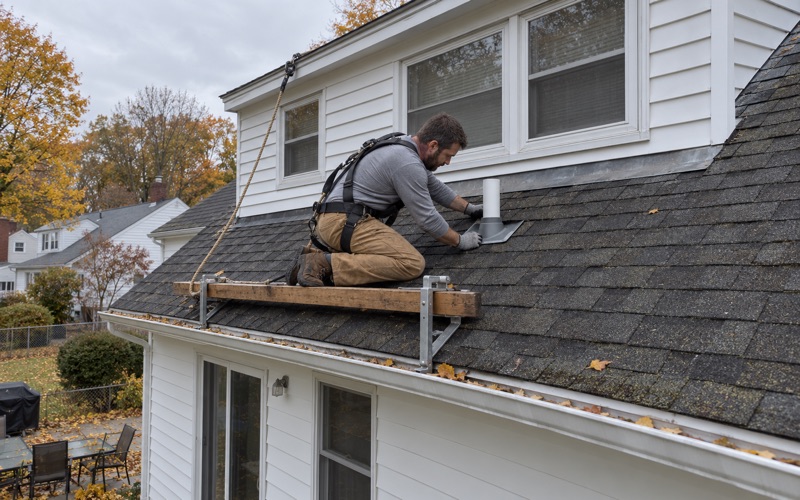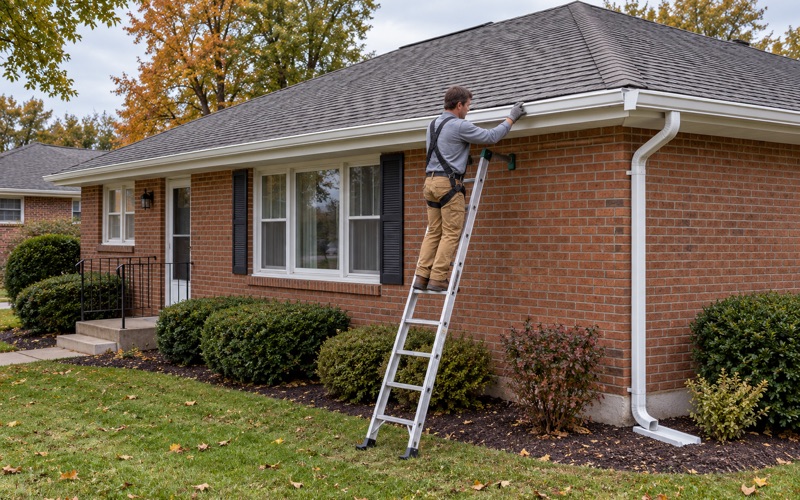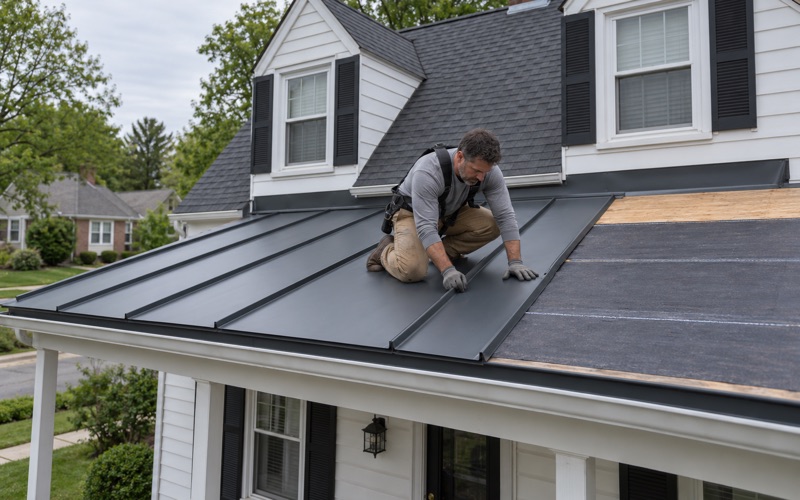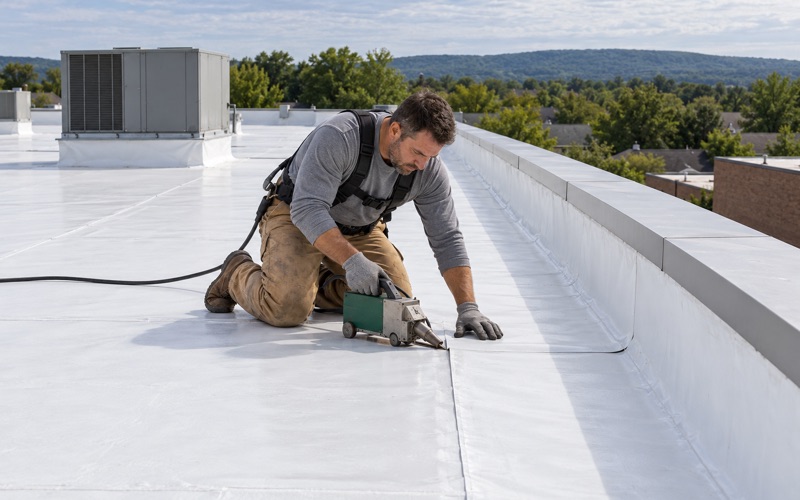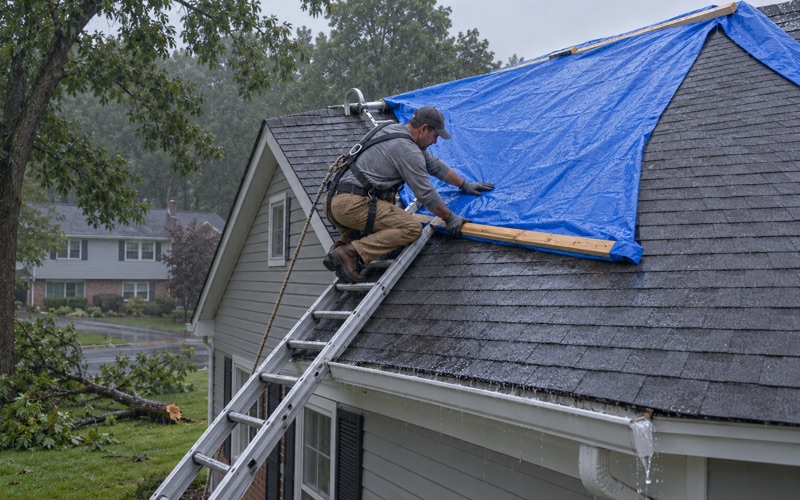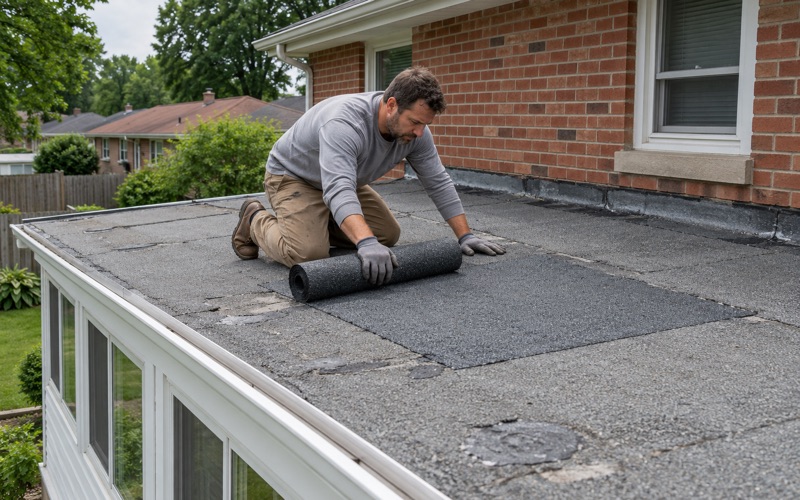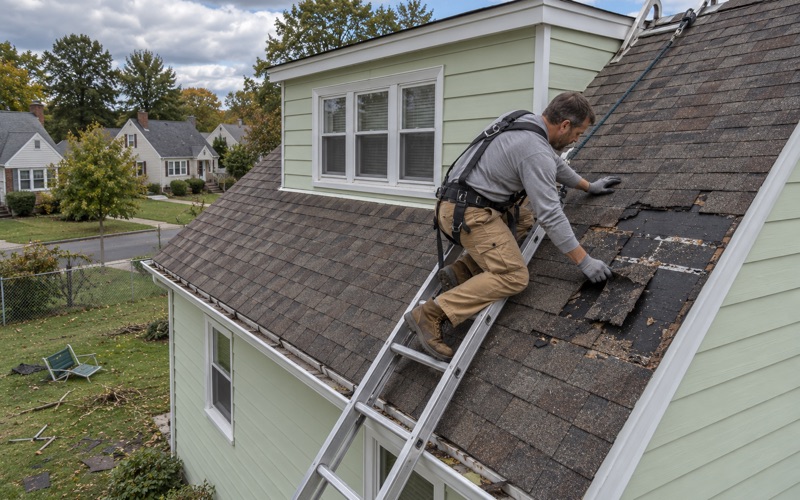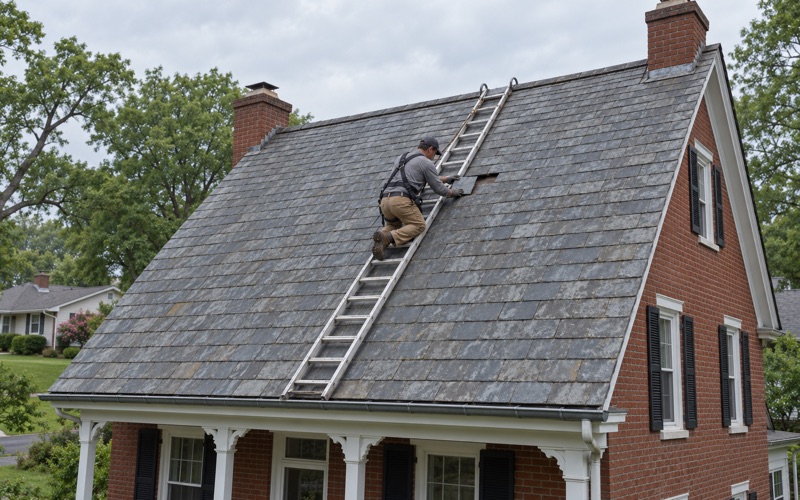
Lower Paxton Roofing has spent more than 20 years on roofing in Lower Swatara and the townships around it, and the work here starts the way it does everywhere: with a straight look at what the roof actually needs. A leak call gets a trip into the attic as well as onto the shingles, so we find where water really enters before we price anything.
Our first answer on any worn roof is whether it can be repaired. Replacement comes up only after that question is settled honestly, and when it does, the written scope breaks tear-off, decking, underlayment, flashing, ventilation and gutters into separate lines. That layout lets an owner hold our estimate beside another one and compare the two item by item.
One thing sets jobs in this township apart from most of the region. A large airport sits inside the township line, and the federal rules around its runway can reach a roofing job when tall equipment is involved. The sections below explain where that matters, how far ahead it has to be planned, and what the local housing stock tends to need.
Roofing Next to Harrisburg International Airport
Runway 13/31 Inside the Township
Harrisburg International Airport sits within Lower Swatara Township on the Susquehanna River, and the Susquehanna Area Regional Airport Authority has owned it since 1998. Its single asphalt runway, 13/31, measures 10,001 feet long and 200 feet wide, at a field elevation of 310 feet. Many people know the airport by its MDT code, which comes from its Middletown postal address.
That postal detail causes confusion on its own. Every location in the township carries a Middletown address, yet Lower Swatara is a separate first class township, incorporated from Swatara Township on November 7, 1961. When we check the rules for a house here, we check them with Lower Swatara, not with Middletown Borough and not with Swatara Township.
The FAA’s 100-to-1 Surface
Federal rule 14 CFR 77.9 sets out when the FAA must be told about construction or alteration near an airport. For an airport whose longest runway is more than 3,200 feet, notice is required for anything that would rise above an imaginary surface sloping 100 to 1 for a horizontal distance of 20,000 feet from the nearest point of the nearest runway.
A runway of 10,001 feet clears that threshold easily, so the surface applies around this airport. In plain terms, it climbs one foot for every hundred feet of distance from the runway. Whether a particular piece of equipment pokes through it depends on the ground elevation at the house, the height of the machine and the exact distance, all figured together.
Why Most Roof Jobs Never Touch It
The rule is about height above that surface, not about roofing. A crew working from ladders, roof jacks and a material hoist on a one- or two-story house is usually not what the regulation is aimed at, though only the FAA’s own notice criteria settle a given case. Shingles are not a federal question, and a standard tear-off does not become one because of where the house sits.
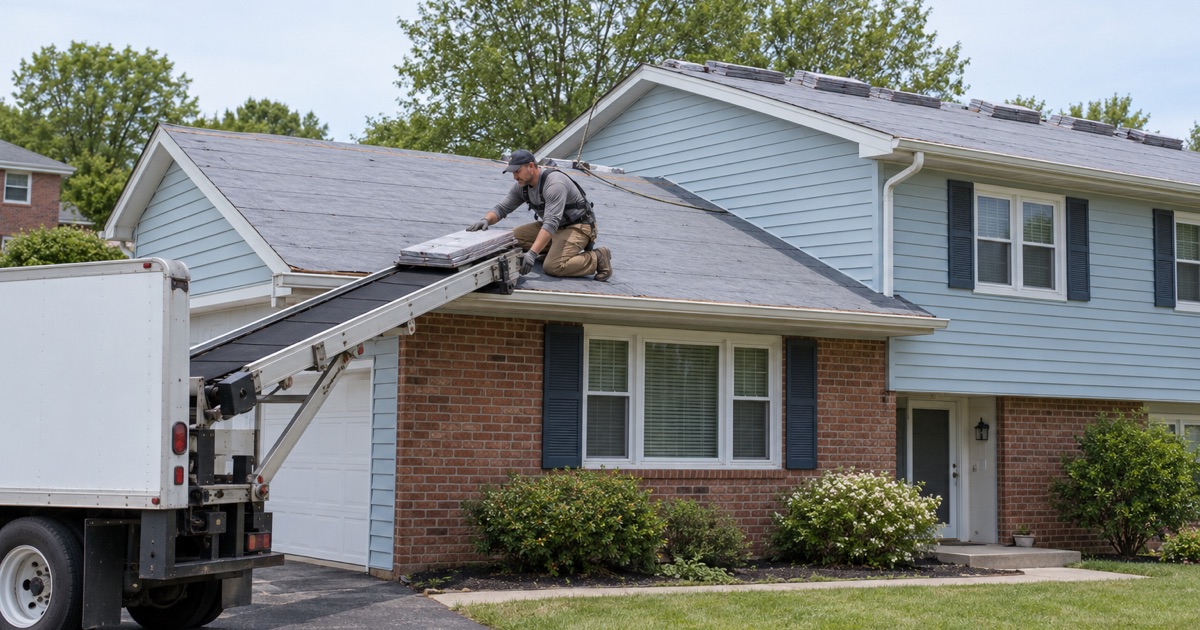
Where it can come into play is the crane or boom lift. A boom truck that sets bundles on a ridge, or a lift used to reach a steep roof, can extend well above the house itself. We treat any job that needs one near the runway as a scheduling question first, settled before the shingle delivery is booked.
Looking for roofing closer to Lemoyne? See Roofing Services in Lemoyne.
Cranes, Boom Lifts and Form 7460-1
Running the Notice Criteria First
Distance alone does not decide whether notice is owed, so we do not work from a rule of thumb about miles. The FAA’s Obstruction Evaluation and Airport Airspace Analysis system, known as OE/AAA, carries the notice-criteria check that answers the question for a specific location and height. We run that check whenever a job plan includes lifting equipment near the airport.
The inputs are the ones the 100 to 1 surface depends on: where the equipment will stand, the ground elevation there, and the highest point the boom or mast will reach while it works. If the result says no notice is required, the plan goes ahead as written. If it says notice is required, the calendar changes, and the owner hears about it right away.
The 45-Day Lead Time
Under 14 CFR 77.7, notice means a completed FAA Form 7460-1, Notice of Proposed Construction or Alteration. It has to be submitted at least 45 days before the start date of the work, or before the date an application for a construction permit is filed, whichever is earliest. That deadline is federal, and it does not bend for a roof that is ready to go.
For a homeowner, the practical effect is a longer gap between signing and tear-off. We build the 45 days into the schedule rather than discovering them on delivery day, and where a different lift position or a smaller machine keeps the work under the surface, we look at that option first. Either way, the owner sees the timing before the contract is signed.
A Neighbor the FAA Already Trimmed
The airport’s obstruction rules are not abstract around here. A project page from the engineering firm RHEA describes tree growth at Sunset Golf Course, next to the airport, that was found to obstruct the runways. The FAA required its removal to make approaches and departures from Runway 13-31 safer, though the page gives no date for the project.
We mention it because it shows how closely the approach paths are protected. If mature trees were cut back for intruding on that airspace, a crane mast raised without a check would draw the same attention. Planning the lift ahead costs far less than halting a job partway through with the roof deck open to the weather.
Lower Swatara’s 1960s to 1990s Houses
What Those Decades Left Behind
Census figures show 2,735 of the township’s 4,170 homes were built between 1960 and 1999, with the 1970s the busiest single decade. Most are one-unit detached houses, and about 87.1% of occupied homes are lived in by their owners. Communities such as Meade Heights and Greenwood Hills sit within the township’s borders.
A house from that stretch is often on its second or third roof covering by now. That history matters, because the decking, vents and flashing underneath may have been carried over through earlier jobs. What we see from the attic, including stains on the sheathing and the condition of the vents, tells us a great deal about what the next roof will meet.
Decking Found Once the Old Roof Is Off
Plywood or plank decking on an older house can hide soft spots until the shingles come off. When we find damaged sheets, we photograph them and show the owner before replacing anything. The per-sheet price is already written into the contract, so there is no haggling on the roof deck and no surprise on the final bill.
New underlayment goes down over sound decking only. On these houses we typically run an ASTM D1970 self-adhering ice and water barrier along the eaves, following the ice barrier provision in IRC R905.1.2, with synthetic underlayment meeting ASTM D8257 across the rest of the field. Drip edge goes on at both the eaves and the rakes.
Flashing, Ventilation and Gutters Together
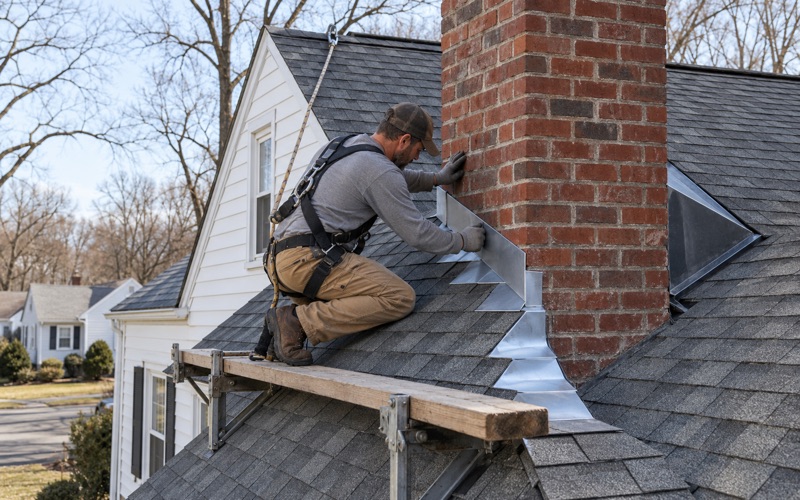
Step flashing, counter flashing and chimney flashing are replaced along with the roof rather than reused beneath new material. Metal bent around a chimney decades ago rarely seals well against a fresh shingle line, and reused flashing is a common place for a new roof to start leaking first. A chimney cricket gets the same scrutiny.
Ventilation gets similar treatment. A ridge vent only works with enough soffit intake to match it, so we check net free area at both ends. Gutters and downspouts are sized and pitched as part of the roof plan, and at the end of each work day the yard, driveway and gutters are cleaned, including a magnet sweep for nails.
What the Township’s Permit Sheet Covers and Leaves Out
The Residential Permit List
The Lower Swatara Township Codes Department, at 1499 Spring Garden Drive, publishes a sheet titled ‘When do I need a building permit for residential work?’ Its required list includes additions, structural alterations to existing homes, covered decks regardless of height, attached garages, and framing of new porch or deck roofs, among other items.
Re-roofing is a different matter. Neither the required list nor the exempt list on that sheet names re-roofing or roof covering replacement, so the sheet alone does not answer the question either way. It also notes that listed work may need a zoning permit and approval on top of a building permit, which is worth knowing before a porch project starts.
Porch Roofs and Structural Changes
Where a job goes beyond a covering swap, the sheet is clear. Framing a new roof over a porch or deck needs a permit, and so does any structural alteration to an existing home. We sort those items out at the estimate stage, because they change both the paperwork and the schedule, and an owner deserves to know that before work begins.
Older houses sometimes reveal that kind of work once the deck is open, such as a cracked rafter. When it turns up, we stop, show the owner, and talk through what the township may require before going further. Nothing structural gets quietly folded into a re-roof, and nothing is added to the bill without the owner seeing it first.
Flood Plain Work and the Phone Call First
The township is bordered by the Susquehanna River on the south and Swatara Creek on the east. The permit sheet states that grading, electrical work and alterations in the flood plain require a flood plain permit, and it asks owners to contact the codes office to discuss any work there. A roofing job on such a property that adds wiring can fall under that.
Every township and borough we serve sets its own rule for re-roofing, which is why we call the Codes Department at (717) 939-9377 before pricing a Lower Swatara job. That answer, along with any FAA timing near the airport, goes into the written scope, so the owner knows exactly what is required and when the work can begin.
- 20+ Years Roofing
- Itemized Written Scopes
- Repair Before Replace