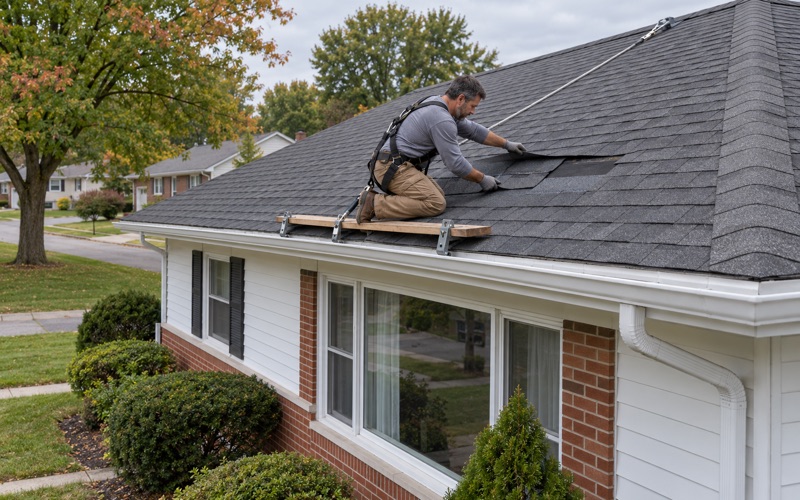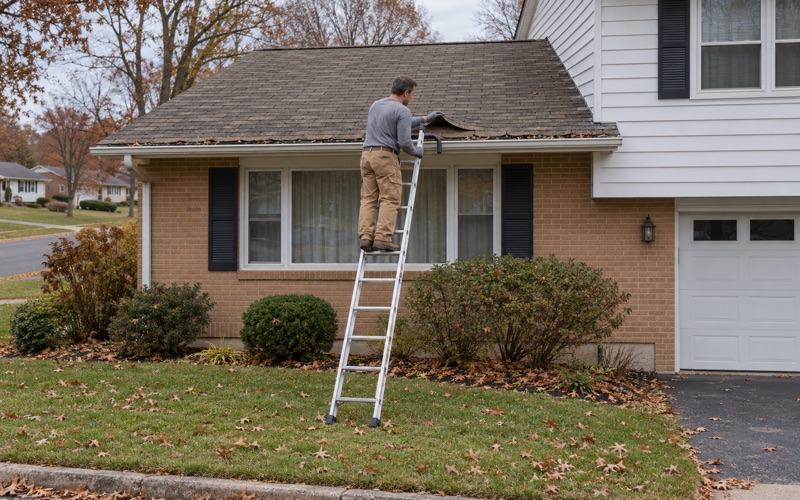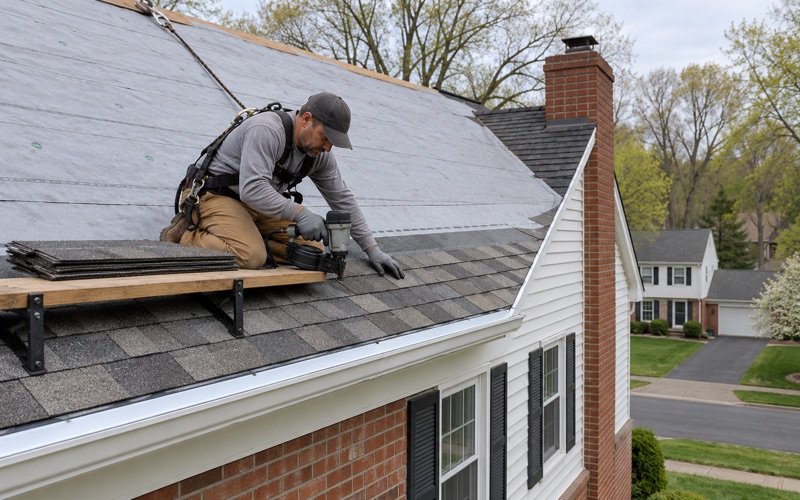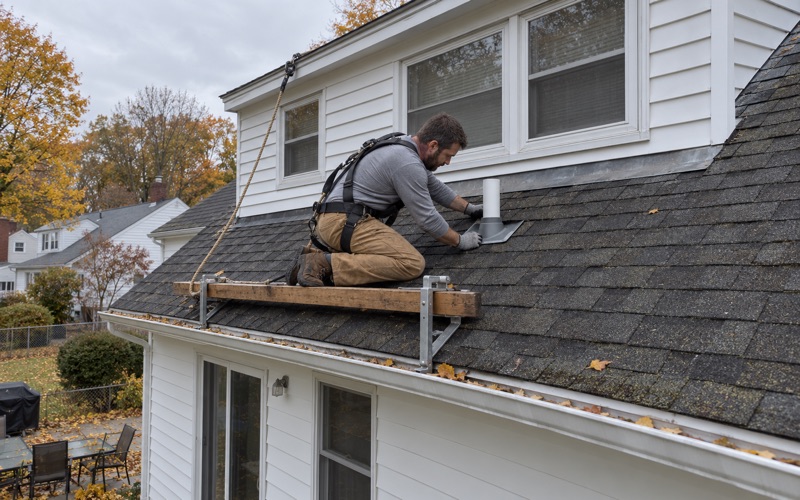
Lower Paxton Roofing brings more than two decades of work to roofing in Middletown, and on a borough job the planning starts at the curb rather than on the ridge. Before we price a tear-off, we work out where the old shingles will land, how long the container can stay, and which office has to sign off on it. Those answers shape the schedule as much as the roof does.
We also check the permit rule for the house’s own municipality before a number goes on paper, because each township and borough around us handles re-roof permits its own way. A leak call follows the same order: we look in the attic as well as on the roof, trace the water to where it actually gets in, and tell you plainly whether a repair will hold before replacement is ever raised.
Our written scopes break the job into separate lines for tear-off, decking, underlayment, flashing, ventilation and gutters. That makes our estimate easy to set beside anyone else’s, item by item, and it puts the container plan and the permit costs where you can see them.
Where the Dumpster Goes on a Middletown Roof Job
Property or Street: The First Question
Middletown Borough’s Container Application starts with a plain choice: is the dumpster going on the property or on the street? That one box decides most of what follows. A roll-off that fits on a driveway or a side lot keeps the job off the public right of way, while a street placement brings the borough into the planning directly.
We look at the lot before we commit to either. Rear access, a shared driveway, overhead wires, tree canopy and the slope of the yard all change where a truck can set a container down safely. On many Middletown lots there is simply no room behind the house, and the street becomes the realistic option rather than a preference.
Why Narrow Streets Change the Plan
Middletown was founded along the left bank of the Susquehanna River and is the oldest incorporated community in Dauphin County, so many of its blocks were laid out long before anyone parked a roll-off at the curb. Narrow streets leave little room between a container, parked cars and passing traffic. We note curb lines, driveway cuts and hydrants before settling on a spot.
A tear-off on an attached house adds another wrinkle, since the container often sits in front of more than one front door. We talk through the placement with the owner and, where it helps, with the neighbors who share the frontage, so the delivery morning is not the first time anyone on the block hears about it.
Looking for roofing closer to Hampden? See Hampden Roofing.
Street Placement, Public Works and the 14-Day Limit
Public Works Permission and the $50 Fee
When the dumpster goes on the street, the borough’s form is direct: any container placed upon the street must have permission from Public Works and pay fees. The 2024 Schedule of Fees lists the temporary container permit at $50 and marks that charge as street placement only, which is how we budget it on a Middletown estimate.
We build that application into our timeline rather than treating it as a chore for delivery day. The request goes in with the planned dates, the container size and the exact location on the block, and the roll-off is booked only once Public Works has given permission for the street spot. That order keeps a truck from arriving with nowhere legal to drop.
No Sidewalks, Ever
The application states one rule with an exclamation point: no dumpsters or containers shall be placed upon a sidewalk, citing Ordinance 235-5.D. That rules out the tempting shortcut of tucking a roll-off half onto the walk to keep a lane open. In a borough where people walk those sidewalks every day, it is a rule we plan around from the first visit.
Keeping the container off the walk also means watching where debris travels. We use tarps and controlled drops so shingles land inside the box rather than on the pavement, and the crew cleans the driveway, yard and gutters at the end of each work day, finishing with a magnet sweep for roofing nails along the curb and walk.
Fourteen Days and the Winter Snow Routes
The container form caps the placement period at 14 days. For most single-house tear-offs that is a comfortable window, but it leaves no slack for a container dropped early or a pickup that slides past a rainy week. We schedule the drop close to tear-off and the haul-away as soon as the last load is in. The form also warns that ignoring the placement and care rules can get the permit revoked.
Winter adds a separate question. Placement on a snow emergency route from December 1 through March 31 is dispositioned by Borough Council under the borough code, so it is decided by Council rather than settled at the counter. If a house fronts one of those routes, we raise it at the estimate and plan the dates around Council’s answer.
Middletown’s Roofing Permit, Priced by the Job
Fifteen Dollars per Thousand
Middletown Borough code enforcement prices roofing permits by the size of the job. The 2024 Schedule of Fees lists roofing permits at $15 per $1,000, and the borough’s code enforcement fees page describes it as fifteen dollars for each one thousand dollars of roof repair work. A larger scope means a larger fee, so we price the permit alongside the work.
The borough publishes the fee but not a rule spelling out which roof work needs a permit, so we do not guess. Before a job is priced, we confirm with the borough’s codes office, at the borough building on West Emaus Street, what that particular scope calls for. The answer goes into the estimate, along with the fee it carries.
When a Required Permit Is Skipped
The fee schedule is blunt about work done without a required permit: fees doubled. That penalty lands on the property, and a doubled fee is often the smaller cost compared with a job paused midway while the paperwork gets sorted out. Checking the requirement first costs a phone call and keeps the schedule intact.
Swatara Creek forms the borough’s eastern border, and the borough takes floodplain permit applications together with building permits. The review runs $50 up to $10,000 of total cost and $100 above that. Where a house sits near the creek, we ask about the floodplain review at the same time as the roofing permit, so neither one holds up the other.
Decking, Photographed Before It Changes
Because the permit fee follows the value of the work, the decking line is the one we watch most closely. When the old roof comes off and we find damaged boards, we photograph them and show you before anything is replaced, at a per-sheet price already set in the contract. The permit and container costs sit on the same page, so nothing on the borough side arrives later as a surprise.
Roofs on the Borough’s Prewar and Attached Houses
A Housing Stock Built Early
Census figures for Middletown borough count 4,767 homes, and 1,302 of them were built in 1939 or earlier. Another 1,004 are one-unit attached houses that share walls with the homes beside them. Those two groups shape what we find when the old roofing comes off, and how we stage the work around the people next door.
On a prewar house we expect layered history. An older roof may carry board sheathing rather than plywood, earlier repairs buried under the current shingles, and painted trim and fascia that call for lead-safe work practices under the EPA RRP rule for pre-1978 homes. We plan for those conditions at the estimate instead of discovering them on tear-off day.
Shared Walls, Shared Flashing
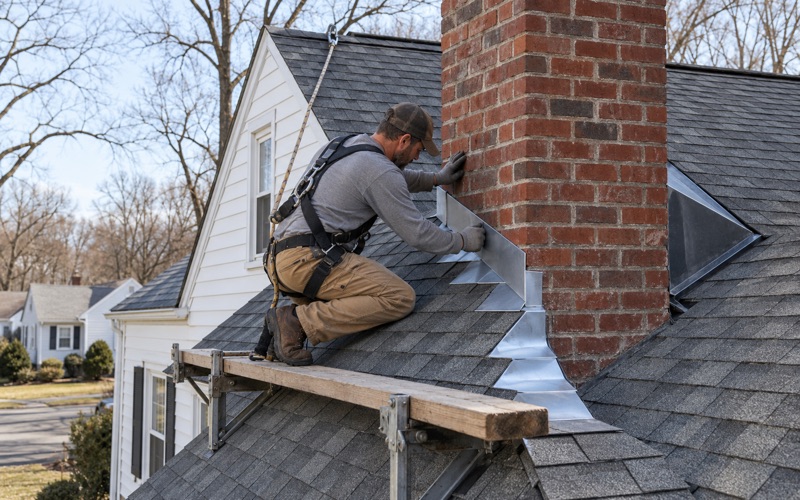
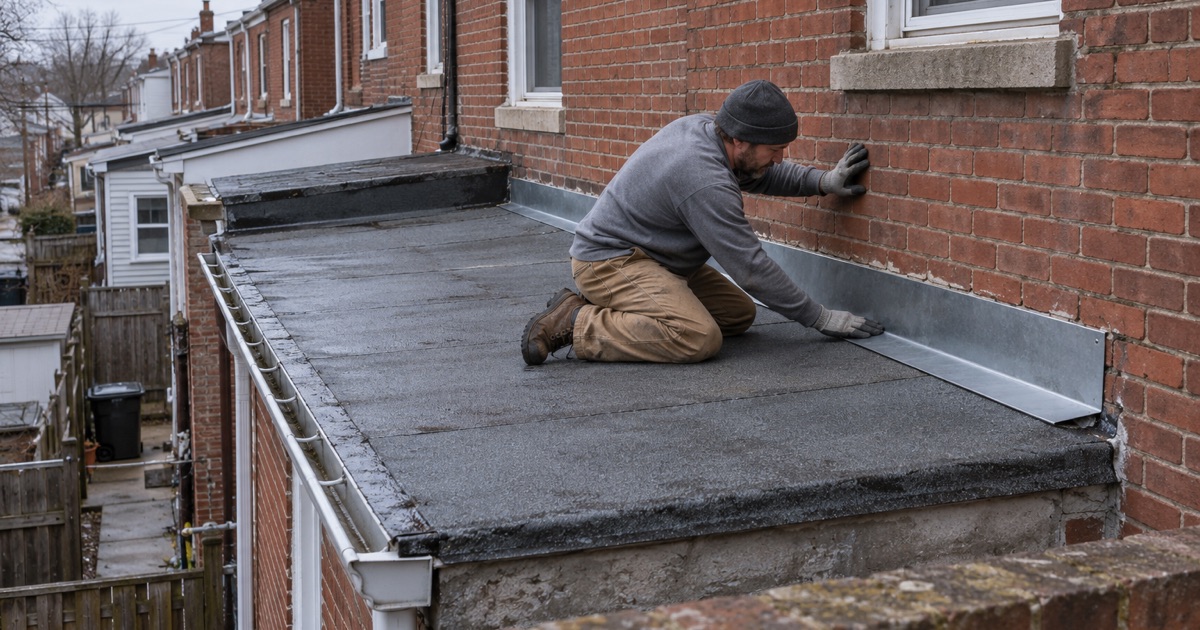
An attached house shares a party wall, and often a roof line, with the house next door. Where the two roofs meet, the flashing and the transition between materials decide whether water stays out. We replace step, counter and chimney flashing with the new roof rather than reusing old metal under fresh material, and we tie the seam into the neighbor’s side carefully.
That shared edge makes the neighbor’s roof part of the job site. We protect it during tear-off, keep debris off it, and let the owner next door know when we will be working at the line. A container in front of two houses and a crew working along a shared seam both go more smoothly with that conversation finished first.
Slate, Chimneys and Gutters
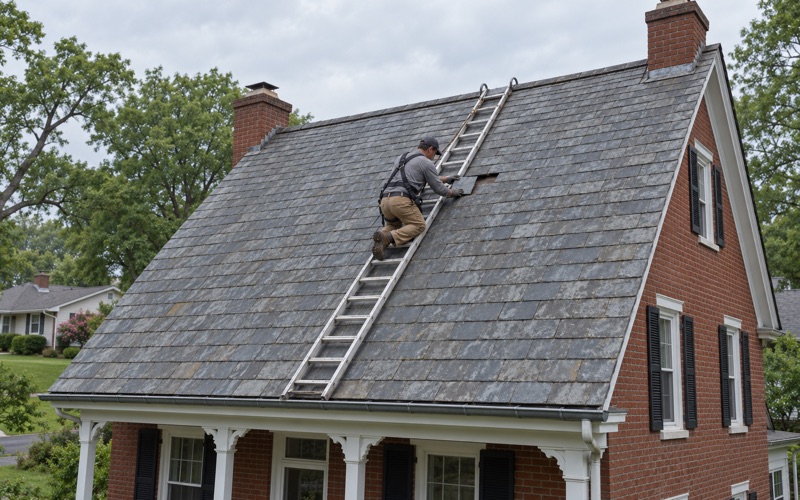
Where an older Middletown house still carries slate, a sound roof with a few broken or slipped pieces gets repaired slate by slate, using copper nails and slate hooks, before anyone suggests tearing it off. Chimneys on these houses get a close look as well, including whether a cricket is needed behind a wide chimney to turn water around it.
Gutters and downspouts are sized and pitched with the roof, not added at the end. On a narrow lot with shared frontage, where the water exits matters as much as how much the gutter carries. We plan downspout discharge so runoff moves away from the foundation and off the walk rather than toward the house next door.
- 20+ Years Roofing
- Itemized Written Scopes
- Repair Before Replace