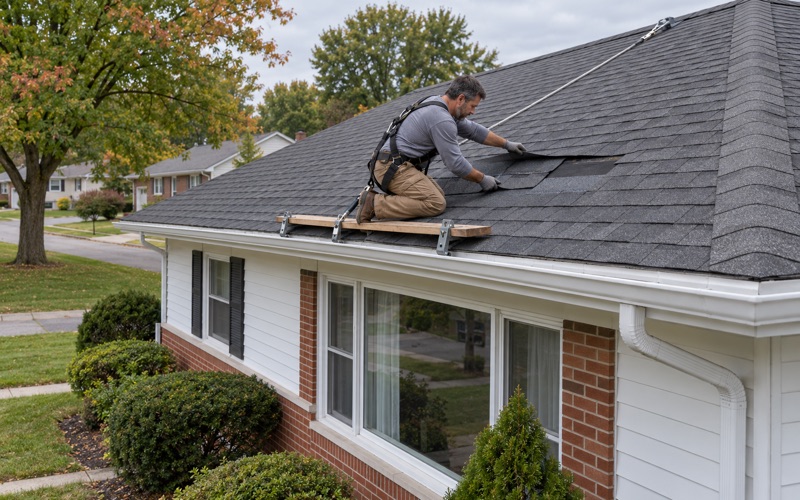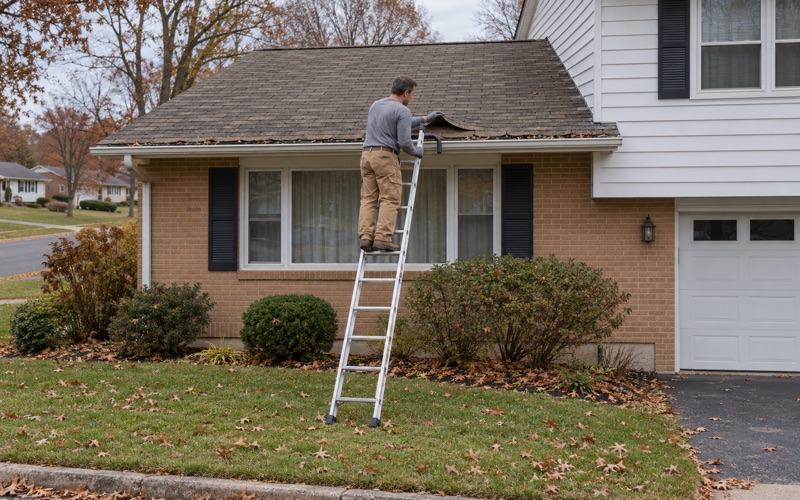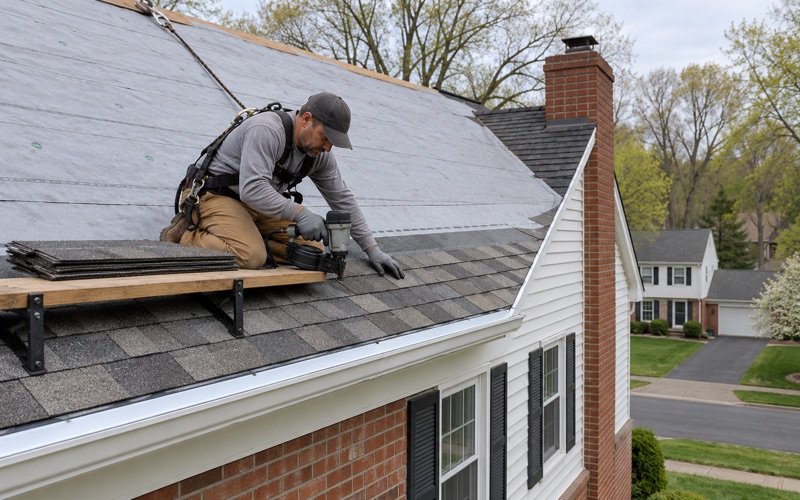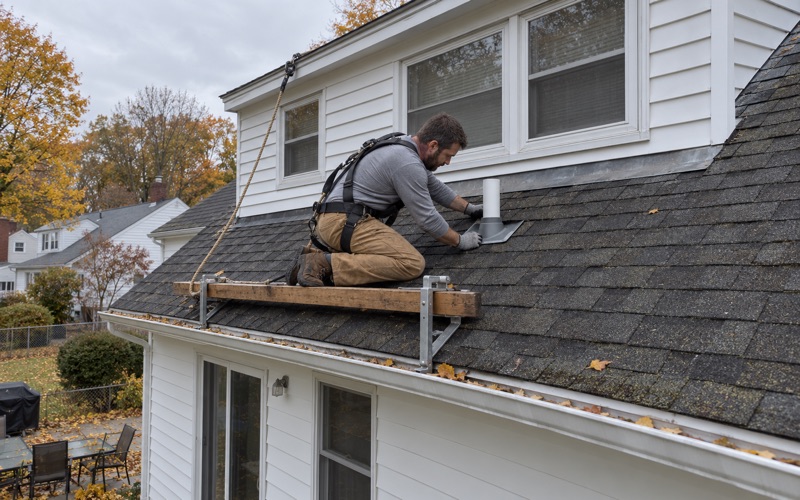
Lower Paxton Roofing has spent more than 20 years on roofing in Mount Joy and across this part of Lancaster County, and the borough has taught us that hard rain is the test most roofs here actually face. When a ceiling stains after a storm, we want to know exactly where the water came from before anyone talks about price.
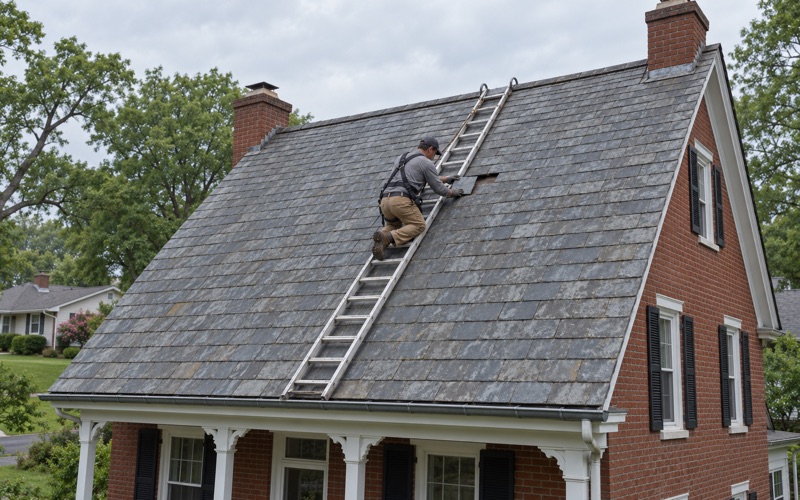
Our visits start with two views of the same problem: the attic from below and the roof from above. A wet rafter, a darkened sheet of decking or a rusted nail tip tells us more about a leak than the shingles alone, and it lets us give an honest repair-or-replace answer before replacement is ever on the table.
Mount Joy also draws its own permit line for roof work, and that line decides how a job here gets scoped. We check the borough’s rule for your address first, then write an estimate where tear-off, decking, underlayment, flashing, ventilation and gutters each sit on a separate line, so a second bid can be compared item by item.
Little Chiques Creek and the Crest of July 2018
A Creek Along the Borough’s East Side
Little Chiques Creek is a south-flowing tributary of Chiques Creek, and it crosses the eastern side of Mount Joy on its way down. Along that stretch it surrounds Little Chiques Park, a 24-acre municipal park on the borough’s eastern boundary. For the homes nearby, the creek is a pleasant neighbor most of the year and a hazard during a few hard storms.
We bring up the creek on a roofing page because it shapes how storms are remembered here. When people in Mount Joy describe a bad rain, they usually describe where the water went on the ground. Our work is the other half of that story: what the same rain did to the roof, the attic and the gutters overhead.
14.4 Feet at the Borough Gauge
The National Weather Service keeps a gauge on Little Chiques Creek in the borough, listed as MJYP1. Action stage there is 11 feet and minor flood stage is 12 feet. The highest crest on record is 14.4 feet on July 25, 2018, more than two feet over that 12-foot flood stage. Other recorded crests reached 12.69 feet and 10.1 feet.
A gauge reading measures the creek’s stage at one point, not the depth of water in anyone’s house, and we are careful not to stretch it further than that. What the July 2018 crest does show is how quickly heavy rain can arrive here. Rain strong enough to push a creek that high is also testing every seam on every roof it falls on.
After the Flood: The Park Restoration
That July 2018 flash flood along Little Chiques Creek caused more than a million dollars in damage to surrounding properties and to the park itself. A grant-funded stream restoration followed in three phases, and the first phase was completed in early May 2025. The work addresses the creek and the park ground, which is where the recorded damage was.
None of the published accounts of that flood describe roofs being lost, and we will not suggest otherwise. What we tend to find after storms of that size is quieter: a leak that appeared during the downpour and stopped afterward, or a stain that slowly spread across drywall. Those are the calls worth making while the evidence is still fresh in the attic.
Looking for roofing closer to North Middleton? See Roofing Services in North Middleton.
The July 2025 Disaster Emergency
More Than Seven Inches of Rain
In July 2025 more than seven inches of rain fell on Mount Joy, and the borough declared a disaster emergency. Fire crews reported up to five feet of water in some homes, and some local businesses reported structural damage. Borough council afterward issued a list of flash-flooding hot spots following the stormwater flooding of July 14.
Those reports describe water at ground level and inside buildings, and that is where the urgent work belonged that week. A roof meets the same storm differently. Seven inches of rain asks every valley, pipe boot and flashing joint to shed far more water than usual, and a weak spot that never dripped before can finally show itself.
West Main Street and Little Chiques Park
Little Chiques Park and West Main Street were among the hardest-hit areas, with a flood basin on West Main Street overflowing during the storm. Main Street through the borough also carries Route 230, so the corridor many residents drive every day sat in the middle of that rain. Homes near the low spots on the council’s list saw the worst of it.
Those homes deserve a roof check that looks past the obvious. Water that came in at the basement and water that came through the ceiling can look alike on a finished wall, and owners sometimes blame the flood for a stain that actually started overhead. Tracing which one it was changes what gets fixed, and who should fix it.
Shingles Only, or Decking Too: Mount Joy’s Permit Line
When No Permit Is Needed
Mount Joy Borough publishes its own list of when permits are required, and roofing sits on both sides of it. Reroofing that is non-structural in nature, which the borough describes as replacing shingles only, does not need a permit. Neither does repair or replacement of siding or covering material. That covers a large share of ordinary shingle work.
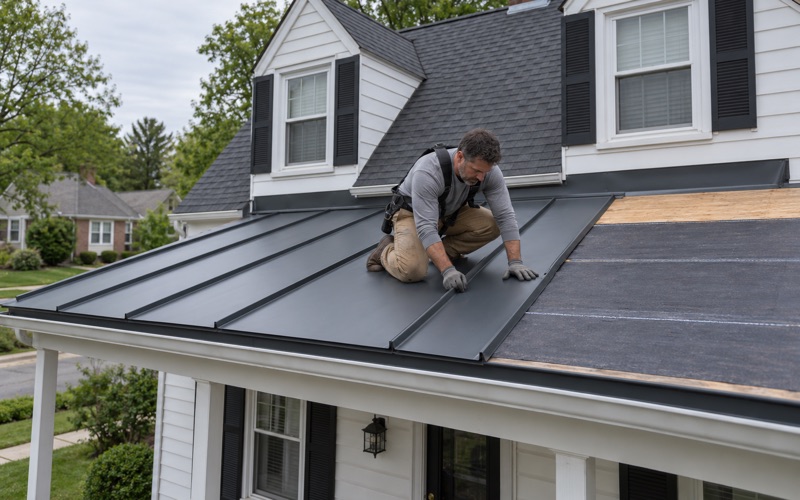
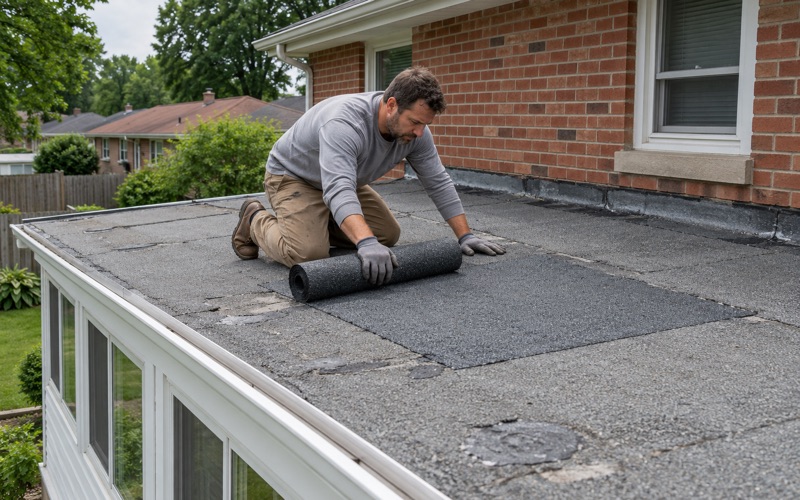
A shingles-only job still has to be done properly. We replace drip edge at eaves and rakes, set ice and water barrier where it belongs and swap worn pipe boots. Step, counter and chimney flashing is replaced with the roof rather than reused under new shingles. Not needing a permit is never a reason to accept a lower standard of work.
When Building and Zoning Permits Apply
The line moves once the wood underneath is involved. The borough requires building and zoning permits for re-roofing when decking or sheathing is being repaired and or replaced. It requires both permits for a new roof structure, such as a pavilion, or a new roof over a previously uncovered deck or patio. Those permits run through the Mount Joy Borough Codes and Zoning Office.
That office is at 300 Orchard Road. Mount Joy Borough is its own municipality, separate from the township that shares its name, so the address on your deed decides which rules apply. We confirm that before quoting, because a job that crosses the decking line needs the permit built into the schedule rather than added halfway through it.
Wet Decking After a Storm
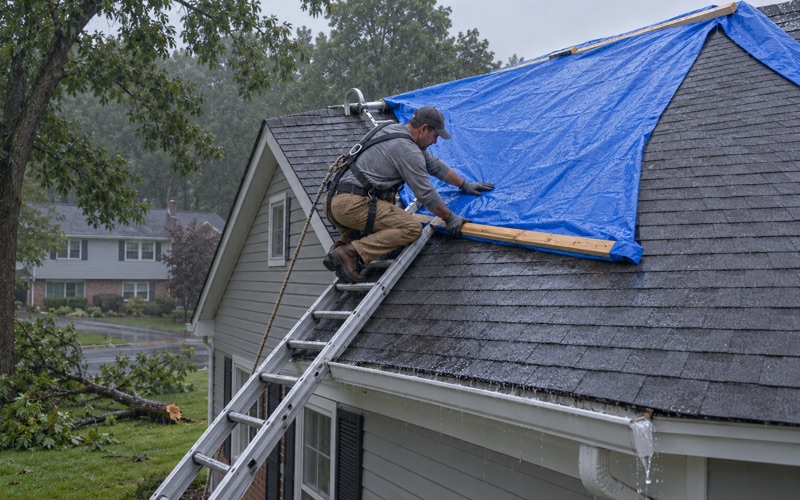
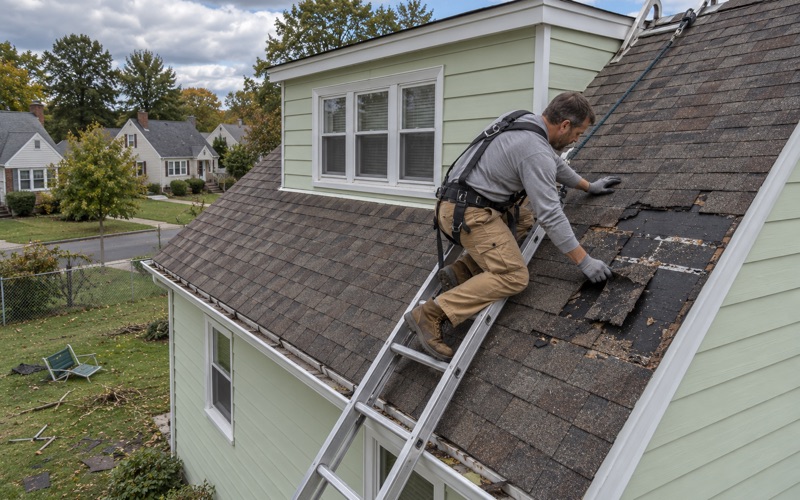
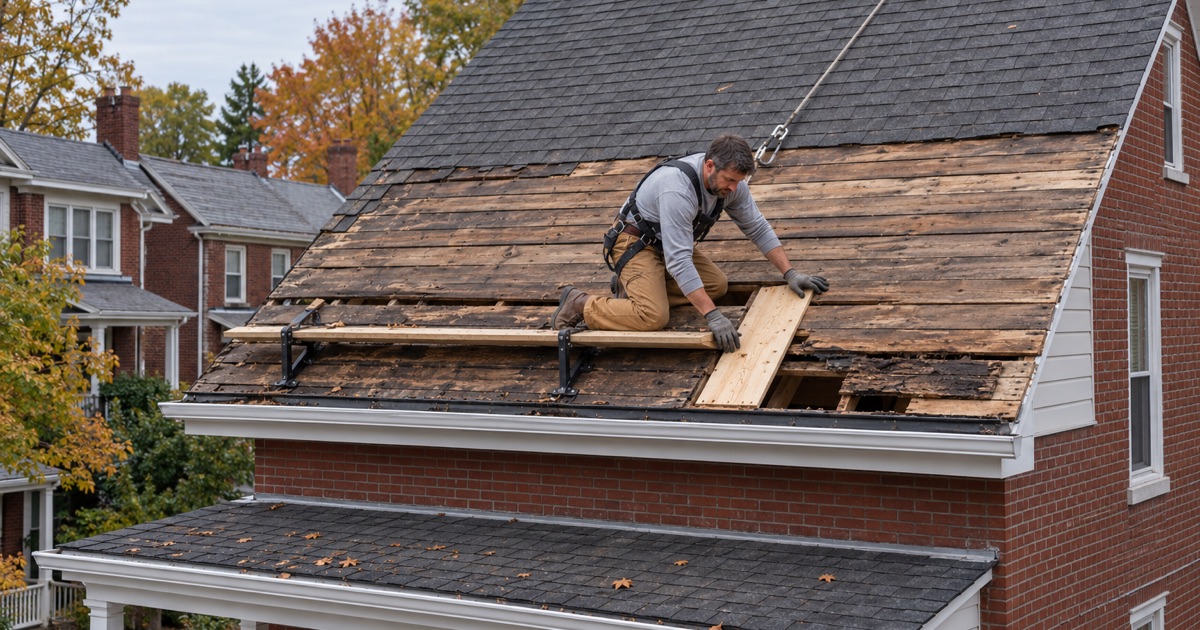
This is where heavy rain and the permit line meet. Decking that sat under a slow leak through a long storm can soften, delaminate or rot around the fasteners, and that damage usually stays hidden until the old shingles come off. A job that began as shingles only can become a decking job once tear-off shows what the rain left behind.
We handle that moment the same way every time. Any damaged sheet found after tear-off is photographed and shown to you before it is replaced, and the contract sets the per-sheet price ahead of time. If that work carries the job across Mount Joy’s decking or sheathing line, we raise the permit right then, not after the roof is closed.
Checking a Mount Joy Roof After a Flash Flood
Start in the Attic
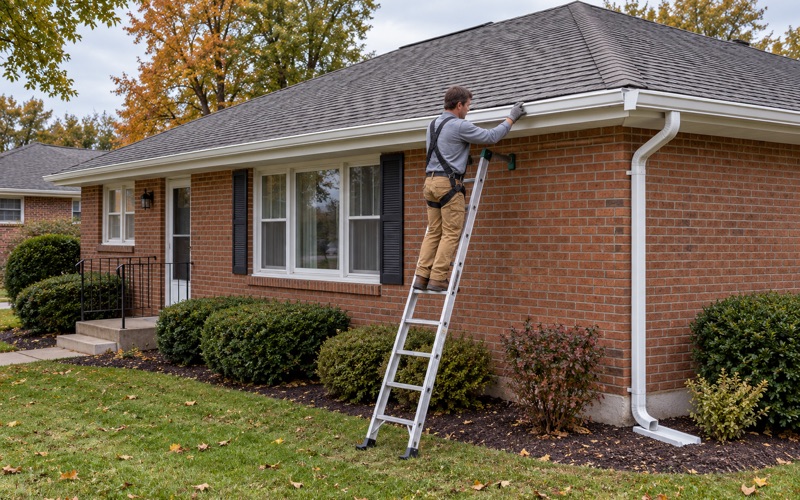
After a storm like the one in July 2025, our first stop is the attic. We look for damp insulation, darkened sheathing, water trails along rafters and rust on nail tips, then match each one to a spot on the roof above. Water travels sideways before it drips, so a stain on a bedroom ceiling is rarely directly below the opening.
Ventilation gets a look on the same visit. A ridge vent needs soffit intake to work, and an attic that cannot breathe stays wet long after a soaking rain. Damp that lingers for weeks can do more harm to decking than the storm itself, so we make sure air moves through the space before deciding what needs fixing.
Flashing, Valleys and Gutters
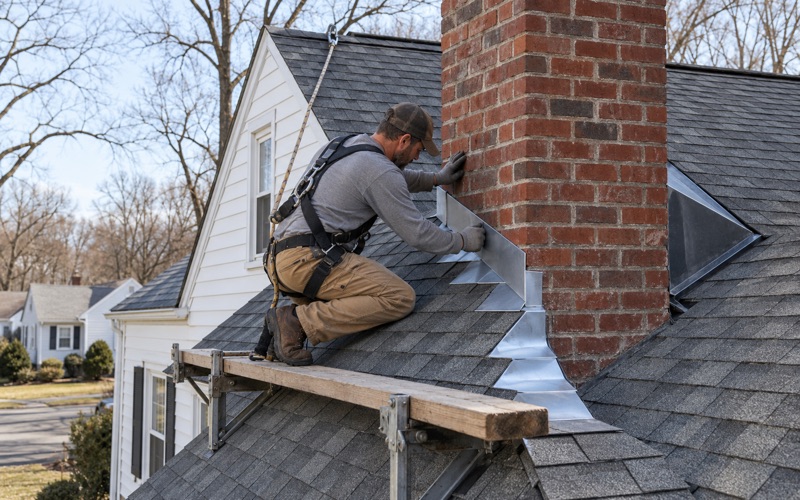
On the roof, we spend the most time where water concentrates. Valleys, chimney flashing, apron and kick-out flashing at wall intersections, and pipe boots carry the heaviest flow during a downpour. A cracked boot or a lifted piece of step flashing can stay dry through ordinary rain and leak only when several inches fall over a few hours.
Gutters belong in the same check. An overwhelmed gutter can push water back under the first course of shingles and into the fascia, especially where downspouts are undersized for the roof above them. We size and pitch gutters and downspouts together with the roof, so they carry the volume a hard summer storm actually delivers.
Repair First, Then the Paperwork
Many post-storm leaks are repairable, and we say so plainly when they are. A resealed flashing joint, a new pipe boot or a few replaced shingles can close a leak without touching the decking. When a repair will not hold, we explain why before replacement comes up, and we tell you whether the work stays shingles only.
If you are filing an insurance claim, we photograph the damage and write it up for your own records, and we will meet your adjuster on site when asked. We do not negotiate the claim for you. At the end of every work day we clean the driveway, yard and gutters, including a magnet sweep for roofing nails.
- 20+ Years Roofing
- Itemized Written Scopes
- Repair Before Replace