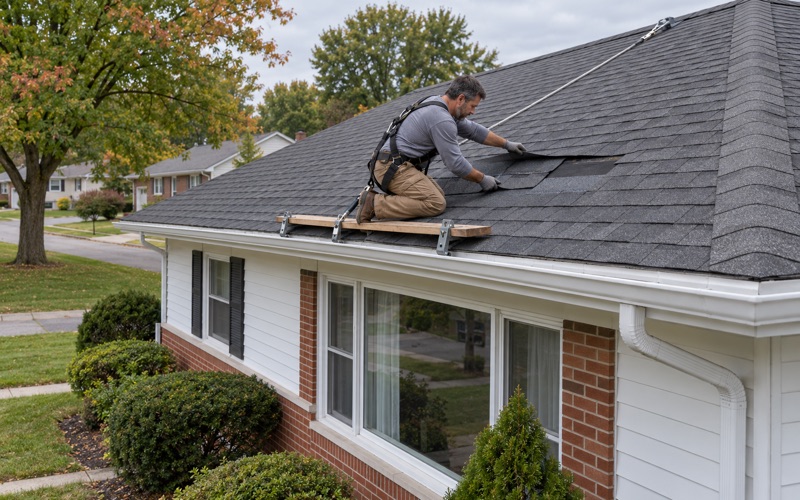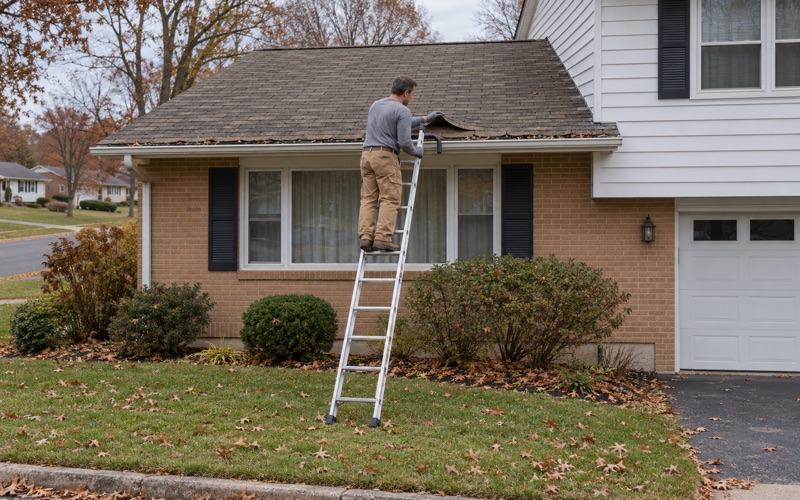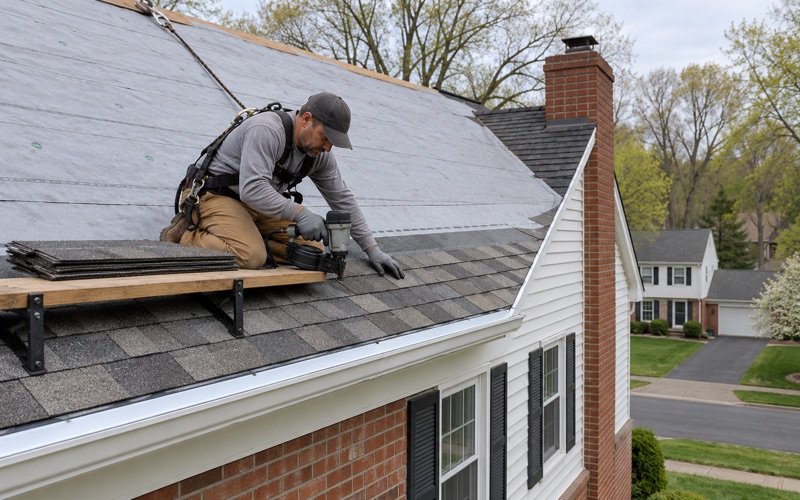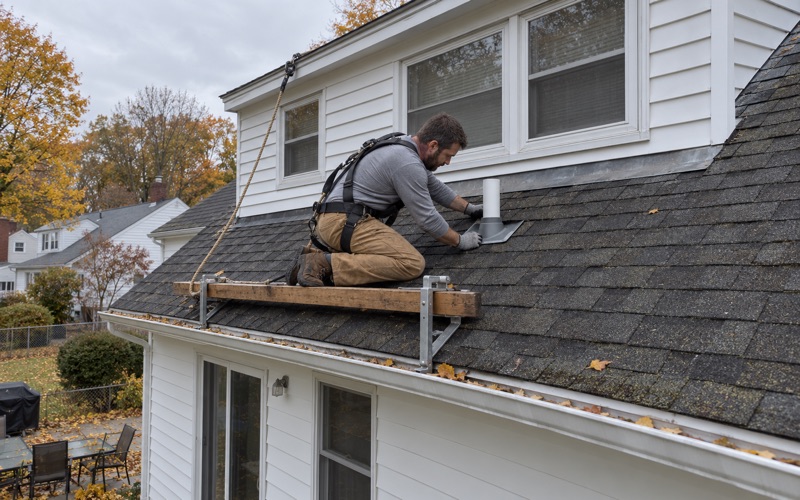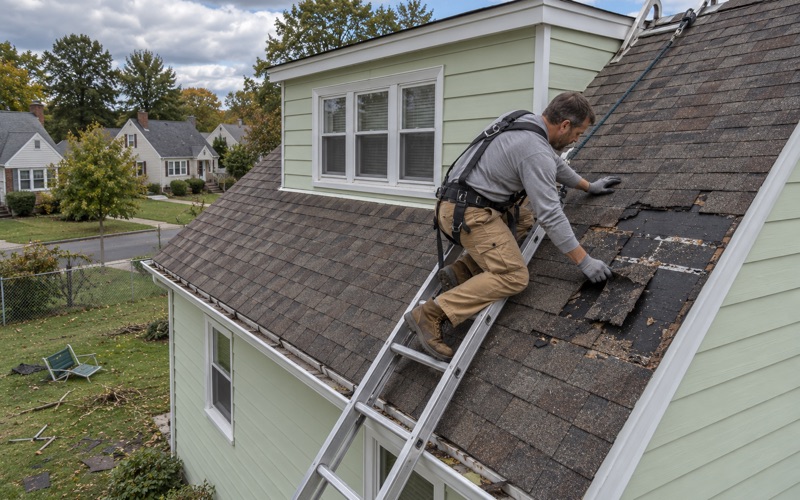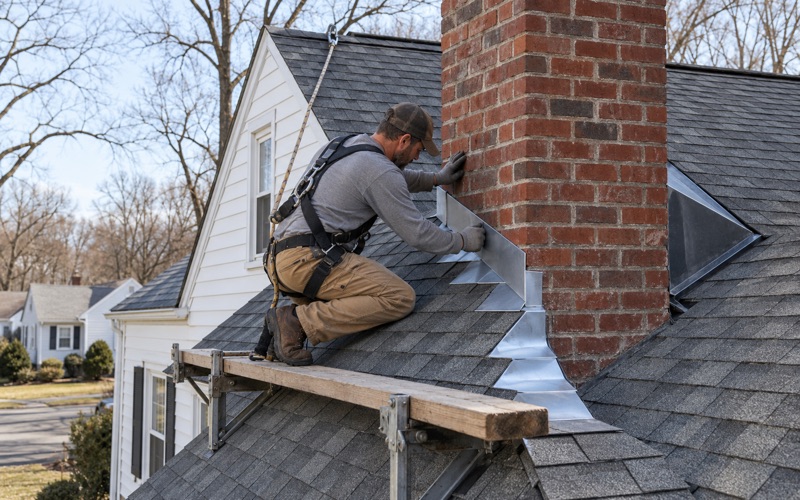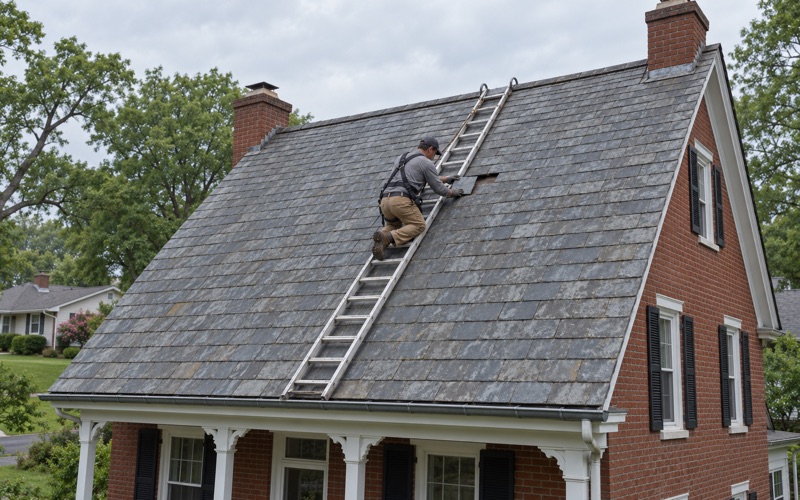
Lower Paxton Roofing has handled roofing in New Cumberland and across the West Shore for more than 20 years, and the first thing we do on a borough job is find out what the lot itself asks of the work. A roof near the water carries a different set of questions than one up the hill, and we answer those before a price is written.
Leak calls start in the attic as well as on the shingles, because water rarely enters where the stain shows. We trace it to the actual entry point, tell the owner plainly whether a repair will hold, and only then talk about replacement if the roof has truly run out of life.
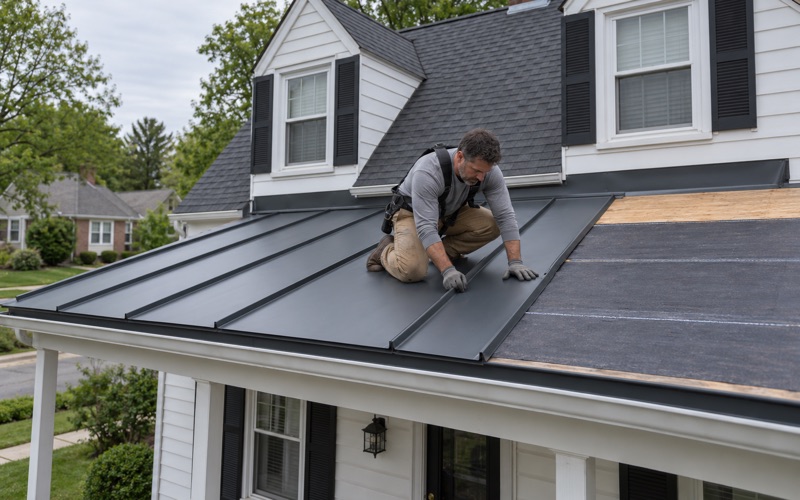
When a full replacement is the right call, our written scope breaks tear-off, decking, underlayment, flashing, ventilation and gutters into separate lines. That lets a homeowner set our number beside anyone else’s and compare each item directly, instead of weighing two totals that may quietly cover different work.
Where Yellow Breeches Creek Meets the Susquehanna River
A Borough Framed by Two Waterways
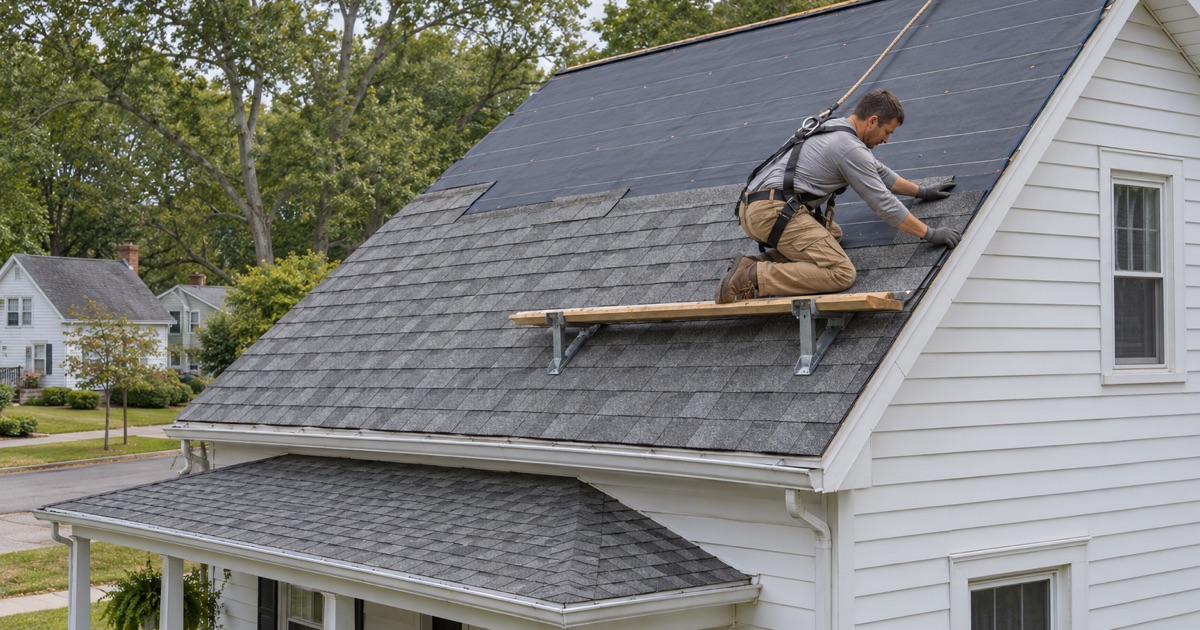
New Cumberland is a borough at the eastern edge of Cumberland County, incorporated in 1831, sitting on the west shore of the Susquehanna River right at the mouth of Yellow Breeches Creek. Those two waterways frame the town, and they frame a good part of how we plan roof work on its lower streets.
Most visitors know the borough for its historic downtown, the West Shore Theater, Borough Park and the yearly Apple Festival. For us the more practical geography is where a house sits relative to the creek and the river, since that position decides which conversations with the borough come before the first bundle of shingles is ordered.
Reading the Lot Before the Roof
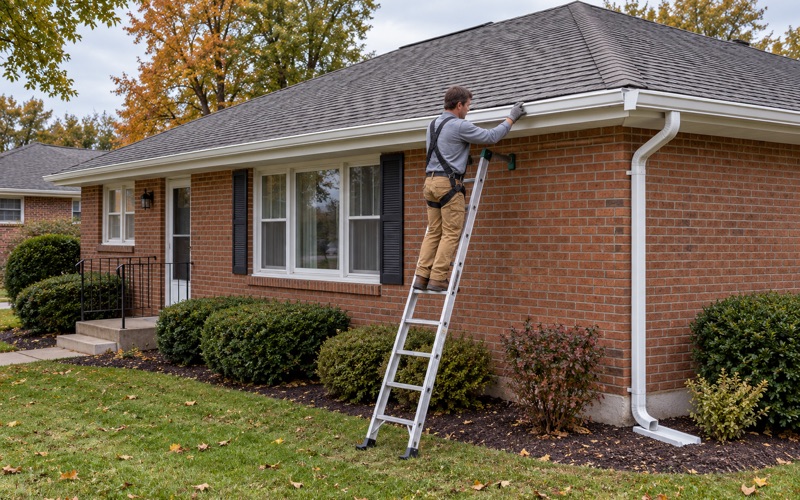
On a creek-side or river-side property we start with the site, not the material samples. We note how close the house sits to the water, how the yard drains, and where the downspouts currently discharge. That information shapes gutter sizing and outlet placement, which we design together with the roof rather than bolting on at the end.
We also look at what the roof is shedding water onto. A downspout that empties beside a foundation on a low lot creates trouble the roof never caused. Sizing and pitching gutters and downspouts with the new roof keeps rainwater moving away from the house and toward whatever drainage the property actually has.
Forecasts We Schedule Around
The National Weather Service office in State College covers the borough under forecast zone PAZ063. We watch that forecast when scheduling a tear-off, because an open deck needs a dry window long enough to install underlayment, flashing and shingles before evening. A section that cannot be dried in the same day does not get opened.
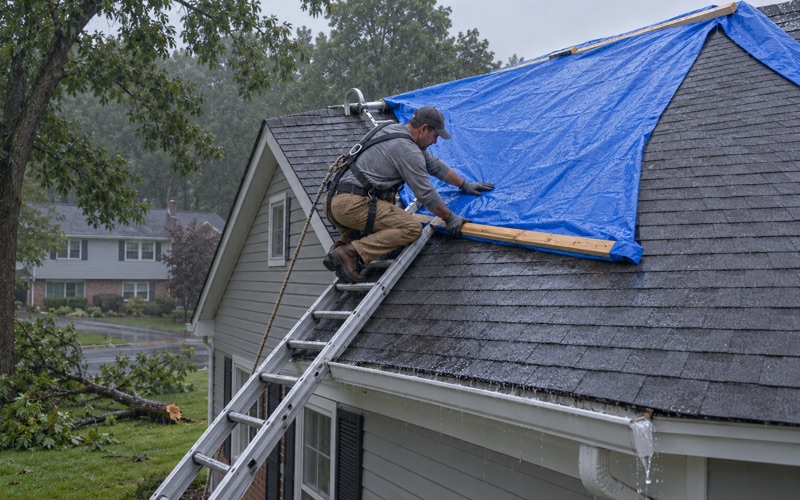
When a forecast turns, we stop removing old material early and secure what is open. Synthetic underlayment rated to ASTM D8257 and self-adhering ice and water barrier rated to ASTM D1970 hold up well during brief exposure, but no responsible crew leaves a deck uncovered overnight on the hope that the rain holds off.
Looking for roofing closer to Hershey? See Roofing in Hershey.
June 1972: Agnes on the River and the Creek
What the Gauges Recorded
In June 1972 the remnants of Tropical Storm Agnes caused severe flooding across Pennsylvania and southern New York. Across the river at the Harrisburg gauge, the Susquehanna crested at 33.27 feet on June 24, 1972, about ten feet above the 23-foot major flood stage, and that crest still stands as the record there.
Two days earlier, Yellow Breeches Creek near Camp Hill reached 18.33 feet against a flood stage of seven feet. Both readings come from gauges outside the borough, one on the Harrisburg side of the river and one upstream on the creek, so they describe the waterways rather than the depth at any New Cumberland address.
The Geological Survey’s Flood Map
The United States Geological Survey mapped the flood that same year. Open-File Report 72-285, prepared by Page and Shaw, shows the flood of June 1972 from Agnes along the Susquehanna River and Yellow Breeches Creek at Steelton, Highspire and New Cumberland, three river towns shown on one map.
The report’s abstract describes floods that were the highest known on many major streams since settlement, with several central Pennsylvania communities inundated to depths of several feet. For this borough it is a public, dated record of how far its two waterways reached, and floodplain rules still apply to lower lots along those same banks.
What That History Means for a Roof Job Now
None of the public records we have read count roofs damaged by Agnes in New Cumberland, and we do not claim otherwise. The value of the 1972 history for a homeowner is simpler: it shows that the river and the creek both have reach, and that the streets near their meeting point are where flood questions belong.
On those streets we plan staging with water in mind. Dumpsters, material pallets and tear-off debris stay on the high side of the driveway, and we keep open work short when heavy rain is forecast upstream. Gutters and downspouts get particular attention, since they decide where a roof’s water lands on a low lot.
Flood Maps, Floodplain Rules and the Borough Office
From the 1973 Map to the Current One
FEMA’s records for New Cumberland, community number 420366B, list an initial flood hazard boundary map dated August 24, 1973. A flood insurance rate map followed on February 16, 1977, and the current effective map carries a date of September 7, 2023. The borough holds no Community Rating System class.
We do not tell anyone whether their house sits inside a mapped flood area, because that answer comes from the current map and the borough, not from a roofer looking at a yard. What we do is raise the question early, so a waterfront job is planned with the right paperwork rather than paused partway through.
What the Floodplain Ordinance Covers
The borough’s floodplain management page names the Susquehanna River and Yellow Breeches Creek as the flood sources its ordinance addresses. It states that a building permit may be required before construction or development in the floodplain, and that all structures located within the floodplain require flood insurance.
For a homeowner, that means a roof project on a low lot can carry a floodplain step that a hilltop project does not. We would rather learn about that before ordering materials. A delayed start costs a few days, while a crew sent home mid-job because a review was missed costs everyone far more.
Roof Replacement Starts at 1120 Market Street
New Cumberland’s codes enforcement page lists roof replacement among the kinds of work for which building permits may be required, and it says all permits start in the Borough Office. That office is at 1120 Market Street, phone (717) 774-0404, and the building code official is Approved Codes, reachable at (717) 506-0464.
Every township and borough we serve sets its own re-roof rule, so we confirm the one for the house’s own municipality before pricing. Here that means contacting the borough first, getting a clear answer on whether this particular job needs a permit, and building any required fee and inspection time into the schedule.
Mid-Century Houses Near the Water
What the Housing Count Shows
Census estimates show New Cumberland is mostly a borough of mid-century detached homes. Of 3,536 housing units, 2,210 were built between 1940 and 1969, and 2,401, or 67.9 percent, are one-unit detached houses. Owners occupy 2,374 of the 3,411 occupied homes, so most roofing decisions here are made by the people living under them.
That profile matters for the work. A house from the 1950s may have been reroofed already, sometimes with a second layer laid over the first. We check the layer count from the attic and at the eaves, since the residential code caps reroofing at two layers, and a third is never an option on our jobs.
Decking, Flashing and Ventilation on Older Frames
Once the old roof comes off a mid-century house, the plank or plywood decking underneath tells its own story. Any damaged decking we find is photographed and shown to the owner before it is replaced, at a per-sheet price already written into the contract, so no surprise line appears after the fact.
Step flashing, counter flashing and chimney flashing are replaced with the new roof rather than reused under fresh shingles, and a chimney that catches water gets a cricket where the layout calls for one. We also pair a ridge vent with soffit intake, balanced by net free area, so the attic can breathe through every season.
Materials, Slate and Daily Cleanup
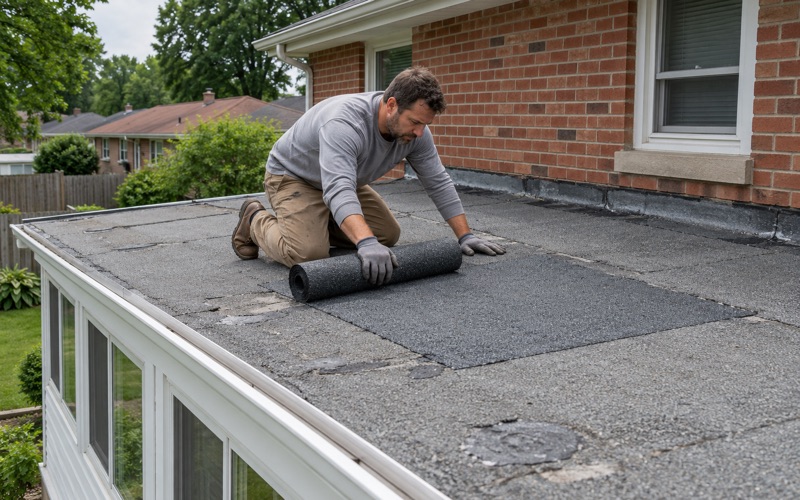
For most of these homes we install architectural laminated shingles such as GAF Timberline HDZ, Owens Corning Duration or CertainTeed Landmark, with drip edge at the eaves and rakes and an ice barrier along the lower edge. Low-slope porches and rear additions get EPDM or TPO membrane instead of shingles stretched past their limits.
Where a sound slate roof remains, we repair it slate by slate with copper nails and slate hooks before anyone discusses tearing it off. At the end of every work day the driveway, yard and gutters are cleaned, and a magnet sweep picks up stray roofing nails before the family walks the lawn again.
When a Storm Damages the Roof
Wind and hail reach the West Shore regardless of elevation. When a storm damages a roof here, we photograph what we find and write it up so the owner has documentation for their own insurance claim. If asked, our crew will meet the adjuster on site to point out the damage directly.
We do not negotiate the claim or act as anyone’s adjuster; that role belongs to the owner and their insurer. Our job is to show what the roof needs, explain whether a repair or a replacement is warranted, and price the work in the same itemized format we use for every other estimate we write.
- 20+ Years Roofing
- Itemized Written Scopes
- Repair Before Replace