
Lower Paxton Roofing has done roof inspection work in Lower Paxton, PA for more than 20 years, serving surrounding cities including Linglestown, Progress, Susquehanna Township, Harrisburg and Hummelstown. An inspection from us covers the roof surface, the flashing, the gutters and the attic, because a roof’s real condition shows up in all four.
Owners call for inspections for different reasons: a house purchase, a sale, a storm, a stain that has not yet dripped, or simply a roof that is getting old. Whatever the reason, the report answers the same practical question. Is the roof sound, does it need repair, or is it time to plan a replacement? You get photos of every finding, a plain written explanation, and a recommendation you can act on or take to another contractor for comparison.
What a Roof Inspection Covers
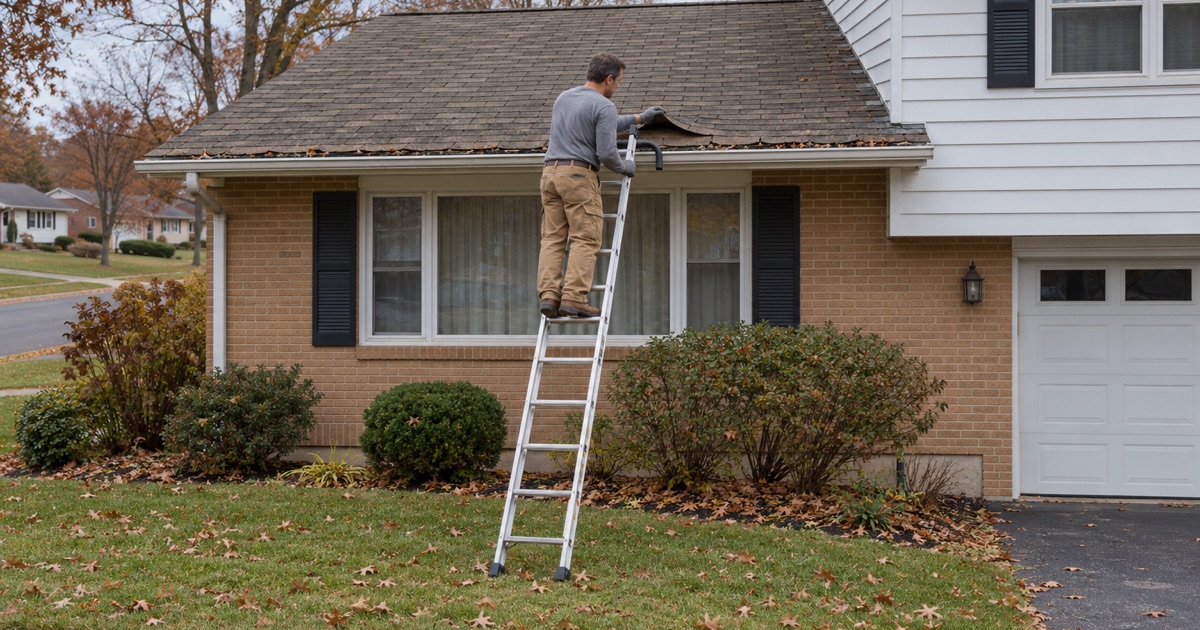
The Roof Surface
On shingle roofs we look for granule loss, cracked or curling shingles, lifted edges, exposed nails and patched areas that suggest earlier leaks. On slate we check for broken, slipped and delaminating pieces and for failed hooks or nails. Metal roofs are checked for loose fasteners, seam separation and rust at cut edges, and low-slope membranes for open seams, blisters and ponding.
We also note how many layers the roof carries and whether the last roof went over the one before it. That single detail changes the cost of the next replacement, because IRC R908 limits asphalt roofs to two layers and a two-layer roof means a full tear-off next time.
Flashing and Penetrations
Most leaks begin at flashing, so this is where an inspection spends real time. Step flashing at walls, counter flashing and crickets at chimneys, apron and kick-out flashing, pipe boots, vents and skylight curbs are each checked for rust, gaps, lifted edges and sealant doing a job that metal should be doing.
We photograph every flashing detail we have concerns about, even when it is not leaking yet. A pipe boot with a cracked collar is cheap to replace now and expensive to ignore once water has been running down the vent pipe for a season.
Gutters, Drip Edge and Fascia
Gutters and downspouts carry everything the roof sheds, so we check that they are pitched, secured and clear, and that downspouts discharge away from the foundation. We look for missing drip edge at eaves and rakes, and for soft or stained fascia behind the gutter, which is a common sign that water has been slipping behind the gutter line.
Undersized gutters overflow in heavy rain and drop water along the foundation, and gutters hung too low let runoff miss them entirely. Where we see either, the report says what size and pitch would actually carry the water, so a gutter fix can be priced alongside any roof work.
Commercial and Low-Slope Roof Inspections
Low-slope roofs on commercial buildings, apartment blocks, porches and rear additions get a different inspection. We walk the membrane for open seams, blisters, splits and ponding, check curbs around rooftop units, clear and inspect drains and scuppers, and look at parapet and wall flashing where most low-slope leaks begin.
A property manager gets the same photo report as a homeowner, organized so it can go straight to an owner or a board. Where the membrane is EPDM, TPO or modified bitumen, the report names it, because the repair method depends entirely on the system.
The Attic Half of a Roof Inspection
Leak Evidence From Below
The underside of the roof deck tells us things the shingles cannot. Water staining, darkened sheathing, rusted nail tips and wet insulation mark where water has been getting in, sometimes for years before a ceiling shows it. Daylight around a chimney or pipe means the flashing has gaps. We match each sign from below to a location on the roof above.
That cross-check is what separates a roofing inspection from a quick look at the shingles. A roof can look fine from the driveway and still be leaking at the chimney into insulation that has not yet soaked through to the ceiling.
Ventilation and Condensation
An attic needs balanced airflow, with intake at the soffits and exhaust at or near the ridge. We check whether soffit vents are open or blocked by insulation, whether exhaust vents are sized and placed properly, and whether bath fans vent outdoors rather than into the attic. Frost on nail tips in winter and mold on the north-facing deck both point to moisture problems.
Ventilation problems shorten a roof’s life and can mimic a roof leak. If the cause of a wet ceiling is condensation rather than rain, the fix is ventilation and air sealing, and the report says so.
Decking Condition
From the attic we can see sagging between rafters, delaminated plywood and old plank decking with wide gaps. Those conditions matter for a repair and even more for a replacement, because decking that has to be replaced adds to the cost. We note what we can see so the estimate for future work is realistic.
We cannot see every sheet from below, especially where insulation covers the eaves, so the report is clear about what was visible and what was not. Any decking that turns out to be damaged during later work is photographed and shown to the owner before it is replaced, at a per-sheet price set in advance.
When to Book a Roof Inspection
Buying or Selling a House
Pennsylvania sellers disclose known roof problems on the seller property disclosure statement, and buyers’ inspectors often recommend a roofer’s evaluation when they see something they cannot judge. A roofing inspection before listing lets a seller fix problems on their own terms. For a buyer, it turns a vague note about the roof into a specific scope and price.
We write reports in plain language so they can be shared with agents and the other party. Each finding states what we saw, where we saw it and what we would recommend.
After a Storm
High wind and hail can damage a roof without leaving anything obvious on the ground. After a storm, we check for lifted and creased shingles, bruised shingles, damaged flashing and dented gutters, and photograph it for the owner’s own insurance claim. We will meet the adjuster on site when asked, but the claim remains between the homeowner and the insurer.
The sooner damage is documented, the easier it is to show it came from that storm. Pennsylvania’s claims rules in 31 Pa. Code 146 require insurers to acknowledge a claim within 10 working days, so the clock on the insurer’s side starts once you report it.
An Aging Roof
If your roof is approaching the end of its expected life, an inspection helps you plan instead of reacting to a leak. We tell you which components are failing first, what repairs could extend the roof’s life, and roughly how long you have before replacement makes more sense than another repair.
Planning ahead matters for more than budget. It lets you choose materials, schedule the work in good weather and coordinate anything attached to the roof, such as solar panels or satellite equipment, rather than making every decision in the week after a ceiling starts dripping.
After the Inspection
The Written Report
Your report lists each finding with a photo, explains why it matters and gives a recommendation: monitor, repair or replace. Where repairs are recommended, we can price them on a written scope with each item on its own line. You are under no obligation to hire us for the work.
Repair or Replacement Advice
A straight answer on whether the roof can be repaired comes before any replacement discussion. If a few targeted repairs will keep the roof sound for years, that is our recommendation. If the roof is past that point, we explain why in writing and show you the evidence, so you can make the decision with the facts in hand.
- 20+ Years Roofing
- Itemized Written Scopes
- Repair Before Replace