
Lower Paxton Roofing repairs slate roofs in Lower Paxton, PA, with more than 20 years of roofing behind us and service across surrounding cities including Linglestown, Progress, Susquehanna Township, Harrisburg and Hummelstown. Slate roof repair is careful, piece-by-piece work, and we always look at repairing a sound slate roof before anyone suggests tearing it off.
Good slate can last far longer than any asphalt shingle. On the older houses where we find it, most problems are not the stone itself but the nails that hold it, the flashing around it and the occasional broken piece. Fix those and the roof can keep going for many more years.
We repair slate one slate at a time, using copper nails and slate hooks, and we replace failed flashing in kind. You get photos of what we found and a written scope of what we will repair before any work begins.
Common Slate Roof Repairs
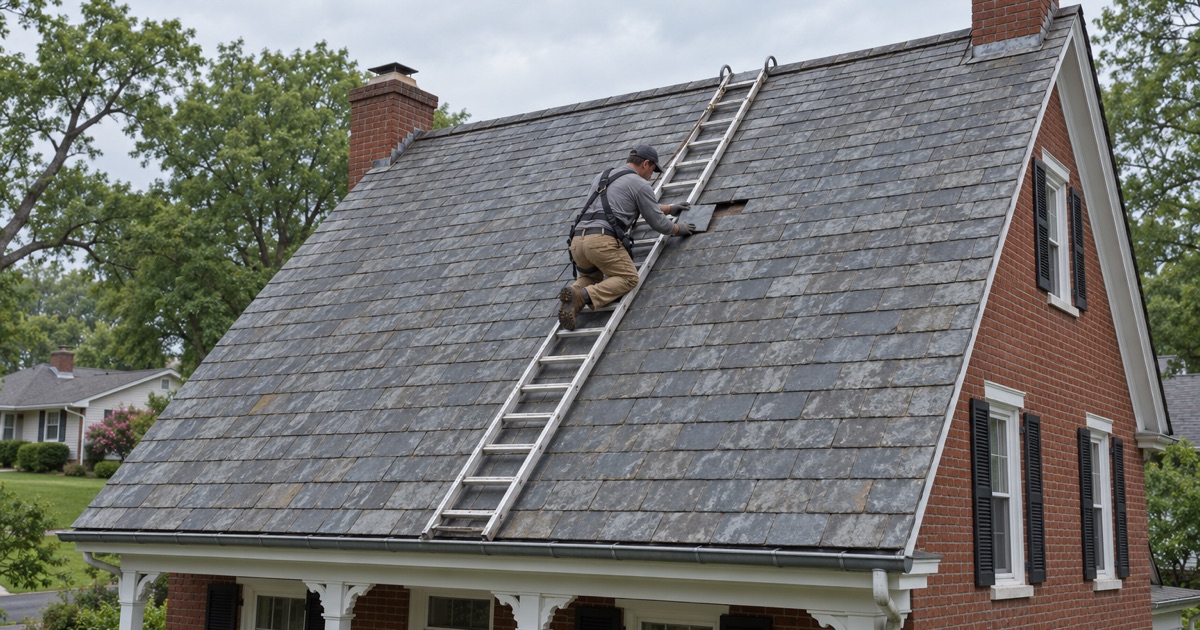
Broken and Cracked Slates
Slates crack from falling branches, hail, ice and foot traffic. A cracked slate lets water through to the underlayment and decking below. We remove the broken piece, cut the old nails with a slate ripper, and slide in a matching replacement slate without disturbing the slates around it.
The new slate is secured with a copper nail through the joint above or with a slate hook, depending on where it sits on the roof. Either method leaves the replacement flat and secure without cracking the slates around it.
Slipped and Missing Slates
When slates slide down the roof or disappear, the cause is usually the nails. Older iron nails rust through over the decades, and the slate slides even though the stone is still sound. We reattach slipped slates or replace missing ones, secured with copper nails or slate hooks so the fix outlasts the original fastener.
If many slates are slipping across the roof, the nails as a whole may be failing. That is a bigger repair, and we explain the options, including removing and relaying sections of the roof with new copper nails while reusing the sound slate.
Ridge and Hip Repairs
Ridges and hips take the most weather, and their slates or caps are often the first to loosen. We reset or replace ridge and hip slates, renew the mortar or metal ridge where it has failed, and seal the joints so water cannot run under them along the top of the roof.
Ridges are also where vents are sometimes added to slate roofs. Any ridge vent on slate has to be detailed to suit the stone, and we check that an existing one is still sealed and not letting wind-driven rain into the attic.
Flashing on Slate Roofs
Copper and Lead-Coated Flashing
Slate roofs usually have copper or lead-coated flashing in valleys, at chimneys and along walls. When that flashing wears through or cracks, the roof leaks even though the slate is fine. We replace failed flashing with copper or lead-coated material so it lasts as long as the slate around it.
Replacing flashing on slate means removing and resetting the slates on either side. We do it slate by slate, keeping the pieces we remove for reuse wherever they are sound.
Valleys
Valleys on slate roofs carry the most water and wear out first. Open metal valleys can rust or crack along their length, and closed valleys can leak where the slates were cut. We replace worn valley metal and reset the slates along both sides.
A valley repair is also the moment to put a self-adhering ice and water barrier under the new metal. Valleys collect snow and ice in winter, and the membrane gives a second line of defense where the roof sheds the most water.
Chimneys and Walls
Chimneys on slate roofs need step flashing woven into each course of slate and counter flashing set into the masonry. Where the chimney is wide, a cricket on the uphill side prevents water from pooling against it. We rebuild these details in copper so they match the slate’s lifespan.
Patches of tar or roofing cement around a slate chimney are a sign that earlier repairs skipped the flashing. Tar does not bond well to slate, hides cracks from view and makes the next repair harder, so we remove it and rebuild the flashing properly.
How We Work on Slate
Staying Off the Slate Field
Slate breaks under foot traffic, and more slate roofs are damaged by people walking on them than by storms. We work from ladders, roof hooks and brackets, and avoid stepping on the slate wherever possible. When access requires it, we spread the load and keep to the strongest parts of the roof.
Matching Slate
Slate varies by quarry, color and thickness. We match replacement slates as closely as available salvaged or new stock allows, and show you a sample before installation. A new piece may look slightly brighter at first and weathers toward its neighbors over time.
Written Scope and Photos
Every slate repair comes with a written scope listing the number of slates to replace, the flashing work and the ridge or hip repairs, along with photos of each area. That lets you see what is being repaired and compare it with any other estimate.
Repair or Replace a Slate Roof
Signs the Slate Itself Is Failing
Some slate does reach the end of its life. Slates that flake, crumble at the edges, sound dull when tapped or have turned soft across large areas are failing. When we see that pattern across the roof, we tell you that repair is no longer good value and explain the options for replacement.
In most cases, though, the slate is sound and the problems are nails, flashing and broken pieces. We give you a straight answer on repair before replacement is ever discussed.
Slate and the Seller Disclosure
Pennsylvania sellers disclose known roof problems on the seller property disclosure statement, and slate roofs often draw questions from buyers’ inspectors who are not familiar with them. A written assessment and repair record from a slate roofer answers those questions clearly and shows the roof has been maintained rather than neglected.
- 20+ Years Roofing
- Itemized Written Scopes
- Repair Before Replace