
Lower Paxton Roofing repairs storm damage on roofs in Lower Paxton, PA, drawing on more than 20 years of roofing and serving surrounding cities including Linglestown, Progress, Susquehanna Township, Harrisburg and Hummelstown. After high wind, hail or a falling limb, the most useful thing a roofer can do is find the damage accurately and record it honestly.
Storm damage is often subtle. A shingle that lifted in the wind and resealed looks fine from the ground but has lost its bond, and hail can bruise shingles without leaving a single hole. We inspect the roof and the attic, photograph every finding, and write it up for the homeowner’s own insurance claim. We will meet the adjuster on site when asked, without negotiating the claim.
Then we repair what the storm damaged, on a written scope, with any replacement discussion coming only after a straight answer on repair. The finished work is photographed too, so your file shows the repair as well as the damage.
Recognizing Storm Damage on a Roof
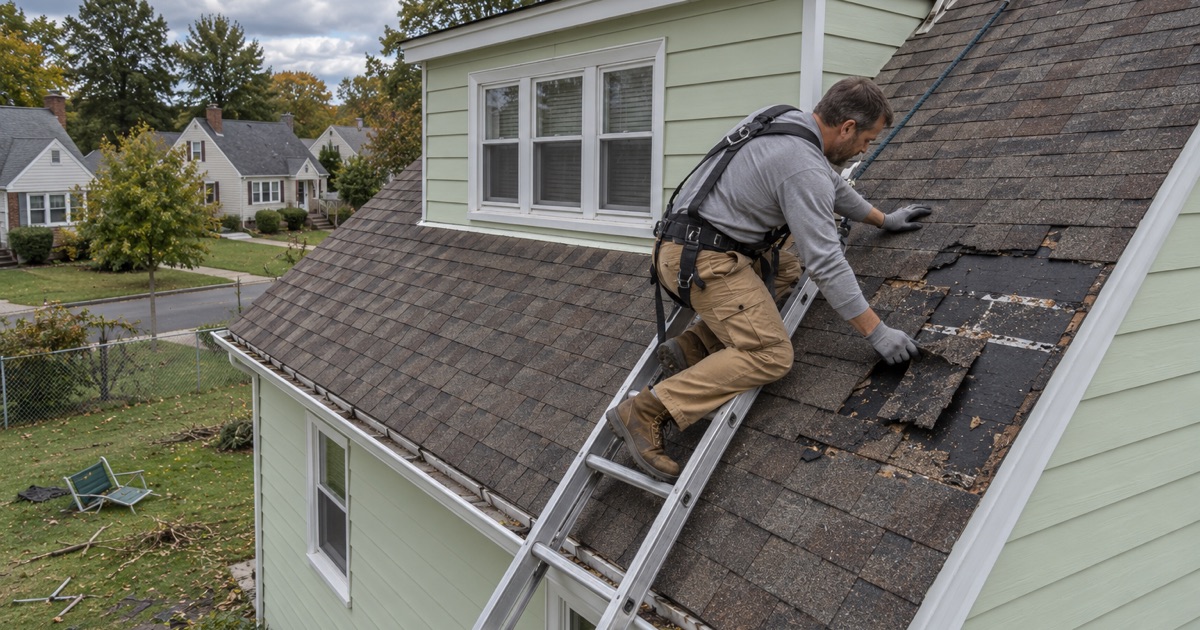
Wind Damage
Wind usually works from the edges and corners of a roof, where uplift is strongest. It tears off tabs, creases shingles along the nail line and breaks the sealant strip that holds each course down. A creased shingle may lie flat again after the storm but will not hold in the next one.
We check each slope for missing, creased and unsealed shingles, lifted ridge caps, loose drip edge and flashing pulled away from walls. Wind damage often appears on the slope facing the storm, so we note which faces were hit.
Hail Damage
Hail damage on asphalt shingles shows as soft bruises, dislodged granules and exposed mat, often in a random pattern across the slope. Metal vents, gutters and downspouts take dents that make the size of the hail easier to judge. Soft metals often show hail before the shingles do.
Hail damage can be confused with blistering, scuffing or normal wear, and insurers look carefully at the difference. We photograph damage with a reference for scale and note which surfaces show it, so the record reflects what the storm actually did.
Fallen Limbs and Debris
A falling limb can puncture decking, crack rafters and tear a hole through to the attic. Smaller debris scrapes shingles and clogs gutters. After a limb strike, we inspect the framing from the attic as well as the surface, because a crack in a rafter may not be visible from the roof.
Storms Around Lower Paxton
Severe Weather in the Area
Central Pennsylvania sees damaging thunderstorms, wind and the remnants of tropical systems. On August 9, 2024, the remnants of Debby produced an EF1 tornado with winds of 105 mph along a 3.48-mile path from Steelton to west of Progress, partially blowing the roof off a building on Berryhill Street and bringing trees down onto roofs in Bellevue Park. Lower Paxton itself was not named in that report.
On September 21, 2024, storms near Woodvale Road in Lower Paxton flooded apartments and brought down trees onto cars. Events like those are why we check roofs promptly after a storm, even where no leak has appeared yet.
Documenting Damage for Your Claim
Photos and a Written Report
Our storm damage report includes photos of each damaged area, a description of what we found and where, and a scope of what it would take to repair it. You can send it to your insurer with your claim and keep a copy for your records.
We document what the storm did and nothing more. Pre-existing wear, old repairs and installation defects are noted as such, because an honest report is more useful to you than one an adjuster can pick apart.
Pennsylvania Claim Timelines
Pennsylvania’s unfair claims rules in 31 Pa. Code 146 set timelines for insurers. A company must acknowledge your claim within 10 working days, complete its investigation within 30 days of notice or explain in writing why it needs more time, and accept or deny the claim within 15 working days after receiving a properly executed proof of loss.
Knowing those timelines helps a homeowner keep track of a claim. If an insurer is not meeting them, the Pennsylvania Insurance Department is the place to raise it.
Replacement Cost and Actual Cash Value
How much a claim pays depends on your policy. Replacement cost coverage pays to repair or replace the roof without subtracting depreciation, while actual cash value pays the depreciated amount, which can be far less on an older roof. Some policies switch roofs to actual cash value after a certain age, so it pays to read the roof section before a storm.
Who Handles Your Claim
Roofers, Adjusters and Public Adjusters
The insurer’s adjuster works for the insurance company. Under Pennsylvania’s Public Adjuster Licensing Law, only a licensed public adjuster may negotiate a claim on a homeowner’s behalf for a fee, and a roofer may not. Our role is to document the damage, meet the adjuster on site when you ask and repair the roof.
Watch Out for Storm Chasers
After major storms, out-of-town contractors often canvass neighborhoods promising free roofs or offering to handle the claim. Pennsylvania requires home improvement contractors to register with the Attorney General, and every home improvement contract carries a three-business-day right to cancel. Check the registration, read the contract and never sign over control of your claim.
Repairing Storm Damage
Repair First, Replacement Only if Needed
Many storm-damaged roofs need targeted repairs: replaced shingles on one slope, new ridge caps, resealed or replaced flashing and new pipe boots. We give a straight answer on whether a repair will hold. If the damage is widespread or the roof was near the end of its life, we explain why replacement may be the better answer.
Damaged decking found during the repair is photographed and shown to you before it is replaced, at a per-sheet price set in the contract. Gutters and downspouts dented by hail are replaced or repaired as part of the same scope.
- 20+ Years Roofing
- Itemized Written Scopes
- Repair Before Replace