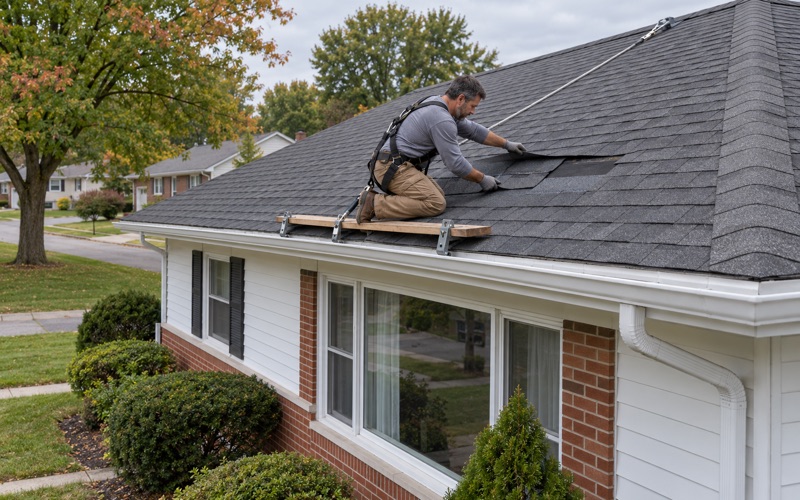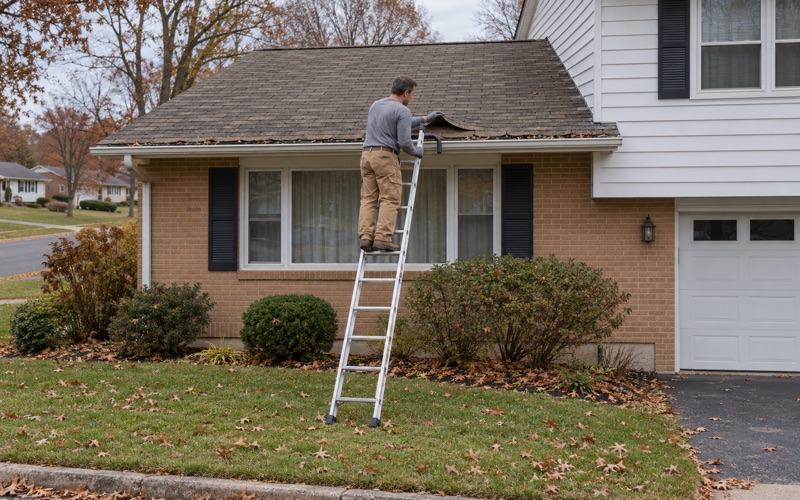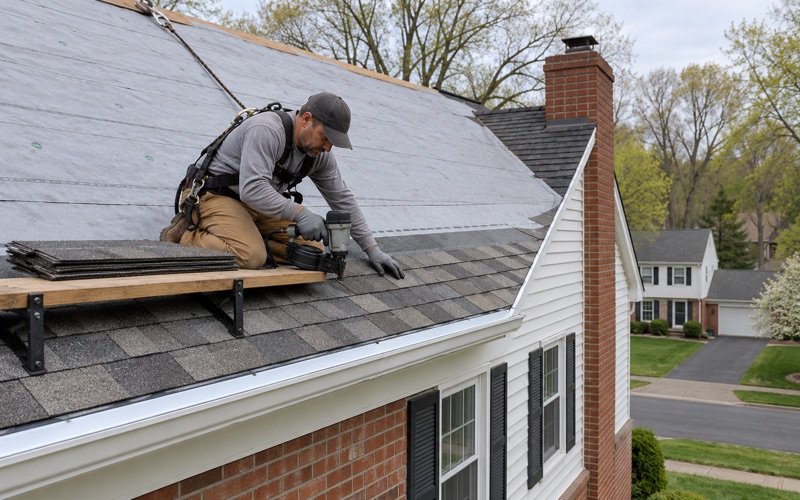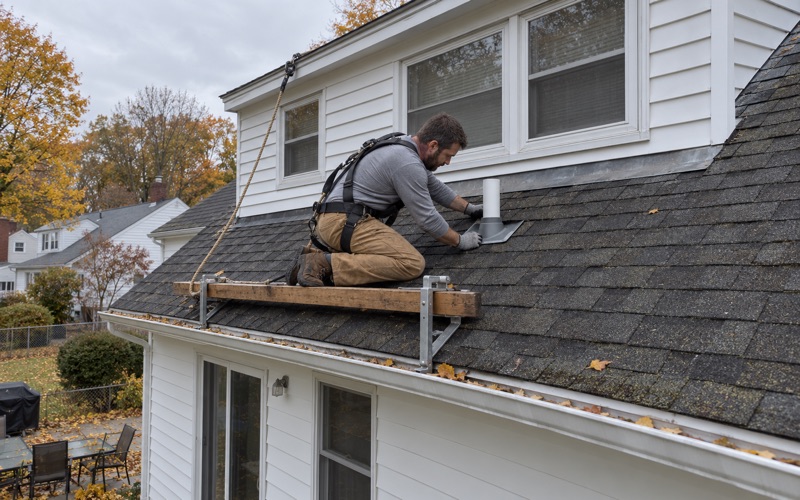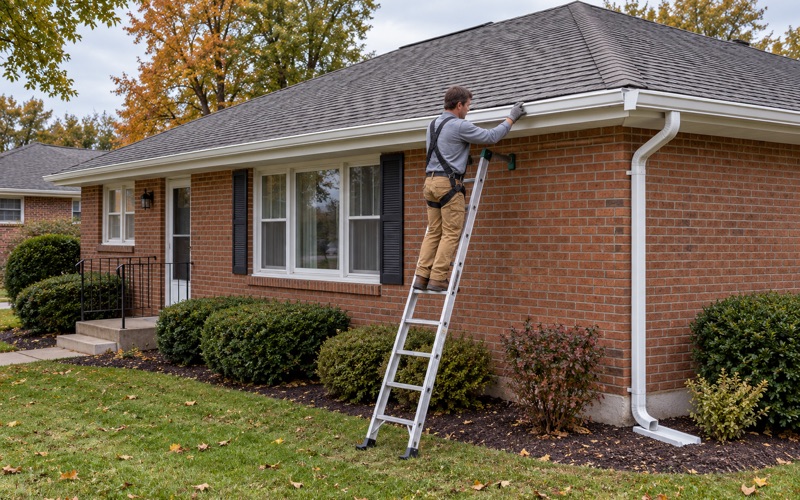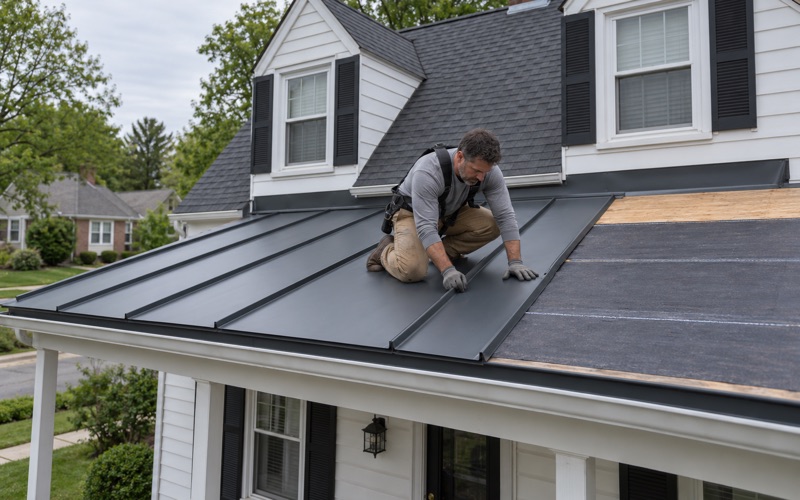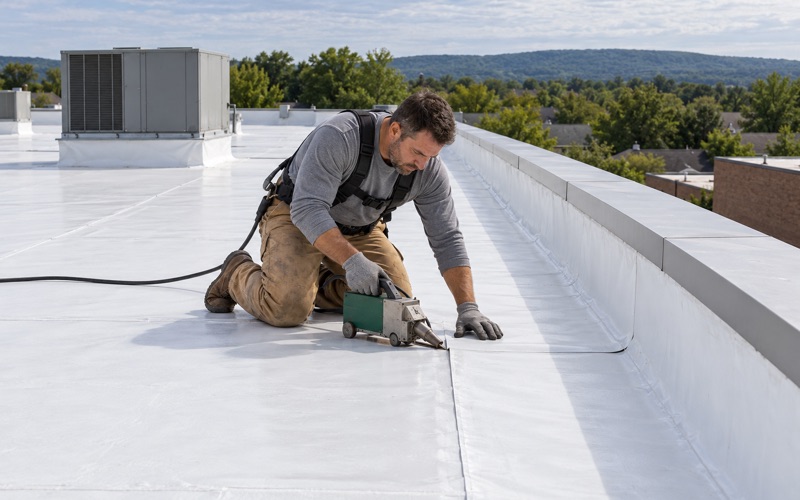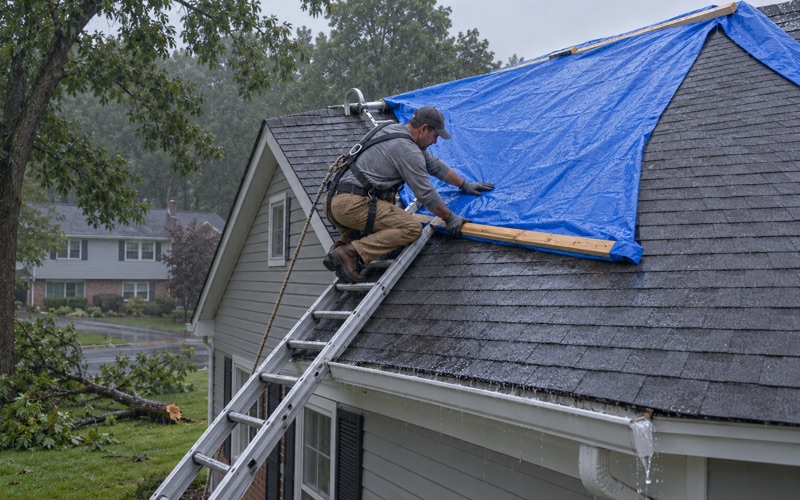
Lower Paxton Roofing brings more than 20 years of work to roofing in Susquehanna Township, and on these jobs we look past the shingles to where the rain goes once it leaves the eaves. A roof here is part of how a property is billed for stormwater, so the drainage that follows a repair or replacement deserves as much planning as the roofing material itself.
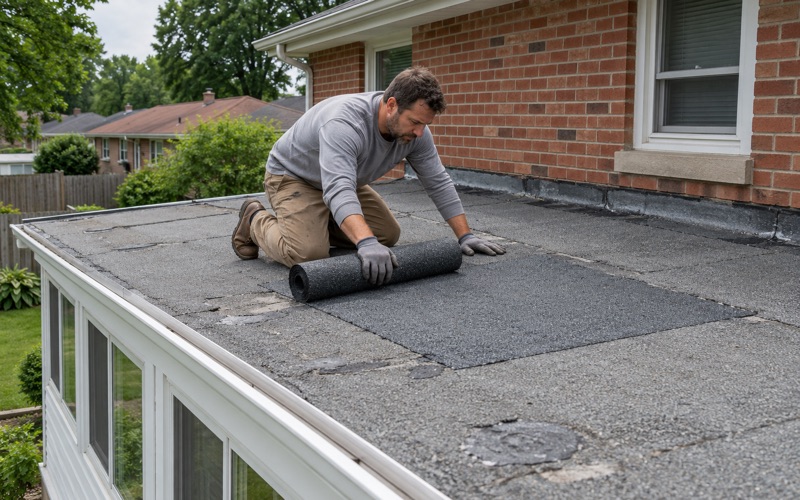
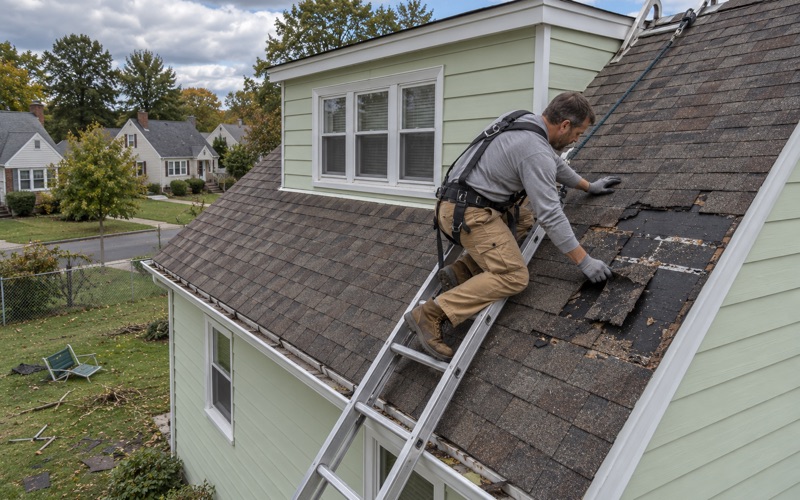
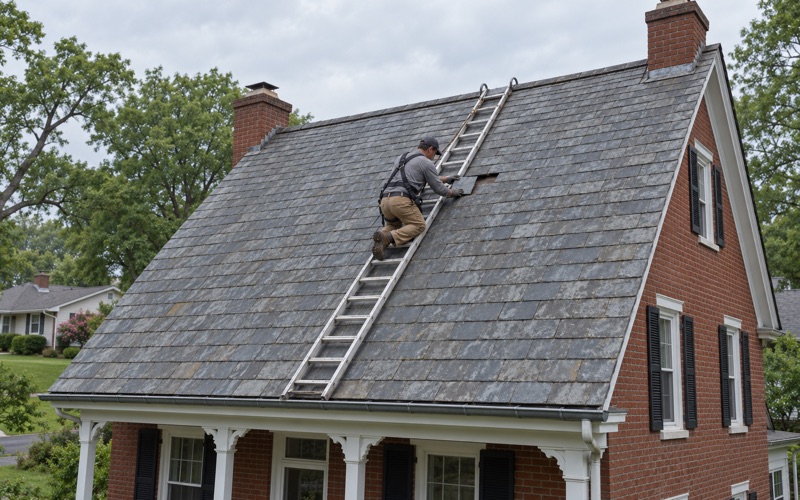
Every leak call starts with two inspections, one on the roof and one in the attic, so we can follow the water to the spot where it actually enters before we put a price on anything. If the roof can be repaired, we say so plainly, and replacement only comes up when a repair would not hold.
Before a job is priced we also confirm the re-roof permit rule for the municipality the house sits in, because each township sets its own. Our written scopes break tear-off, decking, underlayment, flashing, ventilation and gutters into separate lines, which lets an owner set our estimate beside another one and compare them item by item.
Your Roof on the Susquehanna Township Stormwater Bill
Why a Rooftop Counts as Impervious Area
The Susquehanna Township Authority funds its stormwater program with a fee charged to property owners, and that fee is based on impervious area, the surfaces that shed rain instead of soaking it up. Penn State Extension notes that across Pennsylvania, roofs, driveways, patios and parking lots usually count toward that figure, while public sidewalks and roadways do not.
For a homeowner, that means the rooftop is usually one of the largest single pieces of the measurement behind the bill. The roof that keeps the bedrooms dry is also, in the Authority’s eyes, a surface that sends water toward the township’s storm system. We keep that in mind whenever a project changes the footprint or the drainage of a roof.
How the Authority’s Tiers Work
The stormwater fee is not a flat charge. It uses tiers built on ranges of impervious area, and the township’s own materials describe billing based on 1,000 square feet of impervious surface. According to the township, the majority of property owners will pay $34.80 or less per quarter, with larger impervious footprints falling into higher tiers.
We do not quote anyone’s tier, because the tier table and its criteria belong to the Authority and an owner’s own bill is the record that counts. What we can do is explain which parts of a house are roof, how a porch roof or garage roof adds to the total, and why a change in drainage may matter more than a change in shingle color.
Finding Your Parcel on the Fee Map
The township publishes an Impervious Area Stormwater Fee Map that shows each parcel’s total impervious area. Before a re-roof that touches gutters or downspouts, it is worth looking up your own parcel so you know the figure the Authority is working from. That number, not a contractor’s guess, is what sits behind the quarterly charge.
Owners sometimes find the map useful for a second reason. It shows the house, the garage and paved areas as one total, which makes it easier to see how much of the measured surface is roof. When we walk a property, we can point out which roof planes drain where, and that helps an owner read the map with more context.
Looking for roofing closer to Harrisburg? See Roofing in Harrisburg.
Disconnecting Rooftop Runoff and the Credit Policy
What the Credit Policy Says
The Authority’s Stormwater Management Credit Policy Manual states that it may grant up to a 25% credit for property owners who create and maintain a disconnected impervious area from their rooftop, pavement or a similar surface. The township’s credits page describes 16 different credit options, and credit opportunities are listed for Tier 2 through Tier 5 properties.
Those words matter, and so does the word may. The Authority decides whether a credit is granted and how large it is, under criteria set out in its manual. We have not seen anything that ties a credit to a particular gutter layout, so we treat the manual as the source and send owners there before they plan around a smaller bill.
What Disconnection Means for a Roof
In plain terms, a disconnected rooftop is one whose runoff is not sent straight onto a paved surface or into a pipe that carries it off the property. On many houses the gutters feed downspouts that empty onto a driveway or tie into an underground line. Whether a different arrangement counts as disconnected is a question the manual answers, not us.
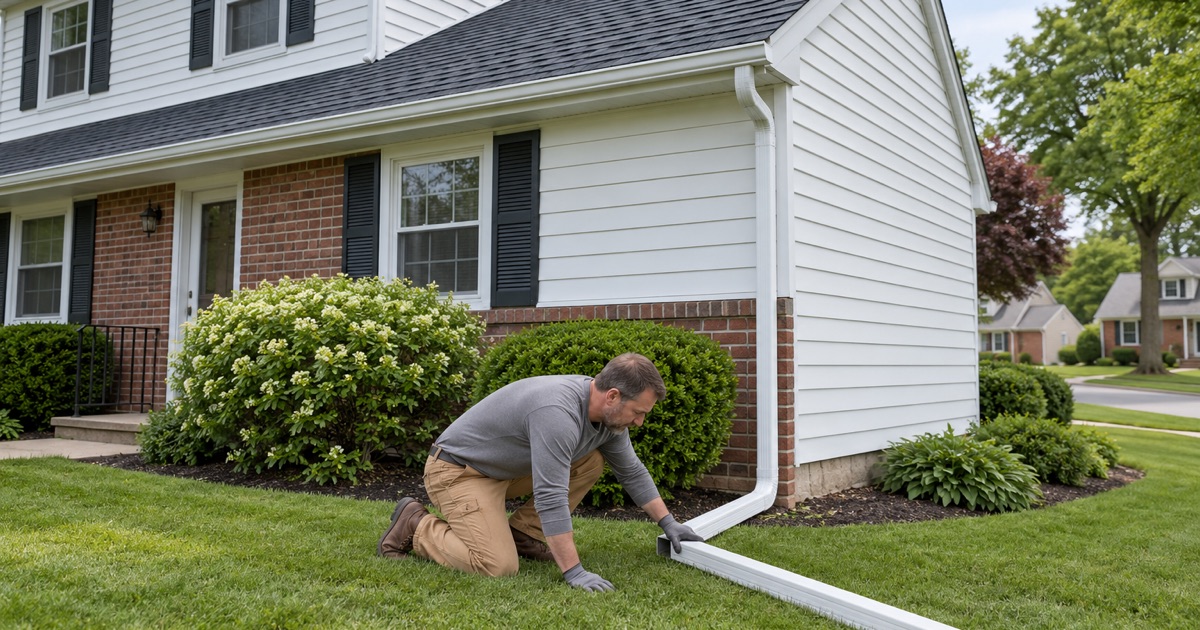
What a roofer controls is the physical part: where each downspout sits, which way the gutter runs pitch toward it, and how far the outlet lands from the foundation. Moving a downspout is simple during a re-roof, when the gutters are already coming down. Doing it afterward means taking apart work that was just finished, which costs more and helps nobody.
Talking to the Authority Before the Job
If a credit is part of your thinking, the time to contact the Susquehanna Township Authority is before the roof is scheduled. Ask what a qualifying disconnected area looks like for your property, what documentation is required, and what upkeep is expected afterward, since the manual speaks of owners who create and maintain the disconnected area.
Once you have the Authority’s answer, we can plan the gutter and downspout layout around it and write those choices into the scope. We will not promise that any particular setup earns a credit, because that decision belongs to the Authority. Our part is to build the drainage you and the Authority have settled on, cleanly and to the right pitch.
Gutters and Downspouts When the Roof Is Replaced
Sizing and Pitching With the Roof
We size and pitch gutters as part of the roof design rather than hanging them at the end. The roof’s area and slope determine how much water reaches each run, and that sets the gutter size and the number of downspouts. Seamless aluminum gutters are our usual choice, with drip edge at the eaves so water lands in the trough rather than behind it.
Pitch is where many installations fail. A gutter that sags or slopes the wrong way holds water, overflows at one end and sends it down the fascia instead of into the downspout. When we replace a roof, we reset the hangers and the slope so each run drains to the outlet planned for it, which matters even more when that outlet has been moved.
Flashing That Keeps Water Out of the Walls
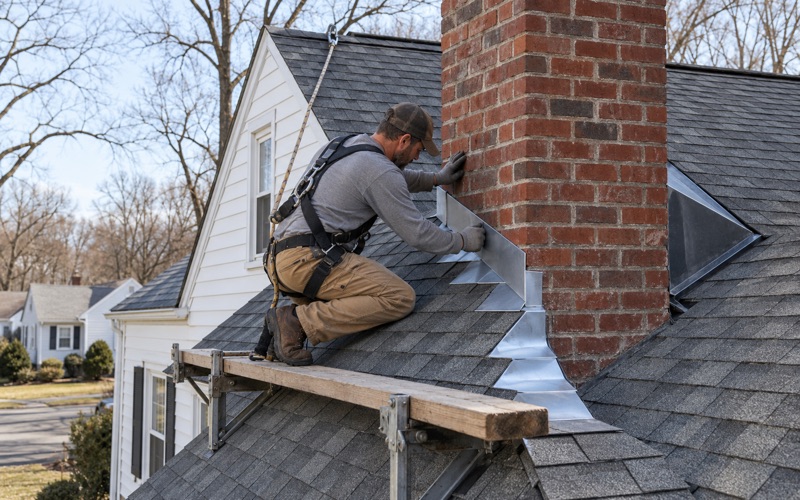
Gutters only handle the water that reaches the eave. At walls, chimneys and dormers, step flashing and counter flashing carry it past the joint, and kick-out flashing turns it into the gutter at the end of a roof-to-wall line. We replace step, counter and chimney flashing with the roof instead of reusing old metal under new shingles.
Reused flashing is a common source of the leaks we trace from the attic side. Metal that has been bent, nailed and sealed once rarely seats as well a second time, and a gap at a sidewall can send water into framing for months before a stain appears. New flashing installed with the roof keeps the water on the path the gutters are built for.
Decking, Cleanup and the End of Each Day
Once the old roof is off, we sometimes find decking that is soft or delaminated. When that happens we photograph it and show the owner before replacing anything, and the per-sheet price is already written into the contract. Nobody is surprised by a decking charge after the fact, and the owner can see exactly which sheets were changed.
At the end of every work day we clean the driveway, the yard and the gutters, and we run a magnet sweep for roofing nails. That matters on a job where downspout outlets are being moved across lawns and planting beds. A stray nail in the grass or a new gutter clogged with tear-off debris undoes otherwise careful work.
From Rockville to Beaufort Farms: The Township’s Houses
A Township Built in Waves
Susquehanna Township was established in 1815 from portions of Lower Paxton Township and runs from the Susquehanna River on its western edge to Blue Mountain at its north end. Its communities include Rockville, Progress, Edgemont, Estherton and Beaufort Farms, and the Rockville Bridge links the township to Marysville across the river.
The state historical commission’s survey records that more than two hundred developments were planned here between 1950 and 1960. Beaufort Farms, approved by township officials in 1947, was laid out by a State College landscape architect and a Harrisburg civil engineer. On curving streets and cul-de-sacs like those, the way a lot falls toward the road or a neighbor shapes where a downspout can sensibly discharge.
Attached Homes and Shared Rooflines
Attached homes are a large part of the township’s housing. Census estimates count 2,530 one-unit attached homes out of 12,529 housing units, and 1,629 of those attached homes are owner-occupied. On a row home or a twin, the roof often runs continuously across a party wall, and the gutter line may be shared with a neighbor.
That changes how we plan both the roof and the drainage. Flashing at the party wall has to tie into the neighbor’s roof, and moving a downspout can send water toward the property next door. We talk through those edges with the owner before work starts, and where a shared roof is involved, we recommend that both owners know what is being done.
Checking the Rule Before the Price
Susquehanna Township handles residential building questions from its offices at 1900 Linglestown Road, and residential permit applications go to the township by email. Rather than assume the answer matches a neighboring township’s, we ask the township what a particular re-roof needs and build that into the schedule and the price.
If the job also changes how the roof drains, we suggest a parallel conversation with the Authority about the stormwater side. Two short calls before the scope is final keep the paperwork and the plan in step. From there, we put the roof, flashing, gutters and downspouts in one written scope, so the drainage decision is recorded with everything else.
- 20+ Years Roofing
- Itemized Written Scopes
- Repair Before Replace