Lower Paxton Roofing has handled roofing in Upper Allen for more than 20 years, and the first thing we settle on any job here is which side of the township’s permit line the building sits on. A house and a campus hall can carry similar materials and still follow different paperwork, so we sort that out before a price is written.
Every leak call starts with two looks, one from inside the attic and one from up on the roof, so we find where water actually gets in rather than guessing from a ceiling stain. From there you get a plain answer about whether a repair will hold, and only if it will not do we talk about replacement.
When replacement is the right call, our written scope breaks tear-off, decking, underlayment, flashing, ventilation and gutters into separate lines. An owner holding two estimates can set them side by side and see exactly where the numbers differ, one item at a time, instead of comparing two totals with nothing behind them.
Messiah University, Grantham and the Township’s Permit Line
Upper Allen Township is home to Messiah University, and that campus is the clearest example of how the township sorts roofing work. The rule turns on what a building is used for, not on how big it is or what covers it.
A 375-Acre Campus With Deep Grantham Roots
Messiah University’s main campus sits in Grantham, on 375 acres inside the township. The school was founded in 1909 by the Brethren in Christ Church and moved to Grantham two years later, after Old Main was built there. It took the Messiah University name in July 2020, after decades as Messiah College.
The university now uses a Mechanicsburg mailing address, which is a common source of confusion. Its main campus is still in Grantham, an unincorporated community of Upper Allen Township, not part of Mechanicsburg borough. For roofing, that detail matters, because the township’s own building department is the office that answers for work on that ground.
What the Township Says About Non-Residential Roofs
Upper Allen Township is direct about this. Its permit guidance states that all non-residential roof repairs and replacements require a Building permit. The wording covers repairs as well as full replacements, so even a section of failed membrane over a non-residential building is a permit matter here, not a quick patch.
Those permits run through Upper Allen Township Community Development at 100 Gettysburg Pike, where the township’s Building Inspectors review and issue building and occupancy permits. Because each municipality around us draws its own line, we check this township’s rule against the specific building before we price anything, rather than carrying over a neighboring township’s practice.
Why Use, Not Size, Decides the Path
A small detached office and a large academic hall land on the same side of the rule, because both are non-residential. A large single-family home stays on the residential side no matter how many squares of shingle it carries. The first question we ask is simply what the building is used for.
That keeps the conversation short for most owners. If the building is a house, the next question is whether it sits in a historic district. If it is not a house, a Building permit is part of the job from the start, and we plan the schedule around the township’s review rather than around a hopeful guess.
Looking for roofing closer to Lebanon? See Roofing Services in Lebanon.
Campus Halls, Dining and Performance Buildings Versus Homes
Academic and Assembly Buildings
Academic halls, the Lottie Nelson Dining Hall and the High Center for Worship and Performing Arts are non-residential buildings. Under the township’s wording, any roof repair or replacement on buildings like these goes through the building department. The High Center alone covers 92,000 square feet, far beyond the footprint of any house.
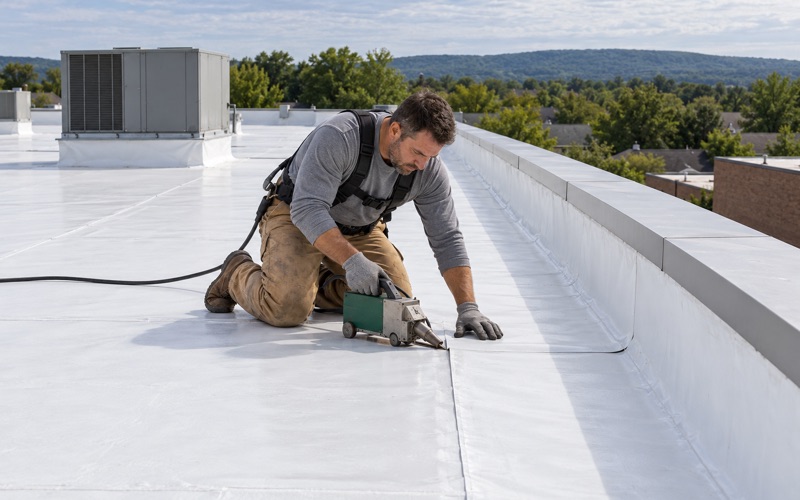
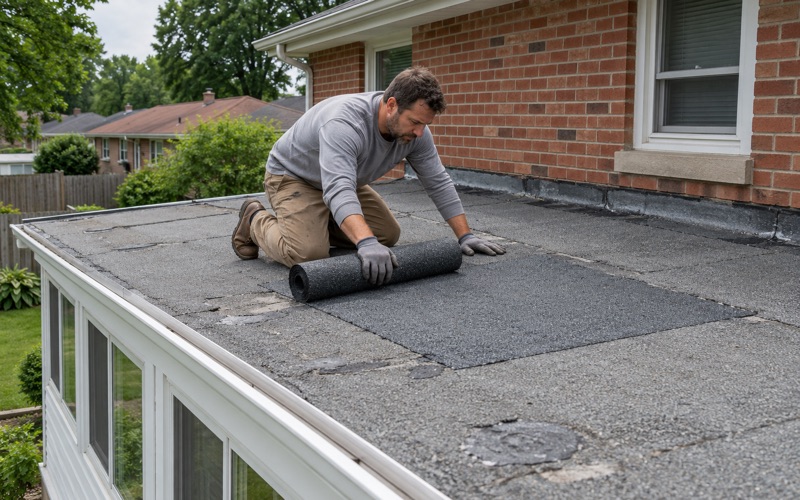
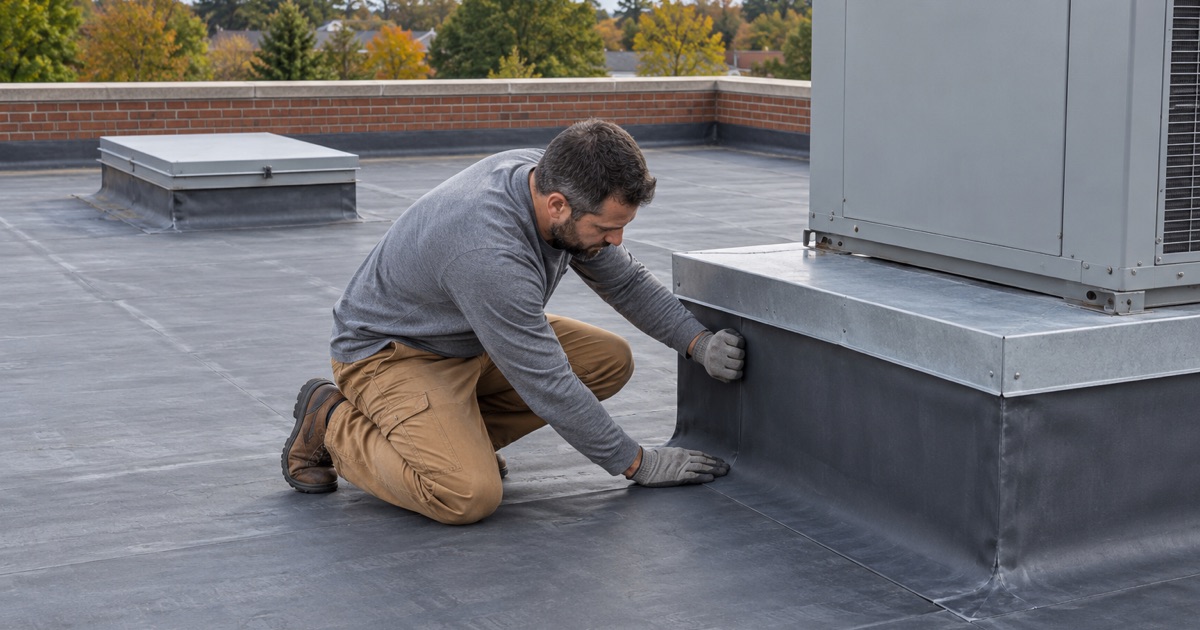
Large flat and low-slope roofs on buildings of that kind are usually single-ply or modified bitumen systems, such as TPO, PVC, EPDM rubber or torch-down SBS. Those are different trades from a shingle re-roof, with their own seams, flashings and inspection points, which helps explain why a review on them earns its place.
Where the Township Leaves Questions Open
The township’s guidance names residential and non-residential roofs, but it does not spell out how every campus building type is classified. Academic and dining buildings sit clearly on the permit side, while residence halls are the open case. The published wording does not state whether they count as residential, so we do not assume an answer either way.
When a building sits in a gray area, the honest step is to ask before work starts. We would rather put that question to Upper Allen Township Community Development early than plan a job on an assumption and learn partway through that the paperwork was wrong and the crew has to stand down.
What This Means for a Homeowner Near Campus
Living near Grantham does not change the rule for a house. A home on a street beside the campus follows the residential side of the township’s guidance, the same as a home anywhere else in Upper Allen. The campus is useful context for how the township thinks about roofs, and nothing more.
We mention it because the university’s size and its Mechanicsburg mailing address can make a neighborhood feel as if it falls under someone else’s rules. It does not. For a house near the campus, the starting point is the residential rule, followed by a check of the address against the township’s historic districts.
Residential Re-Roofs and the Four Historic Districts
No Review or Permit for Most Residential Replacements
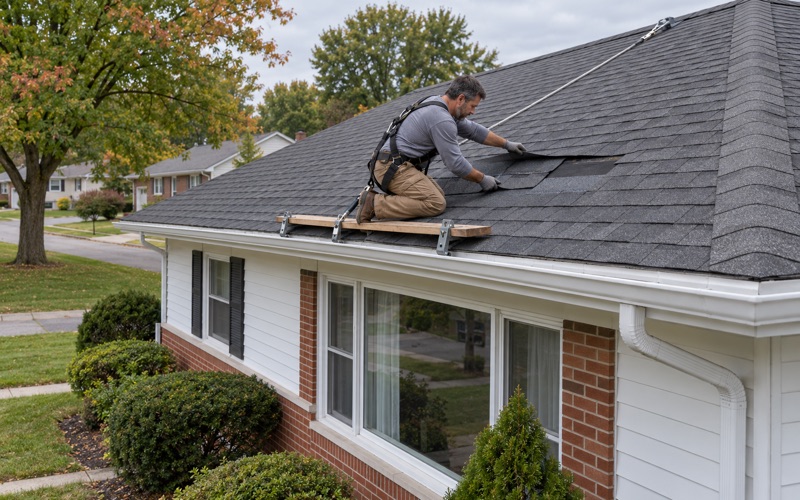
The township’s guidance says residential roof replacements do not require reviews or permits. For a homeowner outside a historic district, that means a shingle tear-off and replacement on a house moves straight from signed contract to scheduling, without waiting on a building review at the township office. The owner signs, we order materials, and the crew is booked.
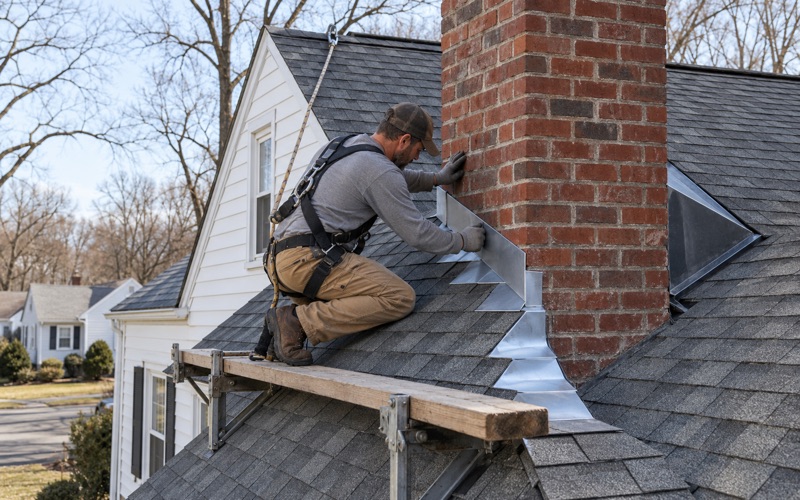
No permit does not mean no standard. We still install drip edge at eaves and rakes, an ASTM D1970 self-adhering ice and water barrier where it belongs, and new step, counter and chimney flashing rather than old metal reused under new shingles. A roof that skips those steps fails the same way with or without a permit.
Shepherdstown, Rosegarden Mill, Trout Run and Yellow Breeches
Upper Allen has established four municipal historic districts: Shepherdstown, Rosegarden Mill, Trout Run and Yellow Breeches. A residential roof replacement inside one of them is the exception to the no-permit rule. There, a Building permit is required, and the township issues it only after a Certificate of Appropriateness.
That certificate comes through the township’s Historic Architectural Review Board, under Chapter 155 of the township code. We do not tell an owner ahead of time what material a district will accept, because that decision belongs to the board. We confirm whether the address falls in a district, then let the review set the terms.
Solar Arrays and Floodplain Lots
Two other cases change the paperwork on a house. The township states that roof mounted structures, such as solar panels, require a Building permit. When a re-roof sits under an existing array, we build the panel removal and reinstall into the schedule from the first estimate, so nothing is discovered on the day the crew arrives.
Properties in a floodway, floodplain or special flood hazard area carry their own step. The township requires a Floodplain Supplement with every permit application there, plus a Zoning Permit for all interior and exterior improvements, even where its list says no permit is needed. Whether a lot is affected is a mapping question we check rather than guess.
Attached Homes and Newer Subdivisions
Townhouses and Shared Roof Lines
Of the township’s 9,141 homes, 2,521 are one-unit attached houses, about 27.6% of the housing stock, according to the 2024 American Community Survey. That is a large share of townhouses and twins, where one owner’s roof meets a neighbor’s along a shared party wall. Most of them, 1,768 by the survey’s count, are lived in by their owners.
On an attached home, the seam between units is where we look hardest. The shingle courses, underlayment and flashing have to tie into the neighboring roof cleanly, and our work stops at the line that belongs to the owner who hired us. We walk that edge with the owner before the scope is written.
Homes Built Since 2000
The same survey counts 3,149 homes, or 34.4%, built during 2000 or later. Houses of that era were commonly roofed with architectural laminated shingles, and owners start asking about a first replacement as those roofs age. Current options include GAF Timberline HDZ, Owens Corning Duration and CertainTeed Landmark.
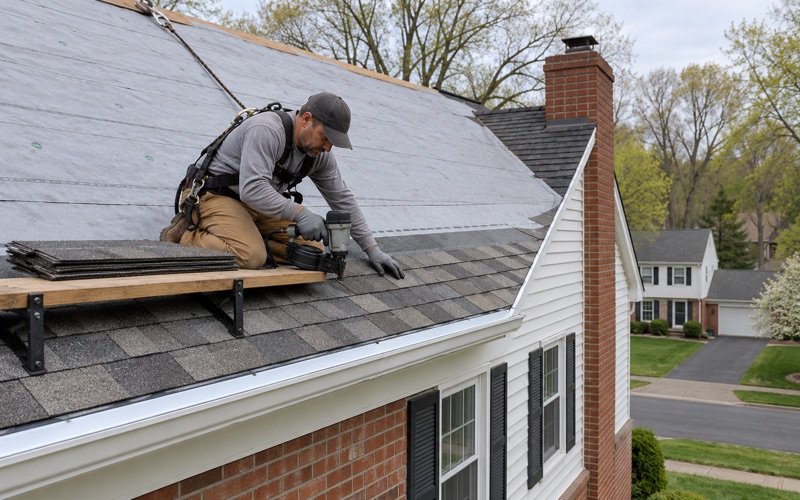
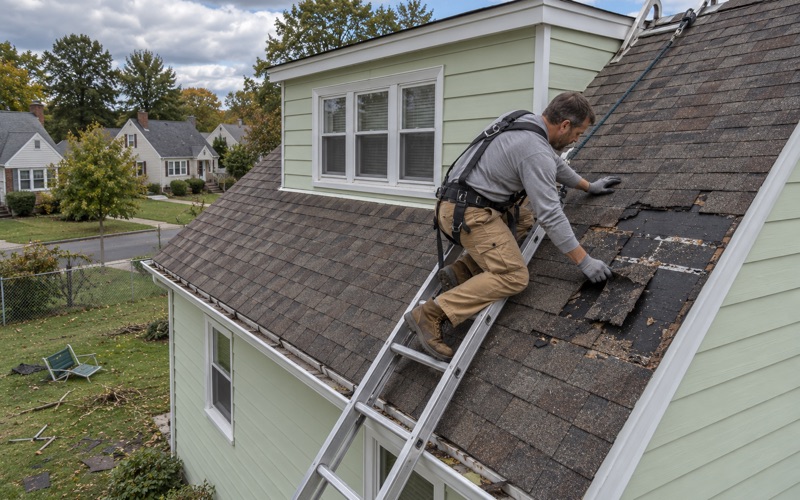
A first replacement on a newer house is usually a single-layer tear-off, which leaves the decking open to view. Removing everything down to the deck also lets us check the sheathing under valleys and around pipe boots. If damaged sheets turn up once the old roof is off, we photograph them and show the owner before replacing anything, at the per-sheet price already set in the contract.
Ventilation, Gutters and Cleanup
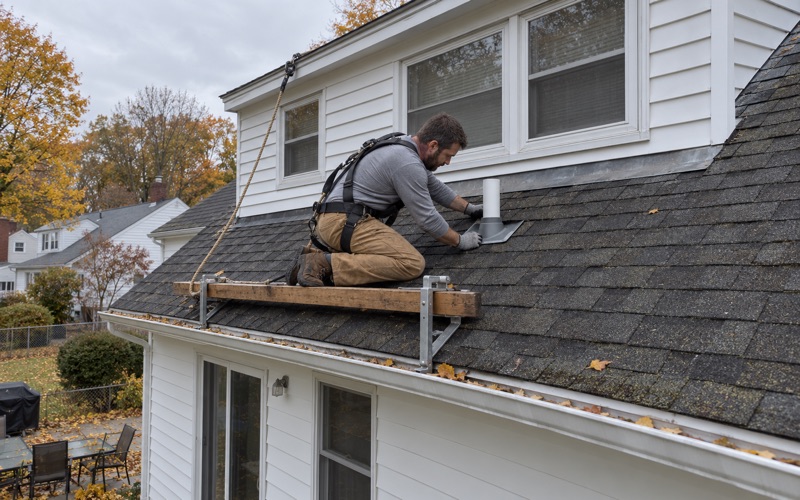
Newer homes often rely on a ridge vent paired with soffit intake, and that balance is easy to upset during a re-roof. We check the net free area at both ends so the attic breathes properly, and we size and pitch gutters and downspouts with the roof rather than leaving them for later.
On tight subdivision lots, cleanup matters to the neighbors as much as the owner. At the end of each work day we clean the driveway, yard and gutters and run a magnet sweep for roofing nails. After a storm, we photograph and write up the damage for the owner’s own claim and will meet the adjuster on site if asked, without negotiating the claim.
- 20+ Years Roofing
- Itemized Written Scopes
- Repair Before Replace